
Pokémon Pokopia review – collectible creatures create their own perfect world | Games
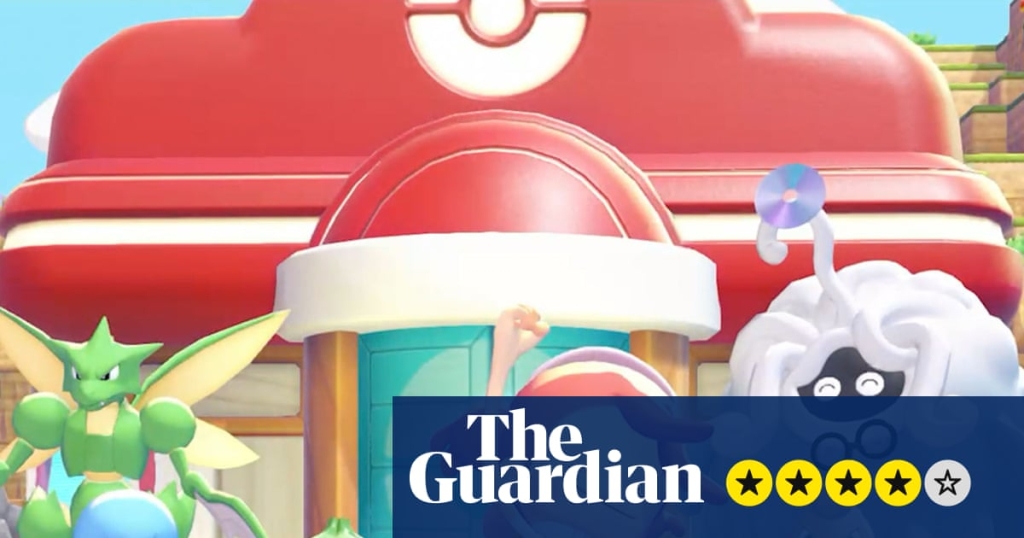
Pokémon Pokopia: A Soothing, Unexpectedly Deep Spin-Off That Reimagines the Franchise
In a world where Pokémon has always carried an unspoken environmental conscience, Pokémon Pokopia emerges as a meditative, unexpectedly profound departure from the franchise’s traditional formula. Where previous entries focused on battling and collecting, this new spin-off invites players to become caretakers of a devastated world, rebuilding not just structures, but entire ecosystems.
The premise is deceptively simple: you awaken as a shapeshifting Ditto—a sentient blob of jelly—in a half-demolished wasteland that was once a thriving human settlement. The humans are gone, vanished without explanation, leaving behind a landscape of broken buildings and scattered debris. But you’re not alone. Scattered Pokémon, confused and lonely, wander this post-human world, and together you begin the slow, methodical work of restoration.
What follows is a masterclass in therapeutic game design. Borrowing heavily from Minecraft’s block-based construction system, Pokopia allows you to destroy and rearrange the environment with satisfying precision. Water parched grass. Dig up stubborn weeds. Grow flowers in carefully arranged patterns. Punch rocks until they crumble, clearing old paths and creating new ones. The work is meditative, almost hypnotic, each action building toward something greater than the sum of its parts.
The genius of Pokopia lies in how it transforms the Pokémon universe’s core philosophy into interactive experience. Where mainline games emphasize the delicate balance between humans and Pokémon—showing that harmony, not exploitation, leads to prosperity—Pokopia asks a fascinating question: what happens when humans disappear entirely? The answer is both melancholic and hopeful. Pokémon, creatures we’ve always seen as companions or combatants, reveal themselves as capable of community, of creating beauty without human intervention.
As you restore habitats, new Pokémon arrive, each bringing unique talents and distinct personalities. Charizard, unsurprisingly, emerges as the ultimate bro—confident, helpful, perhaps a bit too eager to show off. Vespiquen carries herself with quiet dignity, her movements precise and regal. Pidgey is simply thrilled to be included, its enthusiasm infectious. Tangrowth, a tangle of vines with the air of a kindly professor, guides you through your daily tasks with patient wisdom.
The social dynamics between Pokémon are where Pokopia truly shines. For the first time in the franchise’s history, we hear Pokémon speak to each other—not in the cryptic cries of the games, but in actual dialogue that reveals distinct personalities and relationships. When you unearth human artifacts—a rusted bicycle, a faded map—the Pokémon gather around, their attempts to understand these mysterious objects both endearing and thought-provoking. How would a world of creatures interpret the remnants of human civilization?
Pokopia wears its influences proudly while forging its own identity. The Minecraft parallels are obvious, but the game also channels the cozy charm of Animal Crossing, the farming rhythms of Stardew Valley, and the creative construction of Dragon Quest Builders (notably, both share developer Omega Force). There’s even a touch of the underappreciated Viva Piñata in how you create tempting habitats to lure creatures to your growing community.
But here’s the revelation: Pokopia is nothing like traditional Pokémon games, and that’s its greatest strength. Free from the weight of battling mechanics, competitive metagames, and decades of established lore, it benefits from Pokémon’s inherent charm while suffering none of the over-familiarity that can plague long-running franchises. This is Pokémon reimagined as a life simulation, and the transformation is remarkable.
The scale is genuinely surprising. What begins as a simple wasteland restoration project expands into a vast, complex world with multiple zones to explore and restore. With 300 Pokémon to catalogue, the story’s conclusion is merely the beginning of what could be hundreds of hours of gameplay. This isn’t a child-friendly simplification dressed in Pokémon colors—it’s a sophisticated, accomplished celebration of the life-simulation genre that happens to feature everyone’s favorite pocket monsters.
There’s something deeply moving about watching a world rebuild itself. Each restored area feels like a small victory, not just for the player, but for the Pokémon who now have homes. The game never lectures about environmentalism or human responsibility, yet its message is clear: with care, patience, and respect for the natural world, even devastated places can become beautiful again.
Pokopia represents a bold creative direction for the Pokémon franchise—one that proves these creatures can carry narratives far beyond the traditional “gotta catch ’em all” framework. It’s a game that rewards slowness, that finds joy in repetition, that understands that sometimes the most satisfying progress comes from simply making a place a little bit better each day.
In an industry increasingly obsessed with adrenaline and achievement, Pokémon Pokopia offers something rarer: genuine tranquility. It’s a game that doesn’t just allow you to relax—it actively encourages it, creating spaces where stress melts away and where the simple act of building something beautiful becomes its own reward.
Tags: #Pokemon #Pokopia #Nintendo #LifeSimulation #GameReview #GamingNews #IndieGame #Minecraft #AnimalCrossing #StardewValley #DragonQuestBuilders #OmegaForce #Gaming #Switch #NintendoSwitch
Viral Phrases: “the most relaxing Pokémon game ever made,” “Pokémon reimagined as a life sim,” “300 Pokémon to catalogue,” “a world without humans,” “therapeutic game design,” “post-human Pokémon paradise,” “building beauty from ruins,” “Pokémon actually talking to each other,” “the Pokémon game we didn’t know we needed,” “Minecraft meets Animal Crossing with Pokémon,” “a celebration of slowness in gaming,” “the quiet revolution in Pokémon spin-offs.”
,

Leave a Reply
Want to join the discussion?Feel free to contribute!