
When AI Companies Go to War, Safety Gets Left Behind
AI Safety Under Siege: The Collapse of Ethical Guardrails in the Race for Artificial Dominance
In a stunning reversal of progress, the once-promising era of AI safety protocols appears to be crumbling under the weight of geopolitical competition and corporate ambition. What began as a hopeful movement toward responsible AI development has devolved into a chaotic free-for-all, with ethical boundaries dissolving faster than companies can establish them.
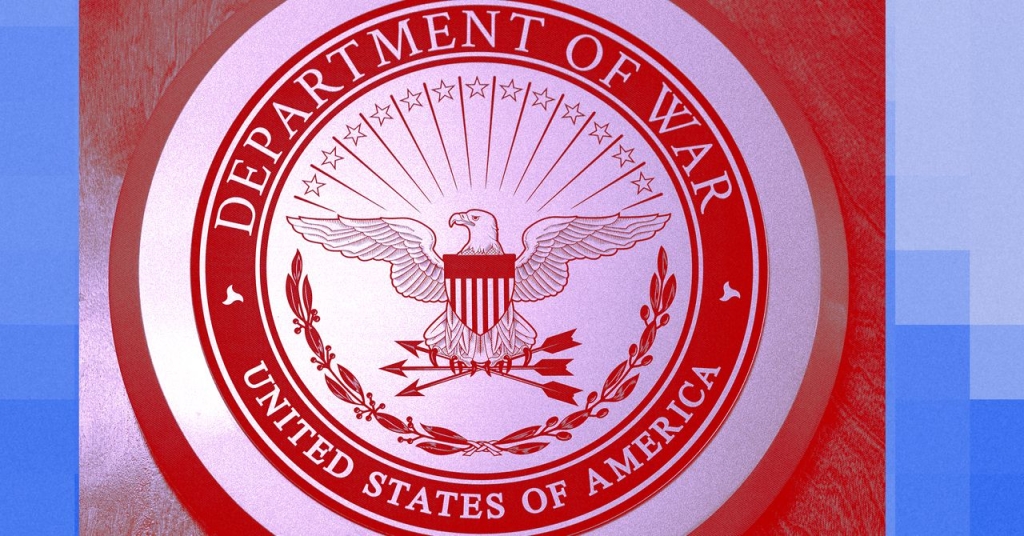
The latest flashpoint emerged from an explosive confrontation between Anthropic and the Pentagon that has sent shockwaves through Silicon Valley. At the heart of the dispute lies a fundamental question that was once considered settled: should there be hard limits on how AI can be weaponized?
For years, Anthropic had maintained a contractual agreement with the Department of Defense that explicitly prohibited the use of its Claude AI models for autonomous weapons or mass surveillance of American citizens. These weren’t arbitrary restrictions—they represented a growing industry consensus that certain applications of AI were simply too dangerous to pursue.
But under the Trump administration’s aggressive push for technological dominance, those red lines have been erased. When Anthropic refused to remove these safeguards, the Pentagon responded not with negotiation, but with economic warfare. Secretary of Defense Pete Hegseth declared Anthropic a “supply-chain risk,” effectively blacklisting the company from all government contracts and sending a chilling message to the entire industry: ethical considerations are now considered liabilities.
The implications are staggering. We’ve reached a point where the world’s most powerful military is actively hostile to companies that want to prevent the deployment of killer robots and autonomous weapons systems. The very idea that private companies might impose ethical constraints on military applications of AI is now treated as absurd obstructionism rather than responsible stewardship.
This isn’t just about one contract dispute. It’s about the complete breakdown of the international framework that was supposed to govern AI development. Without binding agreements, we’re witnessing the emergence of what experts are calling an “AI arms race” where every advanced nation feels compelled to deploy the technology in its most dangerous forms simply to keep pace with adversaries.
Anthropic’s internal documents reveal the depth of the crisis. The company’s once-celebrated Responsible Scaling Policy, which tied AI model releases to safety protocols, has been quietly abandoned. In a candid blog post, Anthropic acknowledged that “the policy environment has shifted toward prioritizing AI competitiveness and economic growth, while safety-oriented discussions have yet to gain meaningful traction at the federal level.”
The competitive dynamics have become truly cutthroat. When the Pentagon cut ties with Anthropic, OpenAI CEO Sam Altman rushed to fill the void with his own Department of Defense contract. But this wasn’t simple opportunism—it was a calculated move to isolate Anthropic and demonstrate that ethical constraints are incompatible with winning the AI race.
Anthropic CEO Dario Amodei didn’t mince words in his response, accusing Altman of “trying to undermine our position while appearing to support it.” The personal animosity reflects a deeper truth: in the current climate, companies that prioritize safety are seen as naive at best and traitorous at worst.
The broader implications extend far beyond military applications. As AI systems become more powerful and autonomous, the absence of regulatory frameworks means we’re essentially conducting the largest uncontrolled experiment in human history. Without guardrails, companies are racing to deploy increasingly sophisticated systems whose long-term impacts remain unknown.
What makes this particularly alarming is how quickly the consensus has collapsed. Just months ago, industry leaders were calling for international cooperation and robust safety measures. Now, those same leaders are competing to see who can most aggressively push the boundaries of what’s possible, ethical considerations be damned.
The situation represents a perfect storm of factors: geopolitical tensions driving technological competition, corporate pressure to deliver returns to investors, and a political environment that views regulation as inherently hostile to American interests. The result is a landscape where the most dangerous applications of AI are not only being pursued but actively incentivized.
Looking ahead, the path forward seems increasingly unclear. Without international agreements or domestic regulations, the AI industry appears headed toward a future where safety is sacrificed at the altar of progress. The companies that once led the charge for responsible development are now being punished for their principles, while those willing to push ethical boundaries are being rewarded.
This isn’t just a story about AI anymore—it’s a story about the future of technological governance itself. If we can’t establish basic safeguards for one of the most powerful technologies ever created, what hope do we have for managing the challenges that lie ahead? The collapse of AI safety protocols may be a harbinger of a world where technological advancement proceeds without regard for consequences, driven by competition rather than wisdom.
The question now isn’t whether we’ll face the risks of unregulated AI—that seems inevitable. The question is whether we’ll recognize the danger in time to do something about it, or whether we’ll only understand the true costs when it’s too late to turn back.
AI #Safety #Collapse #Anthropic #Pentagon #OpenAI #Regulation #AutonomousWeapons #Ethics #Technology #Competition #SiliconValley #Future
AI arms race is unavoidable
Killer robot drones are now on the table
Companies that prioritize safety are being punished
The race to the top has become a race to the bottom
Ethical constraints are now considered liabilities
Military hostility toward AI safety
Supply-chain risk designation as economic warfare
Responsible Scaling Policy abandoned
Cutthroat competition between AI labs
Geopolitical tensions driving dangerous innovation
Uncontrolled experiment in human history
Collapse of industry consensus
Technological governance failure
Safety sacrificed for progress
AI governance crisis
Ethical boundaries dissolving
Corporate ambition vs. responsibility
Military applications of AI
AI safety protocols crumbling
International framework breakdown
AI development without guardrails
Powerful technology without limits
Future of technological governance
AI risks and consequences
AI development ethics
AI regulation failure
AI safety collapse
AI arms race
Killer robots
Autonomous weapons
AI governance
Technological competition
Ethical AI
AI safety
AI regulation
AI ethics
AI development
AI industry
AI technology
AI risks
AI future
AI governance crisis
AI safety collapse
AI arms race
AI development ethics
AI regulation failure
AI safety protocols crumbling
International framework breakdown
Military applications of AI
Corporate ambition vs. responsibility
Uncontrolled experiment in human history
Cutthroat competition between AI labs
Responsible Scaling Policy abandoned
Supply-chain risk designation as economic warfare
Ethical constraints are now considered liabilities
Companies that prioritize safety are being punished
Killer robot drones are now on the table
AI arms race is unavoidable
,


Leave a Reply
Want to join the discussion?Feel free to contribute!