
Dell XPS 14 (2026) review: A Windows laptop I wouldn’t mind returning to from Mac
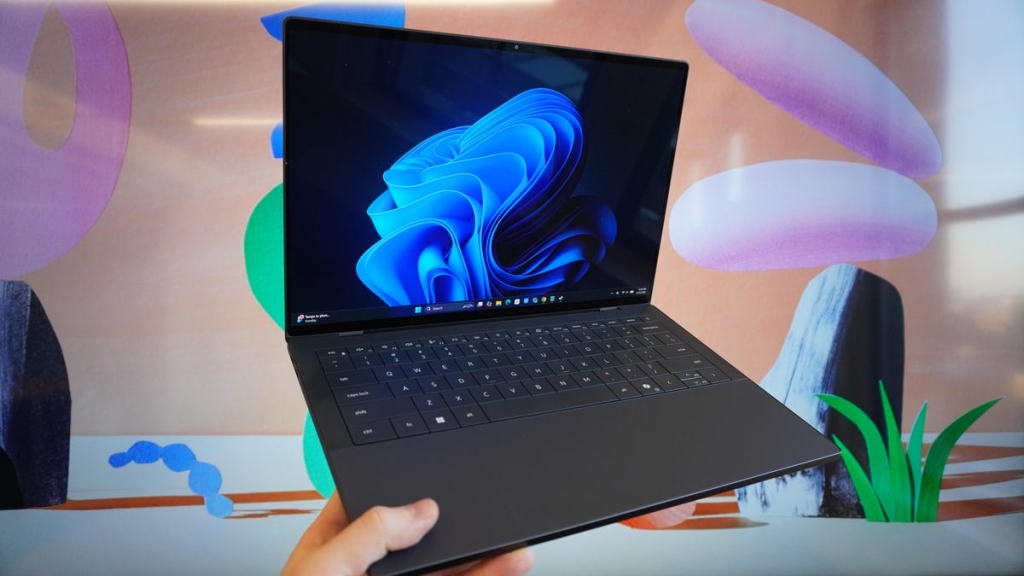
Dell XPS 14 (2026): A Triumphant Return That Redefines Premium
The XPS is back, baby! After a disastrous rebranding attempt that saw Dell temporarily abandon one of its most beloved laptop lines, the XPS 14 has returned in 2026 with a vengeance. This isn’t just a resurrection—it’s a complete reinvention that addresses previous criticisms while maintaining everything that made the XPS special in the first place.
The Comeback Story
Let’s be honest: Dell’s 2025 rebranding experiment was a spectacular failure. The company’s attempt to streamline its laptop lineup by eliminating the XPS, Inspiron, and Latitude brands in favor of a confusing “Plus/Premium” naming convention backfired spectacularly. Sales plummeted, and the tech community revolted.
But here’s the thing about Dell: they listen. By the end of 2025, company executives admitted they’d “missed the mark,” and at CES 2026, they made one of the boldest product decisions in recent memory—bringing back the XPS with a vengeance.
Design: Where Form Meets Function
The 2026 XPS 14 is a masterpiece of industrial design. It’s thinner, lighter, and more refined than ever before, weighing in at just under 3.5 pounds—that’s half a pound lighter than last year’s Premium model. But don’t let the weight loss fool you; this machine feels incredibly solid.
The chassis is a triumph of engineering. There’s no flex, no creaking, no cheap plastic anywhere to be found. Every surface, every seam, every button feels precisely engineered. The aluminum unibody construction gives it a premium heft that immediately communicates quality.
Dell’s design team has clearly been paying attention to user feedback. The infamous zero-lattice keyboard has been refined with subtle key indentations that make typing more comfortable without sacrificing the XPS’s distinctive aesthetic. The haptic trackpad now features subtle delineation lines, solving one of the previous generation’s most common complaints.
Perhaps most impressively, the display hinge has been completely redesigned. It folds back to hide the physical bezels at the bottom, creating a seamless edge-to-edge appearance that maximizes the perceived screen size. The press-fit mechanism provides satisfying resistance and a solid feel, though it does require two hands to open initially.
Display: A Visual Feast
The star of the show is undoubtedly the tandem OLED display option. Available in both 14- and 16-inch configurations, this 2.8K panel is nothing short of breathtaking. With 400 nits of brightness, a 120Hz refresh rate, and Dell’s InfinityEdge design, it pushes the boundaries of what’s possible in a laptop display.
The tandem OLED technology is particularly impressive. By stacking two OLED layers, Dell has achieved perfect blacks, infinite contrast ratios, and color accuracy that would make professional photographers weep with joy. The glossy finish handles glare surprisingly well, and the 120Hz refresh rate makes everything from scrolling through documents to watching videos feel incredibly smooth.
For those who prioritize battery life over absolute visual fidelity, there’s also an IPS option that still looks great but offers significantly better power efficiency.
Performance: Intel’s Panther Lake Delivers
Under the hood, the XPS 14 features Intel’s latest Series 3 “Panther Lake” processors. I tested two configurations: one with the Intel Core Ultra X7 358H (featuring Intel Arc integrated graphics), 32GB of LPDDR5x-9600 RAM, and the tandem OLED display; and another with the Intel Core Ultra 7 355, 16GB of RAM, and the IPS display.
The performance leap is substantial. The X7 358H’s 18-core architecture (compared to the 355’s 12 cores) provides a significant boost in multi-core performance. In our benchmarking tests, the XPS 14 consistently outperformed competitors like the Asus ExpertBook B9, which uses the same processor.
Intel’s XeSS 2 AI graphics upscaling technology puts in serious work for gaming. The integrated Intel Arc GPU offers 50% faster graphics performance than the previous generation, according to Intel. While it won’t replace a dedicated GPU for hardcore gaming, it’s more than capable of handling casual gaming and everyday content creation tasks.
I tested several games on the OLED configuration. Less demanding titles like “World of Warcraft Classic” ran beautifully at high settings, while more demanding games like “Baldur’s Gate 3” required significant graphics downscaling to maintain playable frame rates. It’s clear that the XPS 14 with integrated graphics is designed as a versatile generalist rather than a gaming powerhouse.
Battery Life: The Sweet Spot
Here’s where the XPS 14 really shines. The combination of Intel’s efficient Panther Lake architecture and Dell’s power management optimizations results in exceptional battery life. The IPS configuration with the Core Ultra 7 355 achieved an impressive 16.5 hours in our everyday usage test, while the OLED configuration with the X7 358H still managed over 13 hours.
This is a game-changer for mobile professionals. You’re looking at 1.5-2 full workdays with the IPS display and 1.25-1.5 with the OLED—more than enough for most people’s needs. The XPS 14’s ability to dynamically reduce the panel’s refresh rate to as low as 1Hz when idle is a major contributor to this impressive battery life.
Connectivity: Minimalist but Functional
Dell continues its minimalist approach to ports with three Thunderbolt 4 USB-C ports (two on the left, one on the right) with DisplayPort 2.1 and power delivery, plus one audio jack. While this might be restrictive for some users, it’s in line with the XPS’s premium positioning and helps maintain the laptop’s slim profile.
The Price Question
Let’s address the elephant in the room: the XPS 14 isn’t cheap. The OLED configuration with the Intel Core Ultra X7 and 32GB of RAM starts at $1,949, though it’s currently on sale for $250 off. The IPS configuration with the Core Ultra 7 and 16GB of RAM starts at $1,649.
While these prices are competitive with other premium laptops like the MacBook Pro, they’re still significant investments. However, given the XPS 14’s build quality, performance, and features, they represent good value for the money—especially considering the current discounts.
Why It Deserves Our Editor’s Choice Award
The 2026 Dell XPS 14 is more than just a laptop—it’s a statement. It represents Dell’s renewed commitment to the XPS brand and its willingness to listen to customer feedback. The combination of premium build quality, stunning display options, impressive performance, and exceptional battery life makes it one of the best Windows laptops on the market.
Whether you’re a creative professional, a business user, or simply someone who appreciates quality engineering, the XPS 14 delivers on all fronts. It’s not perfect—the lack of a discrete GPU option might be a dealbreaker for some, and the minimalist port selection could be restrictive for power users—but for most people, it hits the sweet spot between performance, portability, and premium features.
Tags & Viral Phrases:
DellXPS14 #CES2026 #PantherLake #TandemOLED #PremiumLaptop #WindowsPerfection #TechComeback #XPSReturns #IntelUltra #MobilePowerhouse #BatteryLifeKing #DesignExcellence #TechRenaissance #PremiumBuild #PerformanceMeetsPortability #OLEDGlory #FutureOfLaptops #TechInnovation #EditorChoiceAward #PremiumWindows #MobileProductivity #GamingCapable #BatteryEfficiency #IndustrialDesign #TechResurrection #PremiumExperience #WindowsRoyalty #MobileComputing #TechEvolution #PremiumPerformance
The XPS 14 isn’t just back—it’s better than ever, and it’s ready to reclaim its throne as the king of premium Windows laptops.
,


Leave a Reply
Want to join the discussion?Feel free to contribute!