
Chemistry clues could detect aliens unlike any life on Earth
Breaking News: Revolutionary New Method Could Detect Alien Life Beyond Earth
In a groundbreaking development that could reshape humanity’s search for extraterrestrial life, scientists have unveiled a novel approach to identifying living organisms on other worlds—even if they function entirely differently from life as we know it.
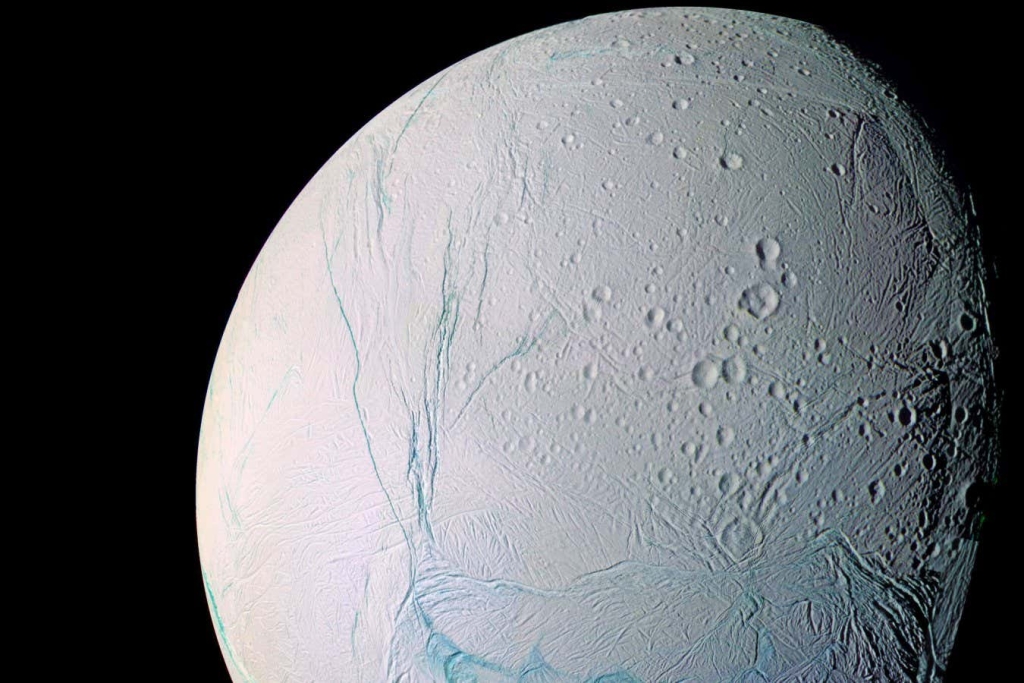
The new test, developed by researchers at the Georgia Institute of Technology, represents a significant leap forward in astrobiology and could potentially be deployed on future missions to Mars, Saturn’s moon Enceladus, or exoplanets light-years away.
From Biosignatures to Biochemical Fingerprints
For decades, the search for alien life has relied on detecting biosignatures—substances or patterns that reliably indicate biological activity. Astronomers have analyzed the atmospheres of distant planets for molecular biosignatures, while planetary rovers have examined soil samples for organic compounds.
However, this approach has a fundamental limitation: many molecules produced by living organisms can also arise through geological or chemical processes without any biological involvement. Amino acids, for instance, have been found in lunar soil, on comets, and within meteorites—all without any evidence of life.
“Traditional biosignature detection is like trying to find a needle in a haystack, but the problem is that the needle might not look like a needle at all,” explains Christopher Carr, lead researcher on the project. “We needed a method that could distinguish between molecules that simply exist and molecules that are actively maintained by living systems.”
The Reactivity Revolution
Carr and his team’s breakthrough centers on a fundamental principle of chemistry: the reactivity of molecules. In non-living systems, molecules exist in a state of chemical equilibrium, constantly reacting and being destroyed based on their inherent reactivity. More reactive molecules are naturally more likely to disappear over time.
Living systems, however, operate differently. They actively maintain specific molecules—particularly those that are highly reactive—because they’re essential for the biochemical processes that sustain life. This creates a unique statistical signature: living systems tend to have higher concentrations of reactive molecules than would be expected in a purely chemical system.
“The beauty of this approach is that it’s incredibly simple,” says Carr. “It’s highly explainable and it’s linked directly to physics.”
The Science Behind the Discovery
The method works by calculating the electronic energy difference in amino acids—specifically, the energy gap between the outermost electron and the next available space that would be filled during a chemical reaction. More reactive molecules have a smaller energy difference.
The team calculated this energy difference for 64 different amino acids, including many not used by life on Earth. They then analyzed amino acid abundances in known samples from both abiotic sources (like meteorites and moon soil) and living sources (such as fungi and bacteria).
By mapping the statistical distribution of amino acid reactivities, they could assign a probability that any given sample was living or non-living. When tested on over 200 samples, the method correctly identified life 95% of the time.
Universal Chemistry, Universal Life?
One of the most exciting aspects of this discovery is its potential universality. While alien life might look nothing like life on Earth, the fundamental chemistry of life is likely to be similar across the cosmos.
“Life, if it does exist elsewhere in the universe, is likely to be based on carbon chemistry and amino acids, and function according to the same chemical reactivity rules as life on Earth,” Carr explains. “Life inherently needs to control when, how and where molecules interact and reactions take place, so that is going to involve having structures that can regulate the flow of electrons and how things interact electrically.”
This means the method should work for extraterrestrial life forms, even if they use different amino acids or operate in environments vastly different from Earth’s.
Beyond Earth: The Next Frontier
The implications for space exploration are profound. This method could form part of a suite of life-detecting tools on future missions to Mars, Enceladus, Europa, or even on probes designed to analyze the atmospheres of exoplanets.
However, implementing this technology presents significant challenges. It would require sophisticated equipment capable of accurately measuring molecules and their abundances in extraterrestrial environments—no small feat given the harsh conditions and limited resources available on space missions.
“The method could form part of a suite of life-detecting tools on a future space mission to Mars or one of Saturn’s moons, like Enceladus, but it would require equipment that can accurately measure molecules and their abundances, which isn’t straightforward,” notes Henderson Cleaves at Howard University in Washington DC.
A New Era in the Search for Life
This discovery represents more than just a new tool in the astrobiologist’s toolkit—it potentially opens up entirely new ways of thinking about what constitutes life and how we might recognize it.
The approach moves beyond simply looking for familiar molecules or patterns and instead focuses on the underlying principles that make life possible: the ability to maintain chemical disequilibrium and regulate molecular interactions.
As we continue to discover thousands of exoplanets and explore our own solar system’s potentially habitable worlds, methods like this could be the key to answering one of humanity’s most profound questions: Are we alone in the universe?
The research team is already working on refining the method and developing the instrumentation needed to deploy it in space. With several ambitious missions to potentially habitable worlds planned for the coming decade, the timing couldn’t be better.
As Carr puts it: “We’re not just looking for life as we know it anymore. We’re looking for life as it could be.”
Tags: alien life detection, astrobiology breakthrough, amino acid reactivity, extraterrestrial biochemistry, cosmic life search, planetary exploration, space mission technology, Enceladus life hunt, Mars life detection, exoplanet biosignatures, chemical disequilibrium, universal life principles, electron flow regulation, space science innovation, alien biochemistry, cosmic chemistry, life beyond Earth, astrobiology revolution, extraterrestrial detection methods, space exploration 2025
Viral Phrases: Game-changing alien life detection method revealed, Scientists unlock secret to finding ET, Revolutionary technique could prove we’re not alone, Chemistry of life transcends planetary boundaries, New approach detects alien organisms even if they’re completely different from Earth life, 95% accuracy rate in identifying living vs non-living samples, Could this method finally answer the question “Are we alone?”, Space missions of the future may carry this life-detecting technology, The universal principles of biochemistry that could exist anywhere in the universe, How measuring electron energy differences could reveal alien life, Breaking the limitations of traditional biosignature detection, The statistical signature of life that works across the cosmos, Why reactive molecules are the key to finding extraterrestrial organisms, From moon soil to alien worlds: The journey of this groundbreaking discovery, The physics-based approach to detecting life that works anywhere, How this method could transform our search for life on Mars and beyond, The elegant simplicity behind this complex scientific breakthrough, Why carbon chemistry might be the universal language of life, The equipment challenges that must be overcome for space deployment, A new era in humanity’s quest to understand our place in the cosmos,


Leave a Reply
Want to join the discussion?Feel free to contribute!