
SanDisk High Endurance review: 20,000 hours of testing later, it’s the microSD card to beat
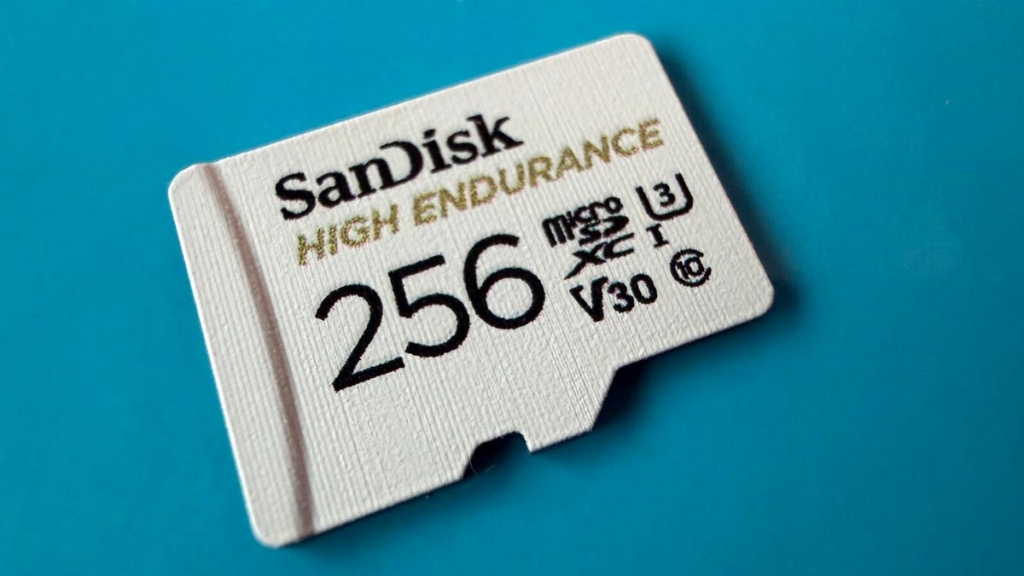
SanDisk High Endurance microSDXC Storage Card: The Ultimate Test of Durability
In the world of technology, durability and reliability are two of the most important factors when it comes to storage solutions. Whether it’s for dash cams, security cameras, or any other device that requires continuous recording, having a storage card that can withstand the test of time is crucial. That’s why when SanDisk released their High Endurance microSDXC cards, I knew I had to put them to the ultimate test.
The SanDisk High Endurance microSDXC cards are specifically designed for heavy use in devices like dash cams, body cams, and home security cameras. They are built to handle continuous recording and are fast enough to handle 4K video recording. But are they really as durable as they claim to be? That’s what I set out to find out.
I started by grabbing three dash cams I had lying around (yes, that’s the kind of stuff I have lying around my place) and set them up to point out a window into my garden. I connected them to battery backups and let them roll. And roll they did. Day and night, spring, summer, autumn, winter, for three years.
SanDisk manufactures two lines of microSD cards specifically designed for intensive usage in devices like dash cams and security cameras: the High Endurance and Max Endurance cards. The Max Endurance cards are the ultimate choice, promising a staggering 120,000 hours of continuous recording. But since testing those to their limit was clearly out of the question, I decided to go with the High Endurance cards, which are rated for up to 40,000 hours for the largest 512GB card.
After all, 40,000 hours is only about four and a half years. So, my plan was simple: run the cards until they died. But here’s the thing – they didn’t.
The SanDisk High Endurance cards turned out to be pretty impressive. They are rated Class 10, U3, and V30, meaning they can handle 4K video and boast sequential read and write speeds of 100 MB/s and 40 MB/s, respectively. While speed isn’t the most critical factor for looped video recording in cameras, it’s still good to know these cards live up to their claims.
These cards are also built to survive a lot. They are resistant to drops, water immersion, and even X-rays. On top of that, they are designed for extreme temperature swings, rated to handle -13°F (-25°C) to 185°F (85°C) even during operation. Whether baking on a car dashboard or mounted on the side of a house, these cards can take it.
This is on top of their high endurance, made possible by SanDisk’s use of high-quality 3D TLC (Triple-Level Cell) flash, which offers much longer life (but slower read/write speeds) than the standard TLC flash used in more mainstream storage cards.
But the real test came when I decided to pull the plug on the experiment after three years. I estimate the cards have run for about 26,500 hours, all of them surpassing the rated 20,000 hours. How is that possible?
It turns out this was due to the cameras I used. While they were set to record HD video, I hadn’t accounted for their use of variable bit rate technology, which conserves storage space at the expense of some quality. Since my cameras were pointed at a garden with minimal movement (especially at night), they recorded less data to maintain the same level of quality compared to if they had been capturing a busy city with constant motion. As a result, less data was written to the cards.
But still, these cards lasted three years of continuous use, writing an estimated 24 TB of data to that 256GB card over that time. That’s impressive endurance, and blasting past the 2-year limited warranty these cards come with.
But in reality, these cards could very well have a few more years left in them. I’ve run tests on these cards, and even after three years of use, performance is exactly the same as when they were new, and a scan of the cards doesn’t show any errors. Not bad for a microSD card you can buy for $60.
So, what’s the verdict? The SanDisk High Endurance range of microSD cards gets two thumbs up from me. Even if you go for the 512GB card, which boosts lifespan out to 40,000 hours of HD video recording, that still only costs a very reasonable $110.
If this isn’t enough for you, go for Max Endurance, where prices range from $37 for a 32GB card with a 15,000-hour HD recording lifespan, to $99 for a 256GB card offering the full 120,000 hours (13 years) of recording lifespan.
Sure, you could throw a regular card into your dash cam, body cam, or security camera system and take a chance, but if one day you need that footage for something and it’s not there because your card failed, don’t blame me.
Tags: SanDisk, High Endurance, microSDXC, durability, reliability, storage solutions, dash cams, security cameras, continuous recording, 4K video, Class 10, U3, V30, 3D TLC flash, temperature swings, X-ray proof, variable bit rate technology.
Viral sentences:
– “SanDisk High Endurance microSDXC cards: The ultimate test of durability.”
– “These cards lasted three years of continuous use, writing an estimated 24 TB of data to that 256GB card over that time.”
– “Not bad for a microSD card you can buy for $60.”
– “If this isn’t enough for you, go for Max Endurance, where prices range from $37 for a 32GB card with a 15,000-hour HD recording lifespan, to $99 for a 256GB card offering the full 120,000 hours (13 years) of recording lifespan.”
– “Sure, you could throw a regular card into your dash cam, body cam, or security camera system and take a chance, but if one day you need that footage for something and it’s not there because your card failed, don’t blame me.”,


Leave a Reply
Want to join the discussion?Feel free to contribute!