
Satellite firm pauses imagery after revealing Iran’s attacks on US bases
Planet Labs Pauses Satellite Imagery Release Over Middle East Conflict: A 96-Hour Delay for All But Military Users
In a move that underscores the growing intersection of commercial technology and geopolitical conflict, Planet Labs—one of the world’s most prominent providers of Earth-imaging satellite data—has announced a temporary hold on releasing new imagery from key parts of the Middle East. The decision comes as tensions in the region have escalated into open conflict, with military strikes and counter-strikes reshaping the strategic landscape.
What’s Happening and Why It Matters
Planet Labs, known simply as “Planet,” operates a vast constellation of hundreds of small satellites that continuously photograph Earth’s landmasses. This network, often called a “flock” of satellites, is designed to capture images of every point on the planet at least once per day. The company’s imagery serves a wide range of clients—from academic researchers studying deforestation to farmers monitoring crop health, from journalists documenting environmental changes to governments tracking military movements.
However, the company’s relationship with military and intelligence clients adds another layer of complexity. Planet holds significant contracts with the U.S. Department of Defense and various intelligence agencies, providing what’s known as overhead intelligence—a bird’s-eye view that can reveal troop movements, infrastructure damage, and other critical information during conflicts.
The 96-Hour Delay: Details of the Restriction
In its statement to media outlets, Planet explained that it’s implementing “temporary restrictions on data access within specific areas of the affected region.” The affected zone includes the Gulf States, Iraq, Kuwait, and adjacent conflict zones. Under this new policy, all new imagery collected over these areas will face a mandatory 96-hour delay before being added to Planet’s public archive.
This means that while the satellites will continue capturing images as they orbit, that data won’t be immediately available to Planet’s commercial customers, researchers, or the general public. Instead, there will be a four-day waiting period—long enough, the company hopes, to prevent real-time tactical advantages to any party in the conflict.
The Exception That Proves the Rule
Not all users will face this delay. Planet specifically carved out an exception for “authorized government users who maintain immediate access for mission-critical operations.” This exception likely covers U.S. military and intelligence personnel who rely on timely satellite data for operational planning and assessment.
The company also noted that imagery over Iran will remain available immediately, suggesting a nuanced approach to different areas within the broader Middle East region.
The Strategic Rationale: Preventing Battle Damage Assessment
Planet’s decision appears motivated by concerns about “Battle Damage Assessment” (BDA)—military terminology for evaluating the effectiveness of strikes and attacks. By delaying public access to imagery, Planet aims to prevent what it calls “adversarial actors” from using its data to analyze where missile strikes succeeded or failed, potentially compromising operational security.
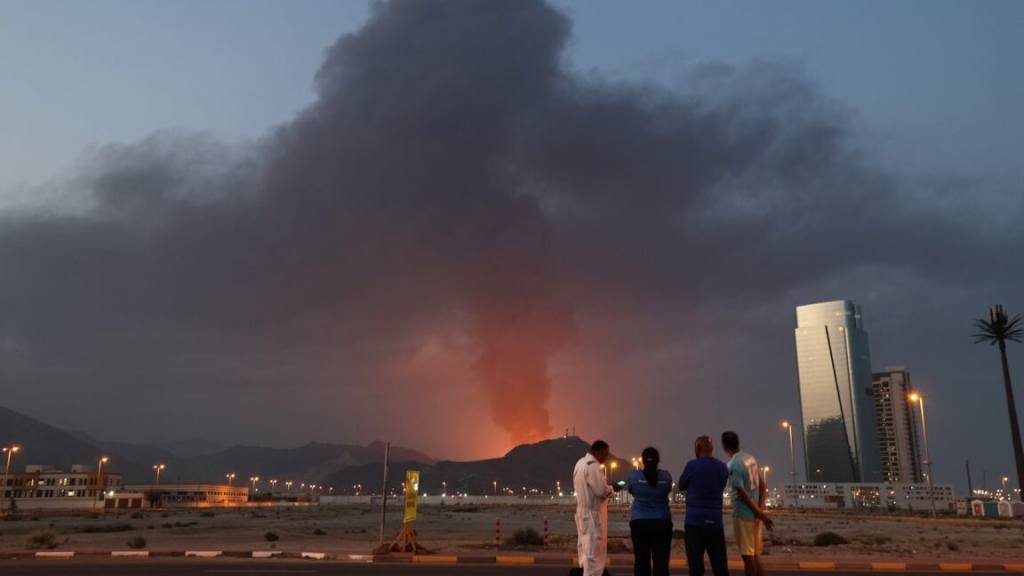
This is particularly relevant given recent events. In the past week, Planet’s imagery documented Iranian missile and drone strikes on U.S. and allied bases throughout the region. These images revealed damage to high-value targets including the U.S. Fifth Fleet headquarters in Bahrain and a $1 billion early warning radar installation in Qatar—a system specifically designed to track incoming projectiles.
The Broader Context: Commercial Satellites in Modern Warfare
Planet’s decision highlights a growing challenge in modern warfare: the role of commercial satellite companies in conflict zones. Unlike the Cold War era, when satellite reconnaissance was exclusively the domain of national governments, today’s commercial providers offer capabilities that were once the sole preserve of superpowers.
This democratization of space-based intelligence creates both opportunities and risks. On one hand, it enables unprecedented transparency and accountability—journalists can verify military claims, researchers can monitor environmental damage, and civilians can better understand conflicts affecting their regions. On the other hand, it means that commercial companies must navigate complex ethical and security considerations that were previously the exclusive domain of government agencies.
Industry Implications and Precedents
Planet’s move sets an important precedent for how commercial satellite companies might respond to conflicts in the future. While the company hasn’t indicated how long these restrictions will remain in place, the decision suggests that commercial providers may increasingly need to balance their commitment to open data access against legitimate security concerns.
Other satellite imagery companies may face similar decisions in future conflicts. The question of whether to restrict access, and under what circumstances, will likely become an increasingly important consideration for the industry as commercial space capabilities continue to expand.
Technical Considerations
From a technical standpoint, implementing such a delay is relatively straightforward for Planet. The company’s satellites continuously collect data, which is then processed and archived. Adding a temporal restriction to the release process doesn’t require any changes to the satellites’ operations or the data collection itself—it’s simply a matter of controlling when processed imagery becomes available to different user categories.
The Human Element
Behind the technical and strategic considerations are real human stakes. The Middle East conflict has already resulted in casualties and displacement, with the potential for further escalation. Planet’s decision, while primarily motivated by security concerns, also reflects the human reality that commercial technology companies must sometimes make difficult choices when their products intersect with active conflicts.
Looking Forward
As the situation in the Middle East continues to evolve, Planet’s policy will likely adapt accordingly. The company may extend, modify, or lift these restrictions based on how the conflict develops. For now, though, the 96-hour delay represents a significant intervention by a commercial entity in the flow of information during wartime—a reminder that in our interconnected world, the lines between commercial technology, national security, and conflict are increasingly blurred.
The decision also raises questions about the future role of commercial satellite companies in global conflicts. As these companies’ capabilities continue to grow, they may find themselves increasingly called upon to make judgment calls about information access that were once the exclusive domain of governments and militaries. How they navigate these responsibilities will likely shape not just their own futures, but also the evolving landscape of modern warfare and international conflict.
Tags: Planet Labs, satellite imagery, Middle East conflict, commercial satellites, overhead intelligence, Battle Damage Assessment, military technology, geospatial intelligence, space industry, conflict reporting
Viral Phrases:
- “Commercial satellites caught in the crossfire of modern warfare”
- “The 96-hour delay that could change conflict reporting forever”
- “When your satellite imagery becomes a battlefield asset”
- “Planet Labs draws a line in the sand—literally”
- “The new front line: commercial space companies vs. conflict zones”
- “Satellite imagery: The unexpected casualty of Middle East tensions”
- “From Earth observation to conflict observation: Planet’s pivotal moment”
- “The four-day wait that could save lives or compromise missions”
- “When commercial tech meets military strategy: A delicate balancing act”
- “The satellites that see everything—but won’t show you everything”
,


Leave a Reply
Want to join the discussion?Feel free to contribute!