
This Jammer Wants to Block Always-Listening AI Wearables. It Probably Won’t Work
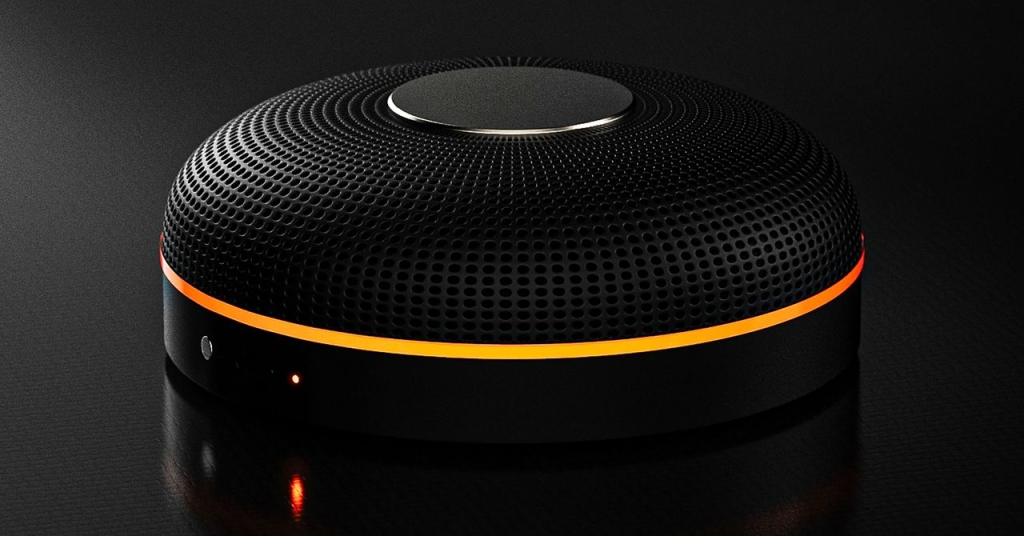
Tech’s “Cone of Silence” Sparks Controversy: Does the Spectre I Really Work?
The tech world is buzzing over the Spectre I, a new privacy device that claims to detect and block hidden microphones in your vicinity. But as excitement builds, so does skepticism from engineers and cybersecurity experts. Is this the future of personal privacy, or just clever marketing wrapped in high-tech jargon?
The Spectre I, developed by Deveillance, promises to be a portable “cone of silence” — a real-world version of the iconic device from Dune that blocks all surveillance. According to the company, the device can locate nearby microphones by detecting radio frequencies (RF) and even disrupt their operation using ultrasonic jamming. Sounds revolutionary, right? Well, not everyone is convinced.
The Science Under Scrutiny
Critics argue that the Spectre I’s core claims don’t hold up under technical scrutiny. Jordan, an engineer who built a test device to analyze RF signatures in microphones, told WIRED that if the Spectre could truly detect and recognize components via RF emissions as claimed, it would be “transformative to technology.” He added, “You’d be able to do radio astronomy in Manhattan.”
The issue lies in the physics. Detecting a microphone’s RF emissions is notoriously difficult unless the sensor is placed extremely close to the device. Objects in a room can scatter and distort frequencies, making precise detection nearly impossible. Plus, there’s the question of ultrasonic emissions — while they might jam microphones, they could also be annoying or even harmful to humans and pets, especially since some animals are highly sensitive to high-frequency sounds.
High-Tech Hype or Real Innovation?
Deveillance is also exploring the integration of nonlinear junction detection (NLJD), a high-frequency radio signal used by security professionals to find hidden bugs. However, NLJD detectors are expensive and typically reserved for military or professional security operations. Bringing this tech to a consumer device raises questions about feasibility and cost.
Dave Jones, a well-known engineer and YouTuber behind the popular EEVblog channel, was blunt in his assessment: “They simply cannot do this.” He accused Deveillance of using “classic trick” wording to imply the device can detect every type of microphone, when in reality it might only scan for Bluetooth audio devices. Baradari, representing Deveillance, maintains that the Spectre uses a combination of RF and Bluetooth Low Energy to detect microphones.
Proof or Puffery?
When WIRED asked for evidence of the Spectre I’s effectiveness, Deveillance shared short video clips showing people listening to audio clips on their phones — allegedly jammed by the device. However, these videos do little to prove the technology works as advertised. Without independent testing or peer-reviewed data, the claims remain unverified.
A Viral Moment for Privacy
Despite the technical doubts, the Spectre I has struck a chord with the public. John Scott-Railton, a cybersecurity researcher at Citizen Lab, sees the device’s viral popularity as a sign of growing consumer demand for privacy tools. “The silver lining of this blowing up is that it is a Ring-like moment that highlights how quickly and intensely consumer attitudes have shifted around pervasive recording devices,” he said.
Cooper Quintin, a senior staff technologist at the Electronic Frontier Foundation, echoed this sentiment. Even if the Spectre I’s technology is flawed, he appreciates the effort to create privacy-protecting devices rather than tools designed to extract more data from users.
The Road Ahead
Baradari acknowledges that the tech is still in development and welcomes the critiques as opportunities to improve. “I actually appreciate those comments, because they’re making me think and see more things as well,” she said. The company’s website now boldly states, “Our goal is to make the cone of silence become reality.”
Whether the Spectre I becomes a groundbreaking privacy tool or a cautionary tale about overhyped tech remains to be seen. But one thing is clear: the public’s hunger for privacy solutions is real, and companies are racing to meet that demand — even if the science isn’t quite there yet.
Tags: #SpectreI #PrivacyTech #ConeOfSilence #MicrophoneDetection #UltrasonicJamming #RFDetection #TechControversy #Deveillance #PrivacyConcerns #Cybersecurity #EEVblog #CitizenLab #EFF #ViralTech #FutureOfPrivacy
Viral Sentences:
- “If this technology works, it could be a boon for many.”
- “They simply cannot do this.”
- “You’d be able to do radio astronomy in Manhattan.”
- “Our goal is to make the cone of silence become reality.”
- “It is nice to see a company creating something to protect privacy instead of working on new and creative ways to extract data from us.”
- “The silver lining of this blowing up is that it is a Ring-like moment.”
- “We need to be building products that do all the cool things that people want but that don’t have the massive privacy- and consent-violation undertow.”
,

Leave a Reply
Want to join the discussion?Feel free to contribute!