
Here’s How Much Faster MacBook Air Gets With M5 Chip vs. M4 Chip
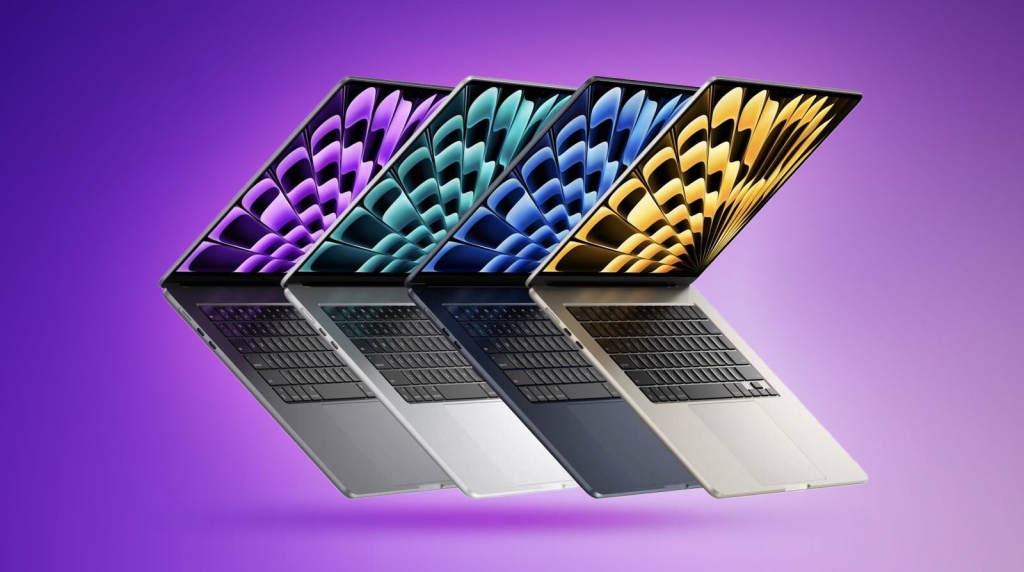
Apple’s M5 MacBook Air: The Unexpected Speed Boost That’s Shaking Up the Laptop Market
Apple just dropped a bombshell on the laptop world, and it’s not what anyone expected. The new MacBook Air with M5 chip has leaked benchmark scores that reveal a shocking 15% performance boost over its M4 predecessor, and tech enthusiasts are going absolutely wild.
The Numbers That Matter
TechRadar’s Lance Ulanoff just unleashed the first real-world Geekbench 6 results for the M5 MacBook Air, and they’re causing seismic waves through the tech community. The 10-core CPU powerhouse scored an impressive 17,073 in multi-core performance, leaving the M4 model’s 14,731 score in the dust.
Let that sink in for a moment. We’re talking about a mid-generation refresh that’s actually faster than some professional-grade MacBook Pros from just a few years ago. The M5 Air is now 16% faster than the M3 Pro MacBook Pro from 2023, which is absolutely mind-blowing for what’s supposed to be Apple’s “entry-level” laptop.
What This Means for You
If you’re sitting there thinking, “Do I really need this upgrade?” – the answer might surprise you. That 15% boost translates to real-world performance that you can actually feel. Apps launch faster, multitasking becomes smoother, and those AI-powered features Apple keeps talking about? They’re about to get a serious shot of adrenaline.
The M5 chip brings more than just raw speed. It’s packing enhanced neural engine capabilities for on-device AI processing, improved energy efficiency (hello, better battery life!), and support for more connected displays than ever before. This isn’t just an incremental update – it’s a genuine leap forward.
How It Stacks Up Against the Competition
Let’s break down the Geekbench hierarchy because these numbers tell a fascinating story:
- M5 Max MacBook Pro: 29,233 (for the pros who need absolute power)
- M3 Ultra Mac Studio: 27,726 (desktop-level performance)
- M4 Max MacBook Pro: 25,702 (still crushing it)
- M4 Pro MacBook Pro: 22,490 (professional territory)
- M3 Max MacBook Pro: 20,960 (last year’s flagship)
- M5 MacBook Air: 17,073 (the dark horse)
- M3 Pro MacBook Pro: 15,260 (getting outpaced by the Air!)
- M4 MacBook Air: 14,731 (still plenty fast)
- M2 Pro MacBook Pro: 14,451 (older but still capable)
The fact that the M5 Air is nipping at the heels of last year’s MacBook Pro models is sending shockwaves through the industry. Why pay more for a Pro when the Air is this capable?
The Strategic Genius Behind Apple’s Timing
Here’s where it gets really interesting. Apple didn’t just randomly decide to upgrade the Air. This move is pure strategic brilliance. By putting the M5 in the Air, they’re effectively making their entire laptop lineup feel fresh and modern without cannibalizing sales of their higher-end models.
The M5 was already in the 14-inch MacBook Pro and iPad Pro from last year, so this isn’t entirely new silicon. But the fact that Apple is now putting it in their most popular laptop model shows they’re confident enough in the performance to make it their mainstream offering.
Pre-Order Madness Begins
The new M5 MacBook Air is available for pre-order right now, with units shipping on March 11. If history is any indication, these are going to sell out fast. The combination of improved performance, better battery life, and Apple’s legendary build quality makes this one of the most compelling laptop upgrades in years.
What About the MacBook Neo?
Just when you thought things couldn’t get more interesting, Apple threw another curveball with the MacBook Neo announcement. This $599 device with the A18 Pro chip is positioning itself as the ultimate budget Mac, and early benchmarks show it’s surprisingly capable – almost matching the original M1 MacBook Air in performance.
The Neo scored 8,668 in multi-core Geekbench, which is impressive for a device that costs less than half the price of the M5 Air. It’s clear Apple is going after every segment of the market, from budget-conscious buyers to power users who need every ounce of performance.
The Bigger Picture
This M5 Air launch represents something bigger than just a laptop upgrade. It’s a statement about where Apple thinks computing is headed. With enhanced AI capabilities, better energy efficiency, and performance that rivals professional machines from just a few years ago, Apple is making it clear that the future of computing is here – and it’s more accessible than ever.
The laptop market is about to get very interesting. With Microsoft pushing Copilot+ PCs, Qualcomm’s Snapdragon X Elite making waves, and now Apple’s M5 Air raising the bar, consumers are the real winners here.
The Verdict
Should you upgrade to the M5 MacBook Air? If you’re coming from an M1 or M2 model, absolutely. The performance gains are significant enough to justify the upgrade. If you have an M3 or M4, the decision is tougher – but with enhanced AI capabilities and better efficiency, there’s still a compelling case to be made.
One thing’s for sure: the M5 MacBook Air has just reset expectations for what a mainstream laptop can do, and that’s something worth getting excited about.
Viral Tags & Phrases:
- M5 MacBook Air benchmark leak
- 15% performance boost
- MacBook Air beats M3 Pro
- Apple’s strategic genius
- Budget MacBook Neo surprise
- A18 Pro chip performance
- Pre-order madness March 11
- AI processing capabilities
- Energy efficiency revolution
- Laptop market shakeup
- Geekbench 6 results
- M5 vs M4 comparison
- Entry-level powerhouse
- Silicon valley buzz
- Tech community meltdown
- Performance per dollar
- Apple ecosystem upgrade
- Neural engine enhancement
- Battery life improvement
- Display support upgrade
- Mid-generation refresh
- Silicon strategy revealed
- Mainstream computing future
- AI acceleration
- Thermal performance
- Multi-core dominance
- Single-core efficiency
- Professional-level performance
- Budget Mac revolution
- Chip architecture evolution
,


Leave a Reply
Want to join the discussion?Feel free to contribute!