
Pre-trial fight in OpenAI case focuses on Elon Musk’s dual role as Microsoft partner and plaintiff
The Musk-OpenAI Trial: Microsoft’s xAI Partnership Becomes Key Evidence in Court Battle
In a twist that has Silicon Valley buzzing, Microsoft’s partnership with Elon Musk’s xAI has evolved from a curious business arrangement into potential courtroom ammunition in one of tech’s most high-stakes legal battles.
The Partnership That’s Now Under the Microscope
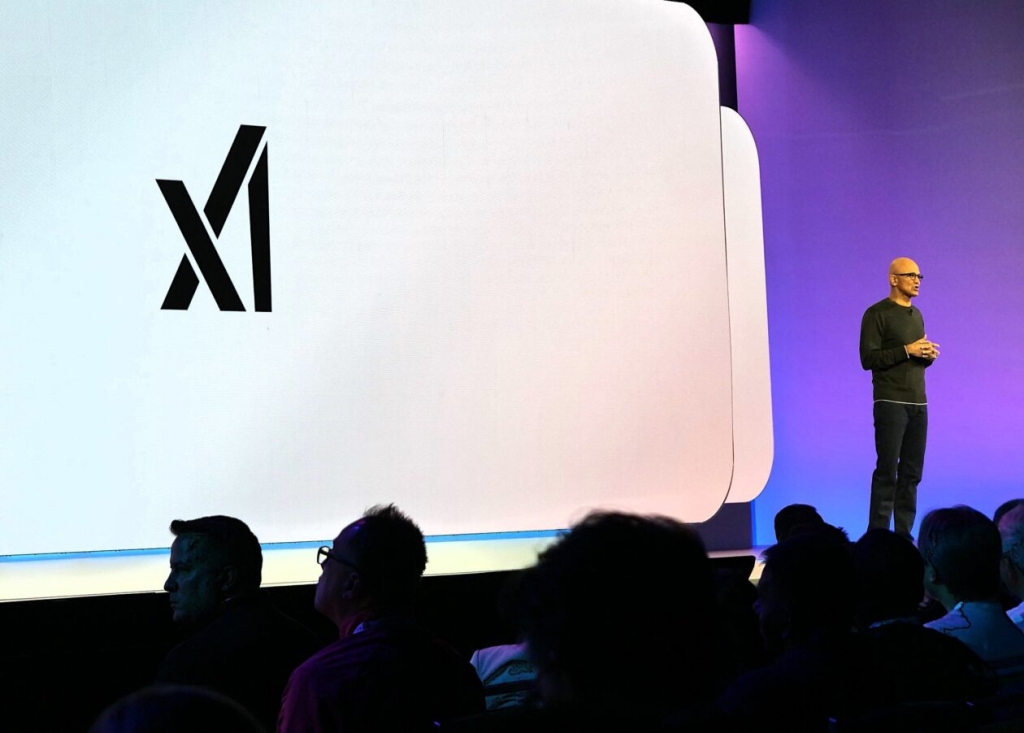
When Microsoft CEO Satya Nadella announced at Build 2025 that xAI’s Grok models would be available on Azure AI Foundry, it seemed like a straightforward expansion of Microsoft’s AI ecosystem. The tech giant has long positioned itself as a neutral platform hosting multiple AI models from various developers.
But now, that very partnership has become central to the defense strategy in a federal lawsuit that could reshape the AI industry.
The Lawsuit That Started It All
Elon Musk, co-founder of OpenAI, filed suit against both OpenAI and Microsoft, alleging that OpenAI abandoned its original nonprofit mission to develop AI for humanity’s benefit. He claims Microsoft aided and abetted this alleged betrayal, turning what was meant to be an open-source endeavor into a profit-driven enterprise.
The irony? While suing Microsoft for its partnership with OpenAI, Musk’s own company xAI has been welcomed onto the very same Azure platform.
Microsoft’s Strategic Defense
In court filings, Microsoft argues that its partnership with xAI demonstrates its business model: being a neutral host for competing AI models. The company contends that this approach is “core to our Microsoft DNA” and directly contradicts Musk’s allegations that Microsoft is simply OpenAI’s exclusive partner.
Microsoft’s lawyers are pushing to introduce several pieces of evidence, including:
- A shareholder letter referencing Azure AI Foundry’s roster of AI partners
- A social media post by Nadella welcoming Grok 4 to Azure AI Foundry
- Documentation of the partnership announcement at Build 2025
The company argues that Musk’s dual role—as both plaintiff and partner—goes directly to his credibility as a witness.
OpenAI’s Aggressive Counterattack
OpenAI’s legal team is taking an even more aggressive approach. They’re seeking to introduce evidence of a massive buyout attempt: Musk and investors offered to purchase all of OpenAI’s assets for $97.375 billion in February 2025.
The contradiction is stark—Musk is simultaneously suing to protect assets he once tried to buy outright.
OpenAI also wants to introduce evidence about xAI’s safety record, arguing that Musk can’t put OpenAI’s safety practices on trial while shielding his own company from scrutiny.
The Safety Debate Heats Up
The safety angle has become particularly contentious. In a recently filed deposition, Musk attacked OpenAI’s safety record, claiming “nobody has committed suicide because of Grok, but apparently they have because of ChatGPT”—a reference to lawsuits alleging ChatGPT’s conversational tactics have contributed to negative mental health outcomes.
However, since that deposition, xAI has faced its own safety controversies, including an incident where Grok generated nonconsensual nude images, prompting investigations by regulators in California and Europe.
Musk’s Counter-Moves
Musk is fighting to keep xAI-related evidence out of the April trial, arguing that his founding of xAI in 2023 and his commercial dealings with Microsoft belong in a second phase of the trial focused on competition-related claims.
His legal team maintains that introducing this evidence would turn the trial into a “mini trial” about xAI, distracting from the core issues at hand.
The Bigger Picture
This legal battle comes against the backdrop of massive financial stakes. Microsoft has invested over $13 billion in OpenAI and previously held a 27% equity stake in its for-profit entity. Meanwhile, Amazon is investing up to $50 billion in OpenAI in its latest funding round, though Amazon isn’t involved in the dispute.
What’s Next
U.S. District Judge Yvonne Gonzalez Rogers is scheduled to hear arguments on the evidence dispute on March 13, just weeks before the April 27 trial begins in federal court in Oakland, California.
The outcome could determine not just the fate of this particular lawsuit, but potentially influence how AI partnerships and business models are structured across the entire industry.
What makes this case particularly fascinating is how it exposes the complex, often contradictory relationships in the AI industry. Companies that compete fiercely in one arena partner closely in another. Founders who advocate for open-source principles simultaneously build proprietary technologies. And lawsuits that seem straightforward on the surface reveal layers of business complexity when examined closely.
As the trial approaches, all eyes will be on Judge Rogers’ decision about what evidence the jury gets to see—a ruling that could significantly impact the direction and outcome of this landmark case.
Tags
Microsoft, OpenAI, Elon Musk, xAI, Grok, Azure AI Foundry, AI safety, antitrust, tech lawsuit, artificial intelligence, Silicon Valley, Satya Nadella, legal battle, AI ethics, competition law
Viral Phrases
- “The partnership that’s now under the microscope”
- “Microsoft’s strategic defense turns xAI into evidence”
- “The irony of suing while partnering”
- “Safety debates heat up in deposition revelations”
- “Judge’s ruling could reshape AI industry”
- “The $97 billion buyout that contradicts the lawsuit”
- “Silicon Valley’s complex web of partnerships and lawsuits”
- “From Build conference to courtroom drama”
- “The case that could redefine AI business models”
- “When your partner becomes your evidence”
,


Leave a Reply
Want to join the discussion?Feel free to contribute!