
Tabletop gaming saved videogame RPGs
Here is the news article rewritten with a detailed, informative, and viral tone in English:
The Evolution of RPGs: How Tabletop Gaming is Influencing the Genre’s Comeback
The RPG genre has come full circle over the past few decades, with its roots in tabletop games like Dungeons & Dragons now influencing a new wave of computer RPGs. In the 1980s and 90s, classic RPGs like Ultima and Baldur’s Gate successfully adapted the mechanics and player agency of tabletop gaming for single-player experiences on desktop computers.
However, as RPGs became big business and tabletop gaming remained niche, the genre shifted. Isometric CRPGs were seen as outdated, replaced by real-time, action-based combat and cinematic storytelling focused on console audiences. Many PC gaming studios made concessions, and for a time, players mostly accepted this.
But now, tabletop gaming is back in a big way. The popularity of live play tabletop sessions and the low barrier to entry for game development have breathed new life into the genre. Studios both large and small are creating fascinating, creative RPGs that owe a debt to tabletop gaming.
My latest obsession is Esoteric Ebb, a D&D-inspired take on Disco Elysium. Like Disco Elysium, Esoteric Ebb functions like a tabletop game, full of skill checks for even mundane actions and an incredible degree of player agency. The breadth of options and reactivity in these games represent RPGs in their purest form.
Instead of being limited to a few choices in how to approach a scenario, these RPGs let you truly embody your character, offering a wealth of possible (and improbable) solutions based on numerous factors. If you want to ignore your main quest and just eat your way through a mountain of apples until you vomit, you’re allowed to do so.
Tabletop campaigns provide a framework to play within, but the stories are ultimately yours to co-author with a game master. This level of player-driven storytelling was rare in video game RPGs for a long time, which often had limited scripts despite nods to player choice.
Drawing inspiration from tabletop gaming has not only improved RPG storytelling, but also revitalized combat. For years, combat in RPGs was generally considered lackluster, but now it’s awesome again – at least in some cases.
Games like Disco Elysium eschew combat entirely, focusing on pure investigation. But Larian Studios’ over-the-top, “everything must burn” brawls in Divinity: Original Sin and Baldur’s Gate 3 have delivered some of the greatest combat scenarios ever seen in the genre. Larian emphasizes player creativity, giving you a toybox of spells, skills and abilities to wreak havoc with.
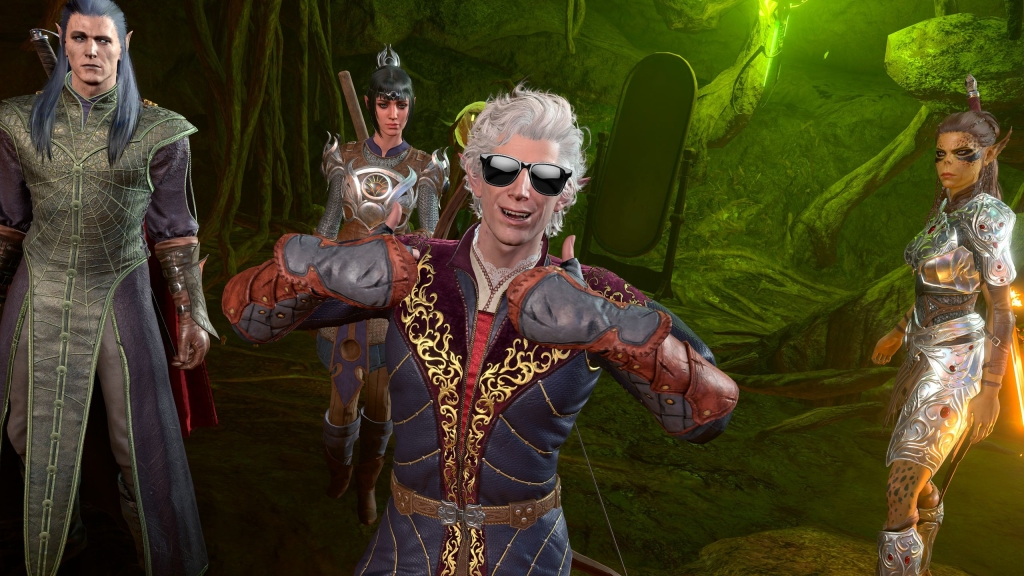
My latest Baldur’s Gate 3 playthrough has involved carving a bloody path across the Sword Coast by simply throwing everything. Every obstacle is just something waiting to be flung into the air or at an enemy. When I have nothing to hand, I’ll just throw a friend at a goblin. It’s incredible.
But Esoteric Ebb shows you don’t need elaborate, sprawling turn-based fights. Its brawls are brief, text-based affairs that play out more like a conversation. It’s some of the most fun I’ve had getting into scrapes in ages. In my first fight against a zombie, I tried to rob him and he bit my finger. He had to die (again). But since I was built for love, not war, I used my charisma to pretend to be his necromancer master and ordered him to punch himself in the head until he was re-dead.
It’s amazing I was ever satisfied with the simplistic, action-RPG combat of the past. You jump in, hit things, heal, fire off some abilities, and it’s over. I don’t mind this in loot-focused games like Diablo or Path of Exile where combat is the main focus. But in a story-driven RPG that claims to care about player agency, it’s unsatisfying.
Big budget RPGs with limited player agency and flashy action combat aren’t going away. But even some of them are taking cues from tabletop games. Cyberpunk 2077, for instance, exists because of a tabletop RPG. While it doesn’t offer the same breadth of roleplaying as Baldur’s Gate 3, it does enough to feel like more than just an action game with dialogue options.
For smaller studios especially, this is the way forward – CRPGs designed with the philosophy of tabletop gaming. Games like Esoteric Ebb, Disco Elysium and Citizen Sleeper. Games driven by great writing, dice rolls and incredible reactivity. And crucially, games that don’t need to sell millions of copies just to break even.
If you want a bit more tabletop in your modern CRPGs, here are some of my favorites:
#TabletopRPGs #CRPGs #DiscoElysium #BaldursGate3 #EsotericEbb #Cyberpunk2077 #PlayerAgency #GameDesign #IndieGames #StoryDrivenGames #DiceRolls #ReactiveStorytelling #WritingInGames #CharacterCustomization #CombatRevamp #GenreEvolution #GamingTrends #RPGCommunity
viral phrases:
– “Tabletop is back, baby!”
– “The stories are ultimately yours to co-author”
– “It’s some of the most fun I’ve had getting into scraps in ages”
– “I’ll just throw a friend at a goblin”
– “Games that don’t need to sell millions of copies just to break even”
– “CRPGs designed with the philosophy of tabletop gaming”
– “Games driven by great writing, dice rolls and incredible reactivity”,

Leave a Reply
Want to join the discussion?Feel free to contribute!