
Top Stories: MacBook Neo, iPhone 17e, Studio Display XDR, and More
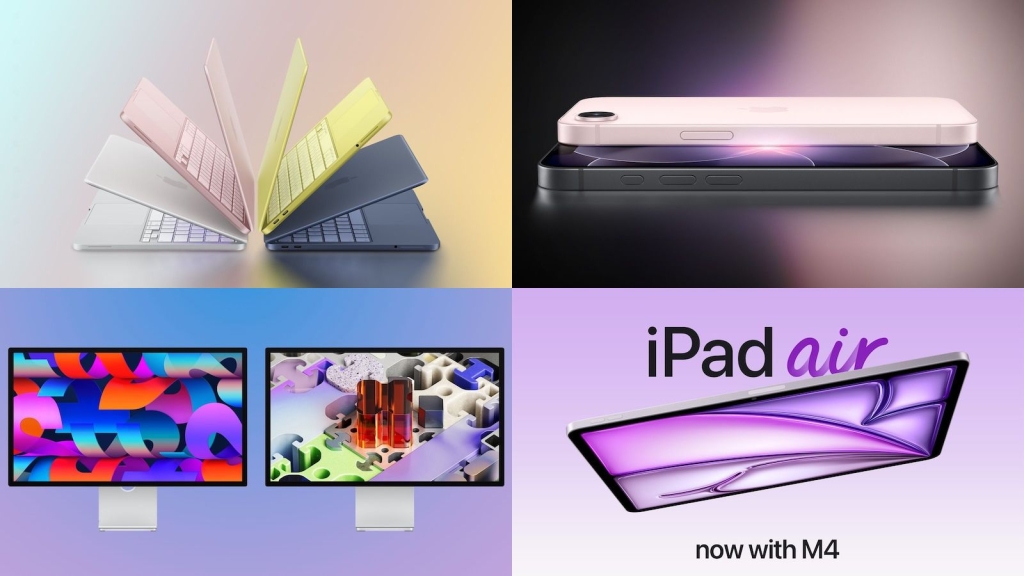
Apple’s March 2026 Product Blitz: Seven New Devices Unveiled in Three Days
What an unprecedented week for Apple enthusiasts! Over just three days—Monday through Wednesday—Apple dropped seven major product announcements that have completely reshaped the tech landscape for 2026. From budget-friendly options to powerhouse professional machines, this product launch cycle represents one of the most comprehensive refreshes we’ve seen from Cupertino in recent years.
Let’s dive deep into each announcement and explore what makes these new devices so revolutionary.
The $599 MacBook Neo: Apple’s Boldest Budget Move Yet
The surprise star of the show was undoubtedly the MacBook Neo, Apple’s first-ever consumer Mac powered by an iPhone chip. The A18 Pro processor, previously reserved for flagship iPhones, brings unprecedented performance to the budget segment. Apple claims this chip delivers up to 50% faster everyday performance compared to the best-selling Intel Core Ultra 5-equipped PCs, with 3x faster AI workloads and 2x faster photo editing capabilities.
What’s truly remarkable is the pricing strategy. At $599, Apple is targeting students, first-time Mac buyers, and budget-conscious consumers who previously wouldn’t consider a Mac. The 13-inch Liquid Retina display with 2408×1506 resolution, 500 nits brightness, and anti-reflective coating provides a premium visual experience without the premium price tag.
The design philosophy takes inspiration from the iPad, featuring uniform bezels and a notch-free display. Available in four vibrant colors, the MacBook Neo represents Apple’s understanding that budget devices don’t need to feel cheap—they just need to deliver exceptional value.
However, this aggressive pricing does come with trade-offs. The MacBook Neo lacks some of the advanced features found in higher-end MacBooks, but for its target audience, these compromises are likely acceptable given the price point and performance capabilities.
iPhone 17e: The “e” Line Evolves
Apple’s budget iPhone strategy took a significant leap forward with the iPhone 17e. Featuring the A19 chip—the same processor found in the standard iPhone 17—this device brings flagship-level performance to the $599 price point. The 6-core CPU and 4-core GPU deliver up to 2x faster performance than the iPhone 11, ensuring even long-time iPhone users will experience a substantial upgrade.
The inclusion of Apple’s latest C1X modem from the iPhone Air means users get up to 2x faster cellular performance compared to the iPhone 16e. This is particularly noteworthy as connectivity speeds continue to be a crucial factor in smartphone usability.
MagSafe returns to the e-line, addressing one of the most requested features from previous generations. Combined with faster charging capabilities, the iPhone 17e offers a complete package that doesn’t feel like a compromise device.
Available in black, white, and a new soft pink color, the iPhone 17e proves that budget smartphones can be both powerful and stylish.
MacBook Pro Gets M5 Pro and M5 Max: The Fusion Architecture Revolution
The professional laptop segment saw perhaps the most technically impressive announcements with the new MacBook Pro models featuring M5 Pro and M5 Max chips. These processors introduce Apple’s revolutionary Fusion Architecture, which bonds two third-generation 3nm dies using advanced packaging technology.
This dual-die approach represents a significant departure from Apple’s traditional single-die design philosophy. By combining two dies, Apple has effectively doubled the processing capabilities while maintaining the efficiency that Apple Silicon is known for. Each chip houses the CPU, GPU, Media Engine, Neural Engine, unified memory controller, and Thunderbolt 5 capabilities.
The M5 Pro and M5 Max chips are specifically designed for professionals who demand the absolute best performance. Whether you’re editing 8K video, training machine learning models, or running complex simulations, these chips deliver unprecedented power in a portable form factor.
Memory and storage improvements, along with Apple’s N1 networking chip enabling Wi-Fi 7 and Bluetooth 6 support, ensure these MacBook Pros are future-proofed for years to come.
Studio Display XDR: The Pro Display XDR’s Successor
Apple’s display lineup received a major overhaul with the introduction of the Studio Display XDR, which replaces the aging Pro Display XDR. The 27-inch, 5K resolution display features mini-LED backlighting with a 120Hz refresh rate and Adaptive Sync technology.
The mini-LED technology provides superior contrast ratios and brightness levels compared to traditional LCD backlighting, while the 120Hz refresh rate ensures silky-smooth scrolling and improved responsiveness. Adaptive Sync technology eliminates screen tearing and stuttering, making this display ideal for both content creation and gaming.
Priced at $3,299, the Studio Display XDR targets professionals who require color accuracy, high brightness, and smooth performance. For those seeking a more affordable option, Apple also updated the standard Studio Display with improved internals while maintaining its $1,599 price point.
iPad Air Gets M4: The Tablet Line Steps Up
The iPad Air received a significant upgrade with the introduction of Apple’s M4 chip. This brings the same powerful processor found in the iPad Pro to a more accessible price point, effectively blurring the lines between the Air and Pro lines.
The upgrade to 12GB of RAM represents a substantial improvement over the previous generation’s 8GB, enabling better multitasking and improved performance in demanding applications. The inclusion of Apple’s N1 wireless networking chip with Wi-Fi 7 support ensures future-proof connectivity, while the custom C1X modem in cellular models provides enhanced mobile performance.
Design-wise, the new iPad Air maintains the same aesthetic as its predecessor, available in blue, purple, starlight, and space gray. The pricing remains unchanged at $599 for the 11-inch model and $799 for the 13-inch model, making this upgrade particularly attractive for existing iPad Air users.
MacBook Air Gets M5 and 512GB Base Storage
The MacBook Air, Apple’s most popular laptop line, received a thoughtful refresh with the M5 chip and a significant storage upgrade. The base model now comes with 512GB of storage—double the previous generation’s 256GB—addressing one of the most common complaints about the Air line.
The M5 chip features a 10-core CPU with what Apple claims are the world’s fastest CPU cores. With configurations offering up to 10 GPU cores with Neural Accelerators in each core, the new MacBook Air delivers up to 4x faster AI task performance compared to the M4-equipped model.
The pricing increase of $100 to $1,099 for the 13-inch model and $1,299 for the 15-inch model is justified by the doubled storage capacity and improved performance. The SSD also features 2x faster read and write speeds, enhancing overall system responsiveness.
The Strategic Vision Behind This Launch
What makes this product launch cycle particularly interesting is the strategic positioning of each device. Apple has effectively created a tiered system that caters to every budget and use case:
- Budget-conscious consumers: MacBook Neo ($599) and iPhone 17e ($599)
- Balanced performance and value: iPad Air ($599-799) and MacBook Air ($1,099-1,299)
- Professional users: MacBook Pro with M5 Pro/Max and Studio Display XDR ($3,299)
This comprehensive approach ensures that regardless of your budget or needs, Apple has a device that can meet your requirements without forcing you into uncomfortable compromises.
The use of iPhone chips in MacBooks represents a significant shift in Apple’s silicon strategy, potentially allowing for more frequent updates to budget devices while reserving the most advanced Mac-specific chips for professional products.
Market Impact and What’s Next
This launch cycle is likely to have significant ripple effects throughout the tech industry. Competitors will need to respond to Apple’s aggressive pricing in the budget segments while also addressing the performance leadership demonstrated by the M5 Pro and M5 Max chips.
For consumers, this represents an excellent time to upgrade, with Apple offering meaningful improvements across its entire product lineup. The convergence of iPhone and Mac silicon also suggests interesting possibilities for future cross-device functionality and unified experiences.
As we look ahead, the success of the MacBook Neo and iPhone 17e could signal a permanent shift in how Apple approaches budget devices, potentially leading to more frequent updates and innovations in these segments.
Tags: #AppleEvent #MacBookNeo #iPhone17e #M5Chip #iPadAir #TechNews #AppleSilicon #BudgetTech #ProfessionalDevices #2026Tech
Viral Sentences:
- “Apple just made a $599 MacBook that outperforms most $1,000 PCs”
- “The iPhone 17e proves you don’t need to spend $1,000 for flagship performance”
- “Fusion Architecture is the biggest leap in Apple Silicon since the M1”
- “Budget devices that don’t feel cheap? Apple just raised the bar”
- “The MacBook Air finally has enough storage for real work”
- “iPad Air with M4 chip: when mid-range becomes flagship”
- “Apple’s March 2026 launch might be their most strategic ever”
- “The $3,299 Studio Display XDR could make the Pro Display XDR obsolete”
- “Dual-die Apple Silicon: more power without the power drain”
- “Three days, seven products: Apple’s most aggressive launch cycle yet”
,

Leave a Reply
Want to join the discussion?Feel free to contribute!