
How US Aircraft Carriers Can Navigate If Their Tech Goes Down
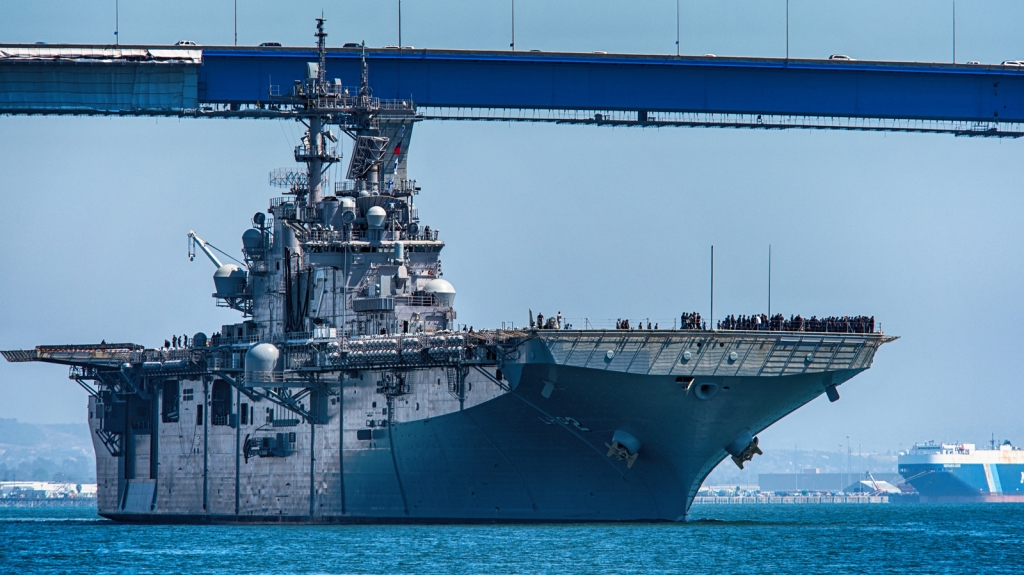
No Radar Or GPS: How US Aircraft Carriers Can Navigate If Their Tech Goes Down
In an era where military operations rely heavily on advanced technology, the United States Navy is preparing for a scenario that would take us back centuries: navigating vast oceans without the aid of modern electronic systems. When GPS signals are jammed, radar systems fail, or satellites are targeted by adversaries, how do these massive floating cities find their way across the open sea?
The answer lies in a remarkable blend of ancient maritime wisdom and modern naval training—a skill set that proved its worth during a groundbreaking 2022 mission when the USS Essex successfully crossed 1,800 nautical miles using only the stars, sun, and traditional navigation tools.
The Vulnerability of Modern Naval Technology
Modern aircraft carriers represent the pinnacle of military engineering, serving as mobile airbases capable of projecting power anywhere in the world. These vessels depend on sophisticated systems including GPS for precise positioning, radar for detecting threats and navigating in poor visibility, and complex software suites like STELLA (System to Evaluate Latitude and Longitude Astrometrically) for celestial calculations.
However, military strategists recognize a critical vulnerability: in any major conflict, these electronic systems would likely be the first targets. Anti-satellite missiles can disable GPS constellations, electronic warfare can jam radar signals, and cyberattacks could compromise onboard navigation systems. The United States Naval Institute has warned that GPS would likely be the first capability neutralized in any serious military engagement.
Understanding how anti-satellite missiles work reveals why adversaries would prioritize targeting these systems. These weapons can destroy or disable satellites in orbit, creating debris fields that could take years to clear and leaving naval forces blind in an instant. Once that happens, carriers lose their ability to precisely navigate, coordinate with other vessels, or accurately target their formidable arsenals.
Ancient Wisdom Meets Modern Naval Power
The solution to this technological vulnerability is surprisingly old-fashioned. Ships have been traversing oceans for thousands of years before the invention of electricity, let alone satellites. Ancient mariners developed sophisticated techniques for determining their position using only the sky above and the sea below. These methods proved remarkably effective—explorers discovered new continents, established trade routes, and built empires using nothing more than celestial observations and dead reckoning.
The U.S. Navy recognized that these traditional skills shouldn’t be lost to history. In 2016, the service made the decision to reinstate celestial navigation training across its officer corps, acknowledging that the ability to navigate without electronic aids could mean the difference between mission success and catastrophic failure in wartime conditions.
The USS Essex: A Modern Test of Ancient Skills
The true test of these revived skills came in 2022 when the USS Essex, an 844-foot-long amphibious assault ship, embarked on a remarkable journey from Oahu, Hawaii to San Diego, California. This wasn’t just an exercise—it was a real-world mission that would prove whether ancient navigation techniques could still serve modern military needs.
The challenge was significant: navigators were prohibited from using any electronic navigation tools. Instead, they relied exclusively on 18th-century technology—paper charts, magnetic compasses, sextants for measuring celestial angles, and the fundamental tools of pen and paper for calculations. The ship’s sophisticated electronic systems were essentially rendered inoperative for navigation purposes.
The results were impressive. Despite the learning curve involved in mastering these traditional techniques, the Essex remained within one nautical mile of its intended position for the majority of the five-day, 1,800 nautical mile (2,071 mile) journey. This level of accuracy is remarkable considering the ship was essentially navigating blind by modern standards.
The Science of Celestial Navigation
Celestial navigation works by using the positions of celestial bodies—primarily the sun, moon, planets, and stars—to determine a ship’s position on Earth’s surface. The fundamental principle involves measuring the angle between a celestial body and the horizon using a sextant. This angle, combined with the exact time of observation from a chronometer, allows navigators to calculate their position through spherical trigonometry.
During daylight hours, the sun serves as the primary reference point. At night, navigators can use dozens of stars with known positions, including the North Star (Polaris) in the Northern Hemisphere, which indicates true north. The moon and planets can also serve as reference points when visible.
The process requires extensive mathematical calculations, typically performed using sight reduction tables or, in modern practice, computer software. However, during the Essex’s journey, all calculations had to be done manually, adding another layer of complexity to the mission.
Why This Matters for National Security
The successful completion of this mission demonstrates that the U.S. Navy hasn’t forgotten the lessons of history. In an age where adversaries are developing increasingly sophisticated means of disrupting electronic systems, maintaining these traditional skills provides a crucial hedge against technological vulnerability.
The implications extend beyond just navigation. If a carrier group can maintain its position and course without electronic aids, it can continue to coordinate with other vessels using traditional signal methods, maintain operational readiness, and potentially avoid threats even when cut off from modern communication and navigation systems.
This capability also serves as a deterrent. Potential adversaries must now consider that even if they successfully target American satellite systems and electronic infrastructure, U.S. naval forces retain the ability to operate effectively using time-tested methods. This resilience in capability could influence strategic calculations in potential conflict scenarios.
Training the Next Generation of Celestial Navigators
The reinstatement of celestial navigation training in 2016 marked a significant shift in naval education. Young officers who grew up with smartphones and GPS in their pockets must now learn skills that their 18th-century predecessors would recognize immediately. This training involves not just the technical aspects of using sextants and performing calculations, but also developing the intuition and experience that comes from understanding the rhythms of the sea and sky.
The USS Essex mission served as both a practical demonstration and a training opportunity. The “learning curve” mentioned in reports suggests that even experienced naval officers required practice to regain proficiency in these skills. This highlights the importance of regular exercises and the need to maintain these capabilities even as technology continues to advance.
The Future of Naval Navigation
While modern technology remains essential for the complex operations that aircraft carriers perform, the successful integration of traditional navigation methods provides a crucial backup system. The future of naval navigation likely involves a hybrid approach—leveraging the precision and capabilities of modern systems while maintaining the resilience and independence that comes from traditional skills.
This approach reflects a broader trend in military thinking: recognizing that technological superiority, while important, must be balanced with operational resilience. The ability to function when technology fails isn’t just a backup plan; it’s becoming an essential component of military capability in an era of increasing electronic warfare and anti-satellite threats.
The USS Essex’s journey from Hawaii to California using only the stars demonstrates that sometimes the most advanced technology isn’t electronic at all—it’s the accumulated wisdom of centuries of maritime experience, adapted for the challenges of modern naval warfare. In an age of increasing technological complexity, this blend of ancient skill and modern application may prove to be one of the Navy’s most valuable assets.
tags: #USNavy #AircraftCarriers #CelestialNavigation #MilitaryTechnology #GPS #NavalHistory #USS Essex #NavigationSkills #ElectronicWarfare #MaritimeSecurity #AncientNavigation #ModernWarfare #NavalTraining #SatelliteVulnerability #TraditionalSkills
oraciones virales: When technology fails, the stars still shine; Navy proves ancient navigation still works; Aircraft carriers going old school to stay ahead; What happens when GPS goes dark? Navy has a plan; USS Essex sails 1,800 miles using only the sky; Military’s secret weapon: 18th century navigation tools; Navy brings back celestial navigation for modern warfare; When satellites fall, sailors look up; Ancient maritime skills save modern military; Navy’s backup plan is thousands of years old; Technology is great until it’s not; The Essex proves paper charts still matter; Military prepares for GPS blackout with star power; When the lights go out, sailors use the stars; Navy’s high-tech ships rely on low-tech solutions; Celestial navigation: the ultimate cybersecurity; Aircraft carriers that can’t be jammed or hacked; Military’s insurance policy against technological failure; USS Essex: sailing through history; When modern warfare meets ancient wisdom.
,


Leave a Reply
Want to join the discussion?Feel free to contribute!