
Next-Generation Weather Satellite Captures Earth’s Atmospheric Chaos in Striking Detail
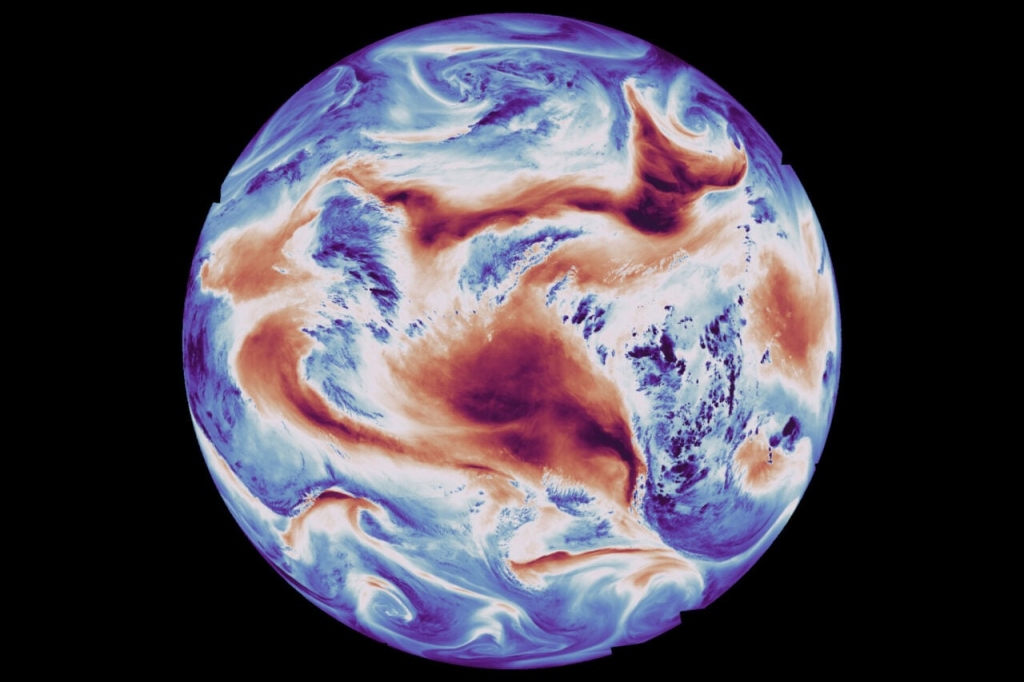
Europe’s New Weather Sentinel Sends Back Its First Stunning Views — And It’s a Game-Changer
By TechHorizon News | January 29, 2026
The European Space Agency (ESA) has just unveiled the first images from its revolutionary MTG-S (Meteosat Third Generation-Sounder) satellite, and the results are already making meteorologists and climate scientists sit up and take notice. These initial snapshots not only demonstrate the satellite’s extraordinary imaging capabilities but also signal a major leap forward in how Europe and Northern Africa will monitor and predict weather patterns in the years to come.
Launched in December 2024 aboard an Ariane 64 rocket from French Guiana, the MTG-S satellite is the first of its kind to carry an advanced infrared atmospheric sounder into geostationary orbit. Its mission? To deliver continuous, high-resolution data on temperature, humidity, and atmospheric composition across vast swathes of the Earth’s surface—data that could dramatically improve severe weather warnings, climate modeling, and long-term forecasting accuracy.
A New Era in Weather Monitoring
The newly released images, captured by the satellite’s cutting-edge infrared sounder, reveal intricate details of global air humidity distribution. The false-color visualization highlights moisture variations across the atmosphere with unprecedented clarity, showcasing everything from dry desert air to the humid tropics. The level of detail is so fine that scientists can already identify subtle atmospheric structures that were previously invisible to older satellites.
“This is more than just a pretty picture,” said Dr. Elise Moreau, ESA’s mission scientist for the MTG-S program. “These images are the first proof that our technology works exactly as designed. They represent a new era in atmospheric observation.”
Why MTG-S Matters
Weather forecasting has come a long way, but significant gaps remain—especially when it comes to short-term, high-impact events like thunderstorms, flash floods, and dense fog. Traditional weather satellites provide excellent coverage but often lack the vertical resolution needed to fully understand the three-dimensional structure of the atmosphere. That’s where MTG-S comes in.
Unlike its predecessors, the MTG-S satellite is equipped with an infrared atmospheric sounder capable of measuring temperature and humidity at different altitudes simultaneously. This means it can detect subtle changes in atmospheric conditions that often precede extreme weather events. For Europe and Northern Africa, regions frequently affected by severe storms, heatwaves, and flooding, this capability could be lifesaving.
The Technology Behind the Breakthrough
At the heart of the MTG-S mission is its Infrared Sounder (IRS), a sophisticated instrument that uses high-resolution spectroscopy to analyze the infrared light emitted by the Earth’s atmosphere. By measuring the intensity of light at different wavelengths, the IRS can determine the concentration of water vapor, carbon dioxide, and other gases at various altitudes.
This data is then fed into advanced numerical weather prediction models, allowing meteorologists to generate more accurate and timely forecasts. In practical terms, this could mean earlier warnings for severe storms, more precise tracking of hurricanes, and better predictions of heatwaves and cold snaps.
A Collaborative Triumph
The MTG-S satellite is the result of a close collaboration between the European Space Agency (ESA) and Eumetsat (the European Organisation for the Exploitation of Meteorological Satellites). The project represents a significant investment in Europe’s space and meteorological capabilities, with the ultimate goal of ensuring the continent remains at the forefront of weather monitoring technology.
“This is a proud moment for European science and industry,” said Phil Evans, Director-General of Eumetsat. “The MTG-S satellite is not just a technological achievement; it’s a commitment to protecting lives and property across our region.”
What Comes Next?
While these first images are impressive, they’re just the beginning. Over the coming months, the MTG-S satellite will undergo a rigorous calibration and validation process to ensure its data meets the highest standards of accuracy. Once operational, it will work in tandem with the MTG-I satellites (which focus on imaging) to provide a comprehensive, real-time view of Europe’s weather systems.
ESA and Eumetsat plan to launch additional MTG satellites in the coming years, creating a constellation that will guarantee continuous coverage well into the 2040s. This long-term vision underscores the importance of investing in next-generation weather infrastructure—especially as climate change increases the frequency and intensity of extreme weather events.
The Bigger Picture
The MTG-S mission is about more than just better weather forecasts. It’s about resilience in the face of a changing climate. As global temperatures rise and weather patterns become more unpredictable, having accurate, timely information about atmospheric conditions is crucial for everything from agriculture and transportation to disaster response and urban planning.
For the millions of people living in Europe and Northern Africa, the MTG-S satellite represents a new layer of protection against the ravages of extreme weather. And for the global scientific community, it offers a powerful new tool for understanding the complexities of Earth’s atmosphere.
Final Thoughts
The first images from the MTG-S satellite are more than just a technological milestone—they’re a glimpse into the future of weather forecasting. With its advanced infrared sounder, Europe has taken a bold step toward a safer, more resilient future. As the satellite continues to calibrate and begin full operations, the world will be watching closely—because when it comes to the weather, every second of warning counts.
Tags / Viral Phrases:
MTG-S satellite, ESA weather satellite, infrared atmospheric sounder, European weather forecasting, global air humidity, severe weather prediction, climate change monitoring, Eumetsat collaboration, next-gen weather tech, atmospheric data revolution, geostationary weather satellite, Meteosat Third Generation, weather resilience, extreme weather warnings, European Space Agency breakthrough, climate modeling advancement, space-based weather monitoring, infrared spectroscopy weather, atmospheric moisture mapping, European meteorological innovation.
,


Leave a Reply
Want to join the discussion?Feel free to contribute!