
Tiny, long-armed dinosaur leads to rethink of dinosaur miniaturization
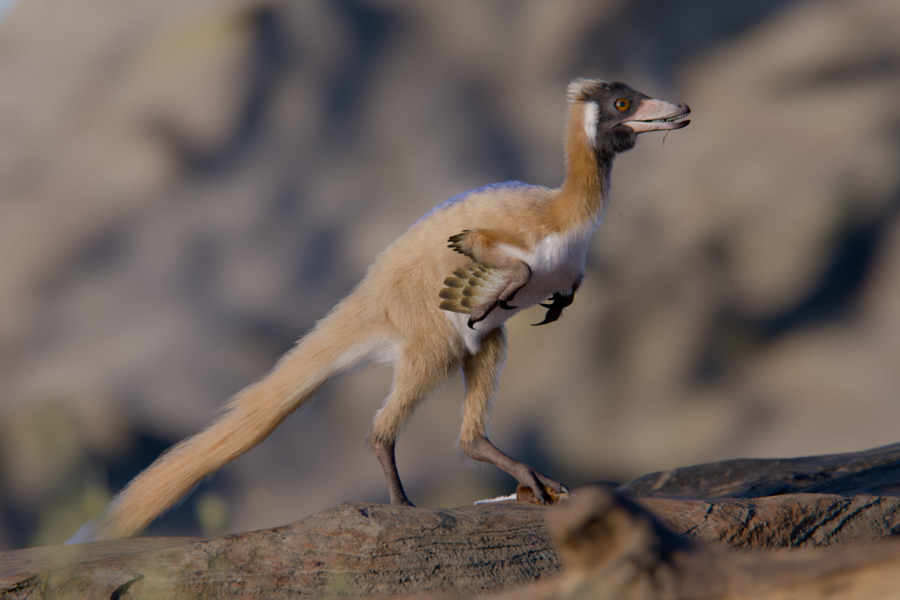
Meet Alnashetri: The Tiny Dinosaur That Rewrites the Miniaturization Story
When you think of dinosaurs, massive creatures like T. rex or long-necked sauropods probably come to mind. But what if we told you that some dinosaurs actually evolved to become incredibly small—and that a newly discovered species is completely changing how scientists understand this evolutionary process?
Researchers have just unveiled fascinating details about Alnashetri, a tiny dinosaur from the Late Cretaceous period that’s causing quite a stir in the paleontology world. This diminutive creature, weighing in at just 700 grams (about the same as a can of soup), is challenging everything we thought we knew about how and why certain dinosaurs evolved to become so small.
The Unexpected Discovery
The real surprise came when researchers realized that Alnashetri wasn’t a highly specialized, late-stage Alvarezsauroid as they initially expected. Instead, despite living during the Late Cretaceous period (roughly 70 million years ago), it occupied an early-branching position among the more basal members of its evolutionary group.
This discovery is groundbreaking because it fundamentally breaks our previous model of how these animals evolved. If miniaturization in Alvarezsauroids was strictly tied to their lifestyle as stubby-armed insect-eaters, an early-diverging species like Alnashetri should have shown some transitional features on a steady, clade-wide march toward that extreme endpoint. But that’s not what the evidence shows at all.
“It’s a very long-limbed animal, so it was probably fairly fast. My best analogy would be something like a roadrunner from the American West,” explained Dr. Makovicky, one of the lead researchers on the project.
Arms and Teeth: Breaking the Mold
Late Alvarezsaurids are famous for their tiny, robust forelimbs that were less than half the length of their femurs. These bizarre arms were so reduced that they almost seemed useless for anything other than perhaps specialized digging behaviors. Alnashetri, however, sported comparatively long forelimbs that were 61 percent of the length of its entire hindlimb—a significant difference from its later relatives.
While it had three-fingered hands with a robust first digit (a hallmark of its group), it still retained slender second and third digits, unlike its later cousins whose arms became increasingly specialized and reduced over time.
But perhaps even more surprising are Alnashetri’s jaws and teeth. Its dentition features non-serrated teeth set into sockets, but importantly, these teeth are not extremely small as they were in the late Alvarezsaurids like Shuvuuia or Jaculinykus. “This decoupled the evolution of small body size from anatomical specializations,” Makovicky explained.
A New Evolutionary Model
The team’s findings suggest that extreme miniaturization in Alvarezsaurids did not necessarily co-evolve with either the evolution of smaller arms more suitable for digging or small teeth built for crushing ants and/or termites. Instead of a clade-wide trend where the entire lineage steadily shrank over time, the new evolutionary model that includes Alnashetri suggests that Alvarezsaurid body mass fluctuated repeatedly.
Alnashetri, it turns out, achieved its 700-gram frame independently from the other, highly specialized alvarezsaurid species. This means that small body size evolved multiple times within this group, rather than being a single, unified evolutionary trend.
Why This Matters
This discovery has profound implications for our understanding of dinosaur evolution. It shows that evolutionary pathways are often more complex and winding than we initially assume. The fact that Alnashetri achieved small size without the specialized features we associate with miniaturization in its relatives suggests that there were multiple ways to be a small dinosaur, each with its own evolutionary advantages.
The research also highlights how important it is to continue discovering and studying fossils from different time periods and geographic locations. Without Alnashetri, our understanding of Alvarezsaurid evolution would be incomplete, missing this crucial piece of the puzzle that shows how these fascinating creatures adapted and evolved over millions of years.
As paleontologists continue to uncover more fossils and refine their understanding of dinosaur evolution, discoveries like Alnashetri remind us that nature often takes unexpected paths, and that the story of life on Earth is far more complex and interesting than we ever imagined.
Tags
Paleontology #Dinosaurs #Evolution #Alvarezsaurids #Fossils #Cretaceous #Miniaturization #PrehistoricLife #ScienceNews #DinosaurDiscovery
Viral Phrases
Tiny dinosaur rewrites evolutionary history, Roadrunner-like dinosaur from the Cretaceous, 700-gram dinosaur challenges scientific assumptions, Dinosaur arms got shorter over time—or did they?, When being small meant being fast, Not all tiny dinosaurs were built the same, Evolution’s unexpected detours, The dinosaur that broke all the rules, Miniature dinosaurs with massive implications, Science’s newest prehistoric puzzle piece
,


Leave a Reply
Want to join the discussion?Feel free to contribute!