
M5 Pro and M5 Max ‘super cores’ supercharge Macs
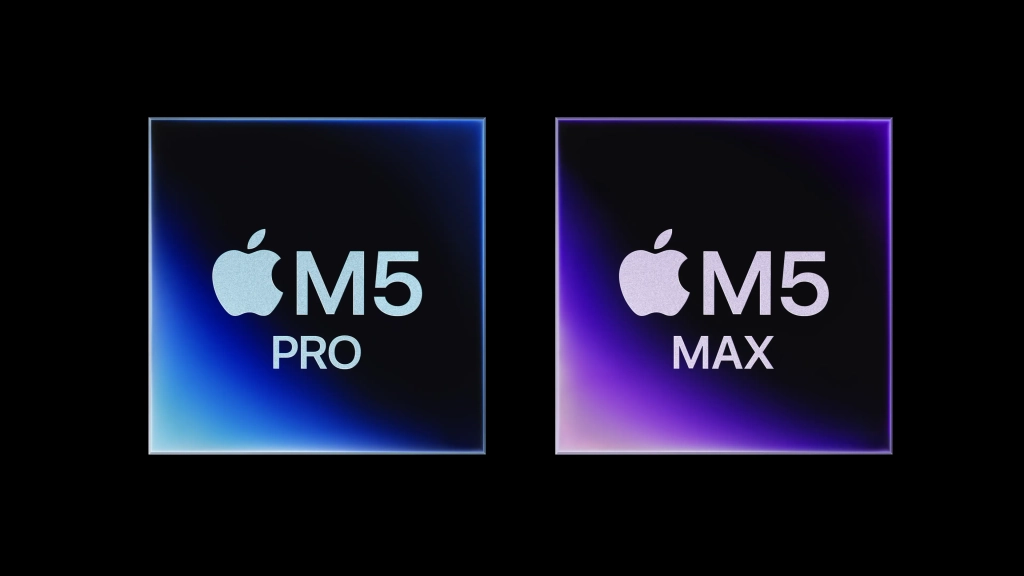
Apple Unveils M5 Pro and M5 Max: The Next Evolution in Silicon Power
Apple has once again pushed the boundaries of what’s possible in personal computing with the introduction of its M5 Pro and M5 Max chips, marking a monumental leap forward in Apple Silicon technology. Unveiled alongside new MacBook Pro models, these powerhouse processors promise to redefine performance standards for creative professionals, developers, and anyone demanding the absolute best from their machines.
The Fusion Architecture Revolution
At the heart of this technological breakthrough lies Apple’s revolutionary Fusion Architecture—a design paradigm that connects two third-generation 3-nanometer dies into a single, cohesive system-on-a-chip (SoC). This innovative approach breaks the CPU and GPU apart onto separate silicon pieces, then reconnects them using advanced packaging technology typically reserved for data center AI applications.
“Apple has just made the most important chip design change in Apple Silicon history,” noted technology analyst Josh Kale. “The M5 Pro and M5 Max are now two chips fused together, bringing data center-level engineering to the MacBook Pro.”
This dual-die configuration delivers unprecedented bandwidth and ultra-low latency, allowing Apple to scale performance dramatically while maintaining the power efficiency that has become synonymous with Apple Silicon. The result is a processor family that can handle everything from complex AI workloads to demanding 3D rendering without breaking a sweat.
Supercharged CPU Performance
Both M5 Pro and M5 Max feature an 18-core CPU architecture built around six revolutionary “super cores”—Apple’s fastest single-threaded core design to date. These super cores, first introduced in the base M5 chip, are paired with 12 all-new performance cores specifically optimized for multithreaded workloads.
The performance gains are staggering. Apple claims up to 30% higher performance for professional workloads compared to the previous generation, with multithreaded performance seeing a 2.5x improvement over the M1 Pro and M1 Max chips. For developers working in Xcode, this translates to dramatically accelerated code compilation times. For creative professionals, it means smoother, more responsive workflows even when juggling multiple demanding applications.
M5 Pro: The Perfect Balance for Demanding Professionals
The M5 Pro variant strikes an ideal balance between power and efficiency, pairing the 18-core CPU with up to a 20-core GPU and supporting up to 64GB of unified memory with bandwidth reaching 307GB/s. This configuration delivers more than four times the peak GPU compute for AI compared to the M4 Pro, and over six times compared to the M1 Pro.
Graphics performance sees a 20% uplift over its predecessor, with ray-traced applications enjoying a 35% boost. Whether you’re running complex simulations, editing 8K video, or developing sophisticated machine learning models, the M5 Pro provides more than enough horsepower for the vast majority of professional workflows.
M5 Max: Absolute Maximum Performance
For those who demand nothing but the best, the M5 Max takes everything to the extreme. Doubling down on GPU capabilities with up to 40 cores, it supports a massive 128GB of unified memory at an astounding 614GB/s bandwidth. This memory capacity and speed directly benefit users working with complex 3D scenes, massive datasets, and local large language models.
The M5 Max delivers over four times the peak GPU AI compute of the M4 Max and over six times that of the M1 Max. Graphics performance maintains the 20% improvement over previous generations, while ray-traced workloads see a 30% boost. This is the chip for professionals working on the most demanding projects—think feature film visual effects, advanced scientific computing, or training sophisticated AI models entirely on-device.
Next-Generation Neural Engine and Media Capabilities
Both chips feature a faster 16-core Neural Engine with higher-bandwidth memory connections specifically designed to accelerate Apple Intelligence features. This enhancement means smoother, more responsive AI-driven experiences across the entire operating system, from intelligent photo organization to advanced language processing.
The updated Media Engine brings hardware-accelerated ProRes and AV1 decode capabilities, ensuring seamless playback and editing of the latest video formats. Thunderbolt 5 controllers are built directly onto the chip, providing blazing-fast data transfer speeds and support for multiple high-resolution displays.
Industry-First Security Features
Apple has also introduced Memory Integrity Enforcement, described as an industry-first always-on memory safety protection that doesn’t impact performance. This feature provides an additional layer of security against sophisticated attacks, ensuring that sensitive data remains protected even in the most demanding computing environments.
Real-World Performance That Speaks Volumes
The practical implications of this technology are profound. Users can now run local large language models while simultaneously working in demanding 3D modeling software like Autodesk Maya. MATLAB users can process massive datasets with ease. Developers can compile complex codebases in record time while running multiple virtual machines.
As demonstrated in Apple’s showcase materials, the M5 Pro and M5 Max chips make it possible to juggle these intensive workloads without the thermal throttling or battery drain that typically plagues high-performance computing on the go.
Availability and What’s Next
The new MacBook Pro models powered by M5 Pro and M5 Max are available for pre-order now, with shipping and in-store availability beginning March 11. Industry watchers expect the M5 Pro to power upcoming Mac mini and Mac Studio models, potentially expanding this revolutionary architecture across Apple’s professional desktop lineup.
This release represents more than just an incremental upgrade—it’s a fundamental reimagining of what’s possible in personal computing architecture. By bringing data center-level engineering to consumer and professional devices, Apple continues to blur the lines between desktop and mobile performance, all while maintaining the legendary power efficiency that has made Apple Silicon the gold standard in the industry.
The M5 Pro and M5 Max chips aren’t just faster processors; they’re a statement about Apple’s vision for the future of computing—a future where performance limitations are a thing of the past, and where users can tackle increasingly complex workloads without compromise, whether they’re in a studio, on location, or halfway around the world.
Tags: Apple M5 Pro, M5 Max, Fusion Architecture, Apple Silicon, MacBook Pro, Neural Engine, 3-nanometer, super cores, unified memory, AI performance, ray tracing, ProRes, AV1 decode, Thunderbolt 5, Memory Integrity Enforcement
Viral phrases:
- “monumental leap forward for Apple silicon”
- “world’s fastest CPU cores”
- “unparalleled combination of performance, efficiency, and incredible on-device AI capabilities”
- “2 chips fused together”
- “AI Powerhouse”
- “
,


Leave a Reply
Want to join the discussion?Feel free to contribute!