
An AI Company Apparently Inspired by ‘the Sims’ Wants to Revolutionize Public Opinion Research
AI Simulates Human Behavior to Replace Market Research, Sparking Debate
A groundbreaking artificial intelligence company, Simile, has secured $100 million in venture capital funding to develop a revolutionary platform that could fundamentally reshape how businesses understand consumer behavior. The San Francisco-based startup, backed by Index Ventures, claims to have created a “foundation model that predicts human behavior in any situation, at any scale” – a bold assertion that has both excited investors and raised eyebrows among industry experts.
At the heart of Simile’s technology are AI agents trained on extensive chat-style interviews with real people, creating what co-founder and CEO Joon Park describes as “digital twins” or “digital clones” of human counterparts. These virtual personas are then enhanced with actual behavioral data and consumer habits to create remarkably accurate simulations of human decision-making processes.
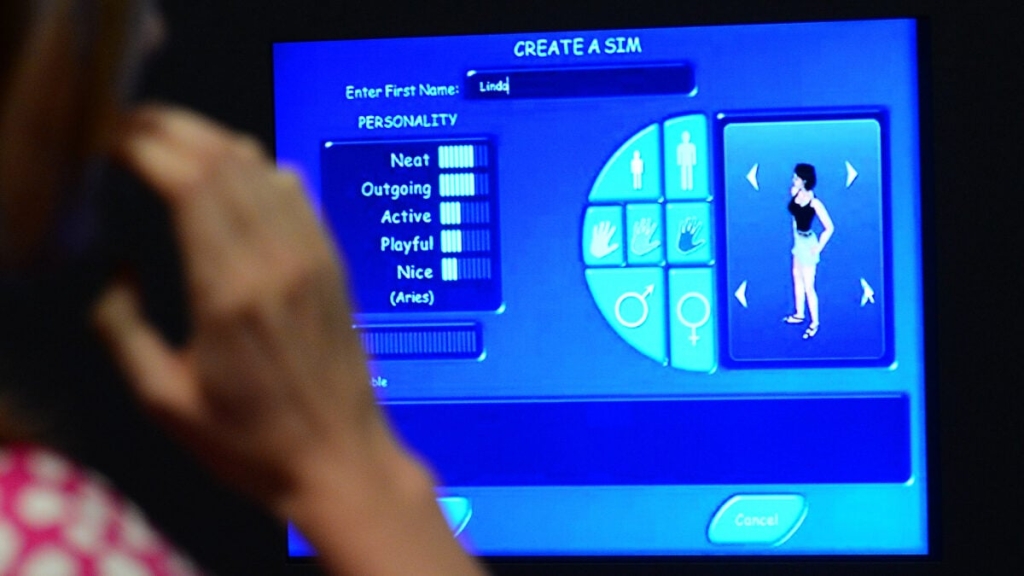
The concept, while innovative, bears an uncanny resemblance to The Sims – the iconic life simulation video game created by Maxis and published by Electronic Arts. In fact, Park’s own research paper from 2023, co-authored with Stanford University colleagues, explicitly acknowledges drawing inspiration from The Sims. The paper describes creating “generative agents” that populate “an interactive sandbox environment inspired by The Sims,” where “end users can interact with a small town of twenty-five agents using natural language.”
The technology’s potential applications are vast and varied. CVS Health, one of Simile’s early adopters, has been using the platform to gain insights into consumer behavior regarding pet medications. According to Sri Narasimhan, CVS’s vice president of enterprise customer experience and insights, the tool has been “a really big unlock” for the company. Narasimhan notes that unlike traditional focus groups or surveys, there’s “no fatigue” when questioning these AI personas – researchers can ask “infinite questions” without limitations.
CVS is now scaling up its use of the technology to include one hundred thousand simulated people for testing store layouts and new product designs. The company sees this as a cost-effective way to conduct market research without the logistical challenges and expenses associated with traditional methods.
The implications extend beyond retail. Gallup, the renowned polling organization, has partnered with Simile to create a tool that simulates the experience of asking policy questions to large groups. This collaboration aims to provide “transparent, replicable, and empirically validated” insights that could revolutionize how public opinion is measured and understood.
However, the technology raises significant ethical questions. Critics argue that relying on AI simulations rather than actual human input could lead to a dangerous echo chamber effect, where algorithms reinforce existing biases rather than uncovering genuine insights. There are also concerns about data privacy and the potential misuse of behavioral information.
The timing of Simile’s emergence is particularly noteworthy given the current crisis of confidence in traditional polling methods. Public opinion polls have faced increasing scrutiny in recent years, with many failing to accurately predict election outcomes and other major events. This has created a vacuum that AI-powered alternatives like Simile are eager to fill.
Despite the skepticism, early results from companies like CVS suggest that the technology may indeed offer valuable insights. The ability to rapidly test hypotheses and gather data from simulated populations could dramatically accelerate the pace of market research and product development.
As AI continues to advance, the line between simulation and reality becomes increasingly blurred. Simile represents a fascinating intersection of technology, psychology, and commerce – one that could either revolutionize how we understand human behavior or lead us down a path of algorithmic overconfidence.
The success of this venture will likely depend on its ability to demonstrate not just technological sophistication, but also ethical responsibility and practical value. As businesses and organizations grapple with the challenges of understanding increasingly complex consumer landscapes, tools like Simile may become indispensable – or they may serve as a cautionary tale about the limits of artificial intelligence in replicating human complexity.
What’s clear is that we’re entering a new era of market research, one where the boundaries between the virtual and the real are becoming increasingly difficult to distinguish. Whether this represents progress or peril remains to be seen, but one thing is certain: the way we gather and interpret human insights is about to change dramatically.
Tags
AI market research, digital twins, consumer behavior simulation, The Sims inspiration, venture capital funding, behavioral prediction, polling alternatives, CVS innovation, Gallup partnership, artificial intelligence, market insights, virtual personas, consumer data analysis, technology disruption, behavioral modeling
Viral Phrases
“Ask infinite questions of their AI people”, “digital twins of human counterparts”, “no fatigue in AI polling”, “The Sims of market research”, “revolutionizing how we understand human behavior”, “blurring lines between simulation and reality”, “AI agents that think and interact like humans”, “the future of consumer insights”, “replacing human polls with AI”, “behavioral prediction at scale”, “virtual focus groups that never sleep”, “AI-powered market research revolution”, “simulating human behavior with uncanny accuracy”, “the end of traditional polling as we know it”, “when AI becomes the ultimate consumer”
Viral Sentences
“The reputation of public opinion polls is not in a good place right now—or at least it wasn’t right before the 2024 election, and it’s hard to imagine the situation has improved much.”
“A new company recently profiled in the Wall Street Journal is asking the bold question, hey, what if we just replaced all that with AI?”
“Simile claims to be ‘developing a foundation model that predicts human behavior in any situation, at any scale.'”
“Actual data from people’s behaviors and consumer habits are added to make sure the clones are accurate.”
“CVS is about to scale up its ‘roster’ to one hundred thousand simulated people, and query them on ‘store layouts and new product designs.'”
“Model decisions against real-world sentiment — transparent, replicable, and empirically validated.”
“The agents in the paper have overarching desires, and interact with one another without being on rails.”
“It’s not like I have to stop with how many questions I asked. There’s no fatigue.”
“This AI people idea may sound a little familiar.”
“There is a famous simulation of consumerism—actually intended to be a parody of consumerism, its creator would later explain to the New Yorker.”
“We instantiate generative agents to populate an interactive sandbox environment inspired by The Sims, where end users can interact with a small town of twenty five agents using natural language.”
“AI agents are trained on chat-style interviews with actual people, at which point the agents become ‘digital twins’ or ‘digital clones’ of their human counterparts.”
“The technology’s potential applications are vast and varied.”
“The implications extend beyond retail.”
“The timing of Simile’s emergence is particularly noteworthy given the current crisis of confidence in traditional polling methods.”
“Despite the skepticism, early results from companies like CVS suggest that the technology may indeed offer valuable insights.”
“As AI continues to advance, the line between simulation and reality becomes increasingly blurred.”
“Whether this represents progress or peril remains to be seen, but one thing is certain: the way we gather and interpret human insights is about to change dramatically.”
,

Leave a Reply
Want to join the discussion?Feel free to contribute!