
New Catalyst Turns CO2 Into Valuable Methanol With Unprecedented Efficiency
Breakthrough Catalyst Transforms CO₂ Into Methanol With Unprecedented Efficiency
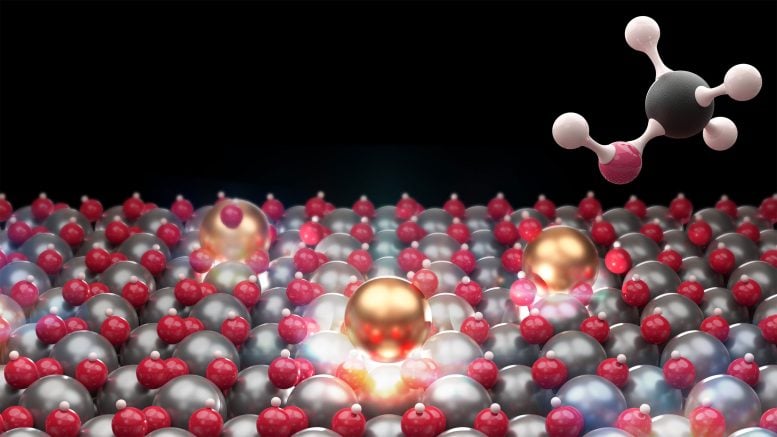
In a landmark development that could reshape industrial chemistry and climate mitigation strategies, researchers at ETH Zurich have unveiled a revolutionary catalyst capable of converting carbon dioxide into methanol with record-breaking efficiency. The breakthrough, detailed in a recent study, centers on a novel catalyst composed of isolated indium atoms, offering not only a more sustainable pathway for methanol production but also unprecedented insights into the molecular mechanics driving the reaction.
Methanol, a versatile chemical compound, serves as a critical building block for a vast array of products, including plastics, solvents, fuels, and pharmaceuticals. Traditionally, methanol is synthesized from natural gas or coal, processes that are both energy-intensive and carbon-heavy. The ability to produce methanol directly from CO₂—a major greenhouse gas—represents a dual opportunity: reducing atmospheric carbon while creating a valuable industrial feedstock.
The ETH Zurich team, led by Professor Javier Pérez-Ramírez, engineered a catalyst where individual indium atoms are dispersed across a support material, rather than being clustered in larger particles. This atomic-level dispersion maximizes the number of active sites available for the reaction, dramatically boosting efficiency. The isolated indium atoms facilitate the conversion of CO₂ and hydrogen into methanol at lower temperatures and with higher selectivity than previous catalysts.
What sets this discovery apart is not just the improved performance, but the clarity it brings to the underlying chemistry. Using advanced spectroscopic techniques, the researchers were able to observe and characterize the reaction intermediates and mechanisms at play. This “hidden chemistry” had previously eluded scientists, making it difficult to optimize catalysts for CO₂ conversion. With these new insights, the team can now fine-tune the process, potentially paving the way for even more efficient systems.
The implications are profound. Methanol produced from CO₂ could become a cornerstone of a circular carbon economy, where emissions are captured and reused rather than released into the atmosphere. Industries ranging from automotive to chemical manufacturing could benefit from a greener, more sustainable supply chain. Moreover, as renewable energy sources become more prevalent, the hydrogen needed for the reaction could be produced via electrolysis powered by wind or solar, further reducing the carbon footprint.
While the technology is still in the research phase, the ETH Zurich team is optimistic about scaling up the process for industrial use. Challenges remain, including the need for efficient CO₂ capture and the economic viability of large-scale deployment. However, the combination of high efficiency, atomic-level understanding, and potential for integration with renewable energy makes this catalyst a promising candidate for next-generation green chemistry.
This breakthrough underscores the accelerating pace of innovation in sustainable technology and highlights the critical role of fundamental research in addressing global challenges. As scientists continue to unlock the secrets of catalysis and carbon conversion, the dream of a low-carbon future moves ever closer to reality.
Tags & Viral Phrases:
- Revolutionary CO₂ to methanol catalyst
- Isolated indium atoms breakthrough
- ETH Zurich green chemistry innovation
- Carbon capture and conversion
- Sustainable methanol production
- Climate change solution
- Atomic-level catalyst design
- Green energy and circular economy
- Renewable methanol fuel
- Next-gen industrial chemistry
- Breakthrough in carbon utilization
- Methanol from thin air
- Game-changing catalyst technology
- Clean energy revolution
- Carbon-negative manufacturing
- Scientific breakthrough of the year
- Future of sustainable fuels
- Climate tech innovation
- Turning pollution into profit
- Science fiction becomes reality
,


Leave a Reply
Want to join the discussion?Feel free to contribute!