
The World’s Largest Battery Will Actually Use Rust To Power Google’s Data Center
Here’s a rewritten, expanded version of the news article with a viral, tech-savvy tone and approximately 1200 words:
Google’s Billion-Dollar Bet on Rust-Powered Energy Revolution
In a groundbreaking move that’s sending shockwaves through the tech and energy sectors, Google has just dropped a cool $1 billion on a technology that sounds like it’s straight out of a mad scientist’s notebook: batteries that run on rust. Yes, you read that right—the same reddish-brown stuff that’s been ruining your favorite tools and corroding bridges for centuries is now the star of a cutting-edge energy storage revolution.
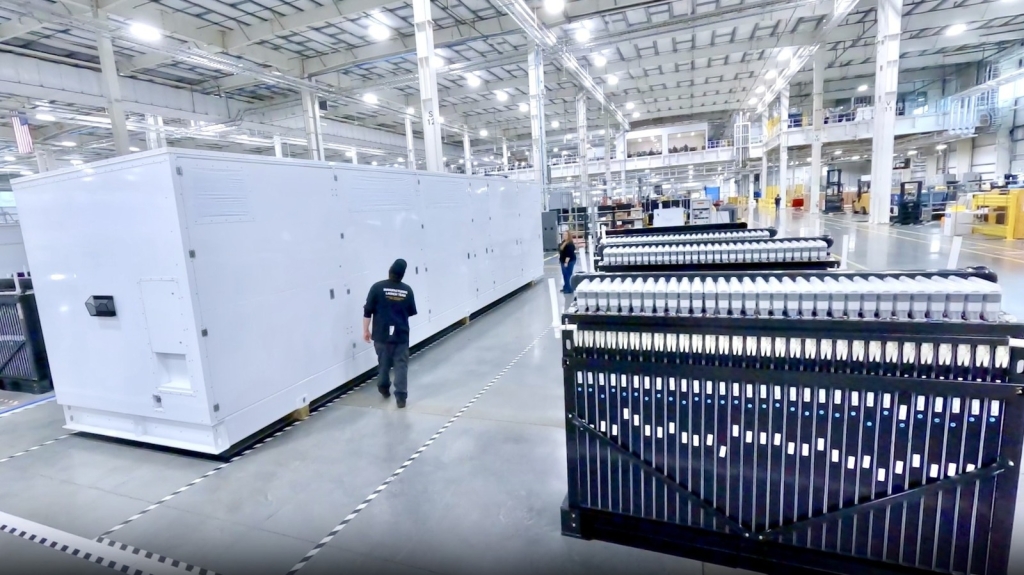
The tech giant’s massive investment is in Form Energy, a company that’s developed an iron-air battery system so innovative it’s been dubbed “the world’s largest battery” by energy experts. This isn’t just any battery—it’s a 300-megawatt powerhouse capable of delivering electricity for a mind-blowing 100 hours straight. To put that in perspective, that’s like running your entire house for over four days without a single recharge.
But here’s where it gets really wild: these batteries don’t just store energy; they “breathe” to produce it. That’s right—just like us humans, these batteries need oxygen to function. When discharging, they pull in oxygen from the air, causing the iron inside to oxidize (that’s the technical term for rusting). Then, when it’s time to recharge, they reverse the process, turning the rust back into pure iron and releasing the oxygen. It’s like watching a piece of metal go through a complete life cycle in a matter of hours.
This isn’t just a neat science experiment—it’s a game-changer for the energy industry. Traditional lithium-ion batteries, which power everything from your smartphone to electric cars, typically last only about four hours at peak capacity. Form Energy’s iron-air batteries? They can keep going for days. And that’s not even the best part.
Iron is one of the most abundant elements on Earth, making these batteries not only more efficient but also significantly cheaper to produce than their lithium counterparts. Plus, they’re non-flammable and use a water-based electrolyte, making them safer and more environmentally friendly. It’s like someone looked at all the problems with current battery technology and said, “What if we just used rust instead?”
Google’s investment is part of a larger strategy to power its data centers with clean, reliable energy. The company has already committed to securing 1,400 megawatts from wind power, 200 megawatts from solar farms, and 300 megawatts from the Xcel Energy grid. But it’s this iron-air battery system that’s really turning heads.
Xcel Energy, the company partnering with Google on this project, is so excited about the technology that they’re calling it “the largest battery project by gigawatt-hour energy capacity announced to date in the world.” That’s a pretty bold claim, but when you consider that a single cluster of these batteries can generate one megawatt while taking up just half an acre of land, it’s easy to see why they’re so enthusiastic.
But why now? Why is Google, a company known for its search engine and cloud services, suddenly so interested in rust-powered batteries? The answer lies in the growing demand for energy to power artificial intelligence and data centers. As AI becomes more sophisticated and widespread, the need for reliable, sustainable energy sources has become critical. Traditional power grids are struggling to keep up, leading tech giants like Google to look for innovative solutions.
This investment also comes at a time when the battery industry is undergoing a major shift. While lithium-ion batteries have been the gold standard for years, new technologies like solid-state batteries and sodium-ion batteries are gaining traction, especially in China. Form Energy’s iron-air batteries represent yet another alternative, one that could potentially disrupt the entire industry.
The implications of this technology extend far beyond just powering data centers. Imagine a future where entire cities could be powered by these rust-breathing batteries, storing excess energy from renewable sources like wind and solar and releasing it when needed. It could be the key to solving one of the biggest challenges in renewable energy: intermittency.
Of course, as with any new technology, there are questions and concerns. How long will these batteries actually last in real-world conditions? Can they be scaled up to meet the massive energy demands of growing cities? And perhaps most importantly, will consumers be willing to embrace a technology that sounds so counterintuitive?
Only time will tell, but one thing is certain: Google’s billion-dollar bet on rust-powered energy is a bold statement about the future of energy storage. It’s a reminder that sometimes, the most innovative solutions can come from the most unexpected places—even if that place is your old, rusty toolbox.
As we look to the future, it’s clear that the race to find sustainable, efficient energy solutions is more important than ever. And if Form Energy’s iron-air batteries live up to their promise, we might just find ourselves in a world where rust isn’t something to be avoided, but rather, something to be celebrated as the key to a cleaner, more sustainable future.
Tags and Viral Phrases:
-
RustRevolution
-
IronAirBatteries
-
GoogleEnergyInnovation
-
SustainableTech
-
FutureOfEnergyStorage
- “Breathing batteries: The tech that’s changing everything”
- “From corrosion to innovation: How rust is powering our future”
- “Google’s billion-dollar bet on the most unlikely energy source”
- “The 100-hour battery: How Form Energy is changing the game”
- “Iron vs. Lithium: The battle for battery supremacy”
- “Rust never sleeps, but now it powers our world”
- “Breathing new life into old technology”
- “The battery that eats oxygen and spits out electricity”
- “Google’s secret weapon in the energy wars”
- “Form Energy: The company making rust cool again”
- “From oxidation to innovation: The science behind iron-air batteries”
- “The rust-powered future is here, and it’s breathing”
- “How Google is betting big on the power of corrosion”
- “The battery that could solve renewable energy’s biggest problem”
- “Iron-air batteries: The technology that’s making lithium obsolete”
,

Leave a Reply
Want to join the discussion?Feel free to contribute!