
US Air Force National Guard Worries Grow After Aircraft Removed From Units
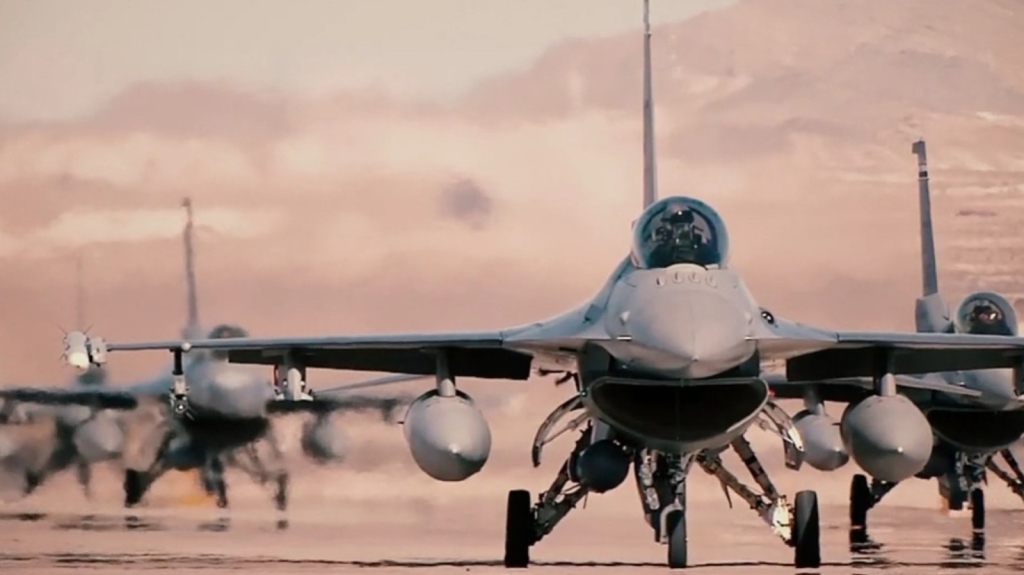
US Air National Guard Faces Uncertainty as Aging F-16s Are Retired Without Immediate Replacements
In a concerning development for America’s air defense capabilities, at least four United States Air National Guard (ANG) units are grappling with an uncertain future as their aging F-16 Fighting Falcon fighter jets are being retired without clear plans for replacement aircraft. This situation has sent ripples of worry through military leadership, as the potential loss of these units’ combat capabilities could significantly impact the nation’s rapid response readiness.
The affected units are based in strategic locations across the country: Arizona, Colorado, New Jersey, and Texas. These ANG units operate under the dual authority structure that defines the Air National Guard—primarily under state governors’ control but subject to federal activation when national security demands it. This unique positioning makes them crucial assets for both state emergency response and national defense operations.
According to reports from Aviation Week, the uncertainty surrounding these units’ futures is causing significant concern among both Air National Guard and Air Force leadership. The potential shift of these units away from their traditional combat roles to other mission profiles could create dangerous gaps in America’s ability to maintain aircraft at immediate readiness for various contingencies.
The F-16’s Storied History and Current Status
The F-16 Fighting Falcon represents one of the most successful fighter aircraft programs in aviation history. The first F-16A models rolled off production lines in Fort Worth, Texas, where General Dynamics initially manufactured them before the division was acquired by Lockheed Martin. The aircraft became operational in January 1979, marking the beginning of a four-decade legacy of aerial dominance.
The evolution of the F-16 has been remarkable, with successive blocks introducing increasingly sophisticated capabilities. The F-16C/D Block 25-30 variants entered service in 1981, followed by the Block 40-42 F-16C/D fighters in 1989, and the Block 50-52 variants in 1994. This continuous improvement program has kept the F-16 relevant despite the emergence of fifth-generation fighters.
It’s worth noting that aircraft retirement is a normal part of military aviation lifecycle management. For context, the average lifespan of the F-35 Lightning II fighter jet is approximately 8,000 flight hours. The F-16 fleet currently maintains an average service life of 17.2 years, though individual aircraft may have significantly different operational histories depending on their usage patterns and maintenance schedules.
Global F-16 Operations Continue Despite Retirements
While the United States faces these particular challenges with its Air National Guard units, the F-16 program continues to thrive globally. The United States isn’t alone in retiring older F-16s—Denmark, for instance, is also phasing out its F-16 fleet as part of modernization efforts. However, these retirements are being offset by continued production and upgrades worldwide.
As of September 2021, the U.S. Air Force maintained an inventory of 1,017 F-16C/D fighter jets, though this number fluctuates due to scheduled retirements and ongoing production. Lockheed Martin continues manufacturing F-16s, having delivered 37 Block 70-72 aircraft—the newest generation of this venerable platform—with an additional 111 units in backlog.
The global F-16 footprint is impressive, with an estimated 2,800 F-16 fighters operating across 29 different countries. These aircraft have accumulated nearly 20 million total flight hours, demonstrating their reliability and versatility across diverse operational environments and mission types.
Combat Legacy and Modern Operations
The F-16’s combat record speaks volumes about its capabilities and reliability. According to USAF fact sheets, the aircraft’s primary function has evolved from a pure air superiority fighter to a true multirole platform capable of executing complex strike missions. During Operation Desert Storm, F-16s conducted sorties attacking critical targets including airfields, military production facilities, Scud missile sites, and various other high-value targets in the Persian Gulf theater.
The aircraft’s versatility became even more apparent during subsequent operations. During Operation Allied Force, F-16s demonstrated their ability to operate in complex air defense environments. Following the September 11, 2001 attacks, these fighters played crucial roles in operations Noble Eagle (homeland defense), Enduring Freedom (Afghanistan), and Iraqi Freedom, showcasing their adaptability to different operational concepts and threat environments.
In more recent developments, the 2026 Iran conflict has prompted Turkey to deploy six of its F-16 fighter jets to strengthen the defense of a Turkish community in northern Cyprus on March 9, 2026. This deployment underscores the F-16’s continued relevance in contemporary geopolitical tensions and its value as a deterrent asset in regional conflicts.
Implications for National Security
The retirement of F-16s from these Air National Guard units without immediate replacement plans raises serious questions about America’s air defense posture. These units represent a critical component of the nation’s ability to rapidly respond to various contingencies, from natural disasters requiring aerial support to potential military threats requiring immediate air superiority capabilities.
The concern among military leadership stems from the understanding that losing these units’ combat capabilities could create dangerous gaps in coverage. The Air National Guard provides a unique capability—units that can transition from state-controlled emergency response to federally-controlled combat operations within hours. This flexibility is particularly valuable in an era of increasing geopolitical tensions and unpredictable global events.
As the military continues to evaluate options for these units, the broader question remains: how will the United States maintain its air superiority and rapid response capabilities while transitioning to next-generation platforms? The answer to this question will significantly impact America’s strategic position and ability to project power globally in the coming decades.
Tags:
F-16 retirement, Air National Guard, military aviation, US Air Force, fighter jets, national security, Lockheed Martin, aircraft modernization, combat readiness, aerial superiority
Viral Sentences:
“Four Air National Guard units lose F-16s with no replacement plans—America’s air defense at risk!”
“17-year-old F-16s being retired as Denmark follows suit—is this the end of an era?”
“2,800 F-16s worldwide, 20 million flight hours—still dominating the skies after 45 years!”
“Turkey deploys F-16s to Cyprus as 2026 Iran conflict escalates—Cold War vibes return!”
“Lockheed Martin still building F-16s—37 delivered, 111 on backlog. Old dog, new tricks!”
“Air National Guard: State-controlled but federally deployable. The ultimate military hybrid!”
“F-16s attacked Scud sites in Desert Storm, flew Noble Eagle after 9/11, now facing retirement!”
“17.2-year average service life—how long until these aging fighters become museum pieces?”
“Multirole fighter jets: From air superiority to disaster response, the F-16 does it all!”
“Without these F-16 units, America’s rapid response capability takes a serious hit!”
,


Leave a Reply
Want to join the discussion?Feel free to contribute!