
Yann LeCun’s AMI Labs raises $1.03 billion to build world models
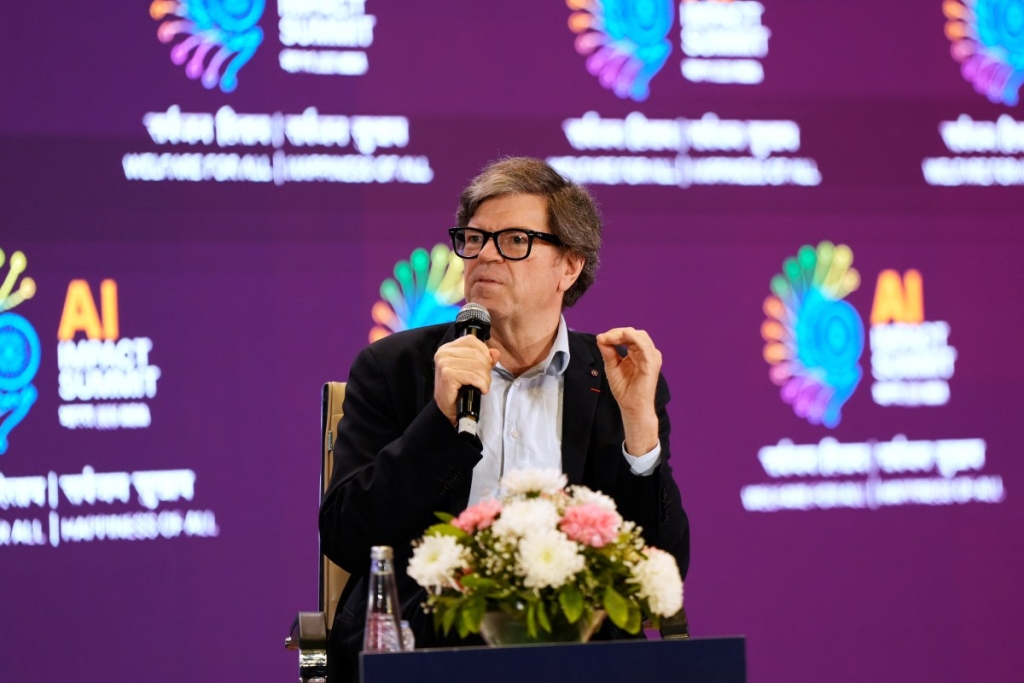
AMI Labs Secures $1.03B to Pioneer World Models—The Next AI Revolution
In a landmark move that signals the next frontier in artificial intelligence, AMI Labs—a bold new venture co-founded by Turing Prize winner Yann LeCun—has raised a staggering $1.03 billion at a pre-money valuation of $3.5 billion. The Paris-based AI research lab is setting its sights on building world models, a cutting-edge approach to AI that learns directly from the physical world, not just from language.
This isn’t just another generative AI startup. AMI Labs is aiming for something far more ambitious: AI that truly understands reality. And with LeCun—often called the “Godfather of AI”—at the helm as chairman, the startup is attracting both massive investment and intense curiosity from the tech world.
Why World Models Matter
World models represent a paradigm shift in AI. Unlike large language models (LLMs), which can hallucinate or misinterpret reality, world models are designed to simulate and understand the physical world. Think of it as AI that can predict what happens next in a real-world scenario—whether that’s diagnosing a patient, navigating a robot through a busy street, or modeling climate change.
“My prediction is that ‘world models’ will be the next buzzword,” said AMI Labs CEO Alexandre LeBrun in an exclusive interview with TechCrunch. “In six months, every company will call itself a world model to raise funding.” But LeBrun believes AMI Labs is different—its goal is to understand the real world, not just mimic human language.
A Team of Titans
AMI Labs isn’t just backed by big money—it’s backed by big brains. In addition to LeCun, the team includes:
- Alexandre LeBrun, CEO and former CEO of Nabla, a leading digital health startup
- Laurent Solly, Meta’s VP for Europe, now COO of AMI Labs
- Saining Xie, chief science officer and renowned AI researcher
- Pascale Fung, chief research & innovation officer
- Michael Rabbat, VP of world models
This powerhouse team is betting that the future of AI lies in understanding the world, not just processing text.
First Stop: Healthcare
AMI Labs’ first partner is Nabla, the digital health startup where LeBrun previously served as CEO. The partnership makes sense: in healthcare, hallucinations from LLMs can be life-threatening. World models, by contrast, could offer more reliable, grounded insights.
“We are developing world models that seek to understand the world, and you can’t do that locked up in a lab,” LeBrun said. “At some point, we need to put the model in a real-world situation with real data and real evaluations.”
A Long Road Ahead
Don’t expect AMI Labs to launch a commercial product overnight. Unlike typical AI startups that can release a product in three months and hit $10 million in annual recurring revenue in a year, AMI Labs is playing the long game. Its technology is based on JEPA (Joint Embedding Predictive Architecture), a framework proposed by LeCun in 2022.
“It could take years for world models to go from theory to commercial applications,” LeBrun admitted. But the startup’s backers are willing to wait—and invest accordingly.
A Who’s Who of Investors
The funding round was co-led by Cathay Innovation, Greycroft, Hiro Capital, HV Capital, and Bezos Expeditions. Other notable participants include NVIDIA, Samsung, Sea, Temasek, Toyota Ventures, and French players like Publicis Groupe and Groupe Industriel Marcel Dassault.
Individual investors include tech luminaries like Tim and Rosemary Berners-Lee, Jim Breyer, Mark Cuban, Mark Leslie, Xavier Niel, and Eric Schmidt. This is not just a bet on technology—it’s a bet on the team and the vision.
Open Science, Open Future
True to LeCun’s beliefs, AMI Labs plans to publish papers and release open-source code as it progresses. “We think things move faster when they’re open,” LeBrun said. “It’s in our best interest to build a community and a research ecosystem around us.”
This commitment to open science is increasingly rare in the AI world, but AMI Labs is doubling down on it.
The Race for World Models
AMI Labs isn’t alone in this race. Fei-Fei Li’s World Labs raised $1 billion last month, while SpAItial secured a $13 million seed round—unusually large for a European startup. But with $1.03 billion in fresh capital, AMI Labs is now one of the best-funded players in the space.
What’s Next?
AMI Labs will use the funding to build out its team in four key locations: Paris (headquarters), New York (where LeCun teaches at NYU), Montreal (where Rabbat is based), and Singapore (to tap into Asian talent and markets).
While the startup has no immediate plans to generate revenue, it’s already engaging with prospective customers. Nabla is the first disclosed partner, but more are expected to follow.
The Bottom Line
AMI Labs is not just another AI startup. It’s a bet on the future of intelligence itself—a future where AI doesn’t just talk, but truly understands the world. With $1.03 billion in funding, a world-class team, and a commitment to open science, AMI Labs is poised to lead the next wave of AI innovation.
Whether world models become the next big thing or not, one thing is clear: the race to understand reality is on—and AMI Labs is running full speed ahead.
Tags: #AIModels #WorldModels #YannLeCun #AMILabs #AI #MachineLearning #TechCrunch #Nabla #OpenSourceAI #FutureOfAI #TechInvestment #SiliconValley #ParisTech #HealthcareAI #JEPA #DeepLearning #TechInnovation #AIResearch #NextGenAI #ViralTechNews
Viral Phrases: “The next AI buzzword,” “AI that understands reality,” “Godfather of AI,” “betting on the future of intelligence,” “open science in AI,” “world models race heats up,” “Paris-based AI lab raises $1B,” “LeCun’s bold new venture,” “AI that learns from the real world,” “the long game in AI,” “tech titans back world models,” “AI healthcare revolution,” “open-source AI future,” “the race to understand reality.”
,


Leave a Reply
Want to join the discussion?Feel free to contribute!