
One vaccine may provide broad protection against many respiratory infections and allergens
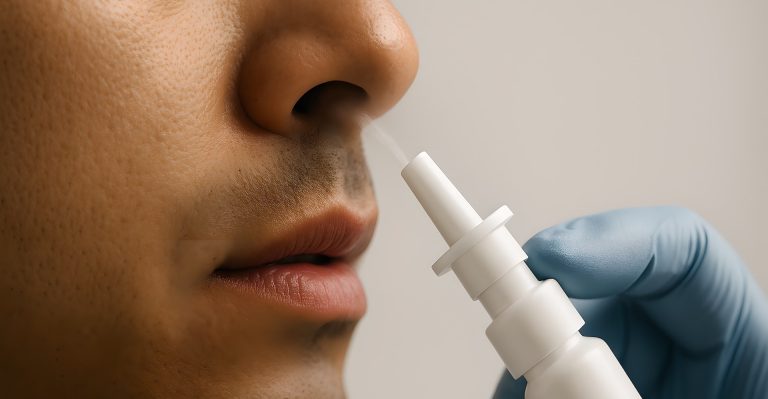
In a groundbreaking leap that could reshape global public health, Stanford University researchers have unveiled a revolutionary nasal vaccine that offers broad-spectrum protection against a wide array of respiratory threats—from viruses like SARS-CoV-2 and influenza to bacteria and even common allergens. Dubbed GLA-3M-052-LS+OVA for now, this pioneering vaccine could soon become the first-ever “universal respiratory shield,” potentially transforming how humanity defends itself against airborne diseases and seasonal outbreaks.
The discovery builds on decades of scientific curiosity surrounding the Bacillus Calmette-Guerin (BCG) tuberculosis vaccine, which has long been observed to provide unexpected cross-protection against other infections in infants. Despite its widespread use—administered to over 100 million newborns annually—the mechanism behind this phenomenon remained elusive until recently. In 2023, Stanford immunologist Bali Pulendran and his team cracked the code, revealing that T cells recruited by the BCG vaccine send persistent signals to innate immune cells, keeping them active far longer than usual—up to three months instead of days.
This sustained activation of the innate immune system, the body’s first line of defense, proved to be a game-changer. In laboratory mice, this mechanism not only protected against SARS-CoV-2 but also other coronaviruses, dramatically reducing viral loads in the lungs by up to 700-fold and ensuring 100% survival rates where unvaccinated mice perished. Inspired by these findings, Pulendran’s team set out to engineer a synthetic vaccine capable of mimicking this effect.
The result is a cleverly designed nasal spray that combines two powerful strategies: direct stimulation of lung-based innate immune cells and the inclusion of a harmless antigen—ovalbumin, a protein found in egg whites—that recruits T cells to maintain the immune response over weeks or even months. Administered as a simple drop in the nose, the vaccine proved astonishingly effective in mice, offering protection not just against a spectrum of viruses but also against dangerous bacterial infections like Staphylococcus aureus and Acinetobacter baumannii.
But the surprises didn’t stop there. When exposed to house dust mite proteins—a common trigger for allergic asthma—vaccinated mice showed a dramatic reduction in allergic inflammation and mucus buildup, hinting at potential applications far beyond infectious disease. “I think what we have is a universal vaccine against diverse respiratory threats,” Pulendran said, emphasizing the unprecedented breadth of protection.
What makes this vaccine particularly remarkable is its speed. In unvaccinated animals, the adaptive immune response—featuring virus-specific T cells and antibodies—typically takes about two weeks to mobilize. In vaccinated mice, this response was ready in as little as three days, thanks to the hyper-alert state of the lung’s immune system. This “double whammy” approach—combining prolonged innate defense with rapid adaptive readiness—could be a decisive advantage in the face of emerging pandemics.
Looking ahead, the researchers are eager to translate their findings to humans. Pulendran envisions a future where a simple two-dose nasal spray each fall could shield people from the entire gamut of respiratory threats, including COVID-19, influenza, respiratory syncytial virus (RSV), the common cold, bacterial pneumonia, and even seasonal allergens. “Imagine getting a nasal spray in the fall months that protects you from all respiratory viruses… That would transform medical practice,” he said.
With Phase I safety trials on the horizon and the potential for larger efficacy studies, the timeline for a human-ready vaccine could be as short as five to seven years, provided sufficient funding and regulatory support. If successful, this innovation could not only simplify annual vaccinations but also serve as a powerful bulwark against future pandemics, offering humanity a new level of resilience against the invisible airborne enemies that have shaped our history.
The study, a collaborative effort involving researchers from Emory University School of Medicine, the University of North Carolina at Chapel Hill, Utah State University, and the University of Arizona, was supported by the National Institutes of Health, the Violetta L. Horton Professor endowment, the Soffer Fund endowment, and Open Philanthropy.
Tags: universal vaccine, respiratory protection, nasal spray vaccine, innate immunity, T cell signaling, cross-protection, SARS-CoV-2, influenza, RSV, bacterial pneumonia, allergens, pandemic preparedness, Stanford research, Bali Pulendran, GLA-3M-052-LS+OVA, breakthrough immunology
Viral sentences:
“Imagine getting a nasal spray in the fall months that protects you from all respiratory viruses… That would transform medical practice.”
“This vaccine is a ‘double whammy’ against viral infection.”
“The lung immune system is so ready and so alert that it can launch the typical adaptive responses… in as little as three days.”
“I think what we have is a universal vaccine against diverse respiratory threats.”
“With enough funding, a universal respiratory vaccine might be available in five to seven years.”
“The sustained activation of the innate immune system proved to be a game-changer.”,


Leave a Reply
Want to join the discussion?Feel free to contribute!