
When KaOS Linux dropped KDE Plasma, I worried – now I’m loving the new default desktop
KaOS Linux Ditches KDE Plasma for Niri: The Tiling Desktop Revolution You Didn’t See Coming
In a move that sent shockwaves through the Linux community, KaOS Linux has made the bold decision to abandon KDE Plasma in favor of the innovative Niri desktop environment. This isn’t just another Linux distro update—it’s a fundamental reimagining of how we interact with our digital workspaces.
The End of an Era: KDE Plasma’s Exit from KaOS
For years, KaOS Linux proudly showcased KDE Plasma as its flagship desktop environment. The combination of KaOS’s rolling release model with Plasma’s feature-rich interface created a powerhouse distribution beloved by many users. However, the developers have now chosen a different path—one that leads to Niri, a scrollable tiling compositor that’s unlike anything else in the Linux ecosystem.
“When I first heard about this change, I thought ‘Hoo boy, this marks the beginning of the end,'” admits Jack Wallen of ZDNet. “I was wrong. Niri is actually pretty cool.”
What Exactly Is Niri?
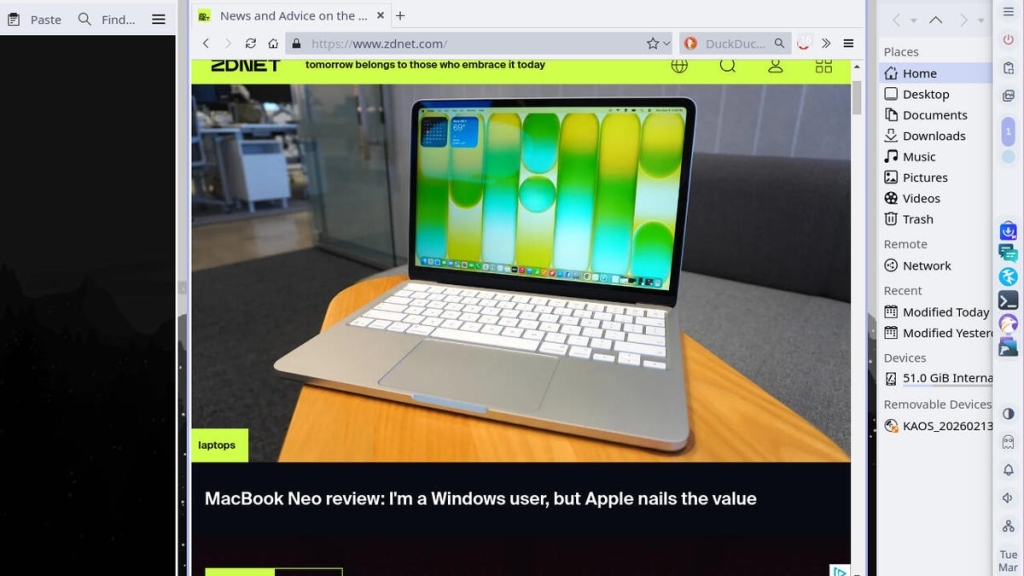
Niri represents a radical departure from traditional desktop paradigms. Unlike conventional tiling window managers that arrange windows in grids or stacks, Niri creates a horizontal scrolling workspace where applications line up side-by-side in a continuous scrollable plane.
Here’s how it works: Your first application opens on the left half of the screen. Launch a second app, and it appears on the right side of the first. A third app pushes the first one off-screen to the left, creating a dynamic workspace that expands horizontally as you open more applications.
The magic happens when you need to access those “pushed-off” applications. Simply click and drag any window’s titlebar left or right to scroll through your workspace, revealing the application you need. It’s like having both a tiling and traditional window manager seamlessly integrated into one elegant system.
KaOS: Built from Scratch with Laser Focus
KaOS describes itself as “a rolling and transparent distribution for the modern desktop, built from scratch with a very specific focus—focus on one DE (desktop environment), one toolkit (Qt), one architecture (x86_64).”
This philosophy of extreme focus has always defined KaOS, and the transition to Niri represents the ultimate expression of this vision. By committing entirely to a single, innovative desktop environment, KaOS creates a cohesive experience that feels purpose-built rather than assembled from disparate components.
The Beauty of Niri’s Design
Niri isn’t just functional—it’s genuinely beautiful. The desktop menu, accessed through the three-line launcher icon at the top of the screen, features elegant curves and smooth transitions that blend seamlessly with the desktop edges. The horizontal layout breaks from the traditional vertical menu paradigm, offering a fresh perspective on application organization.
The notification center deserves special mention. Similar to the Budgie Raven notification center but executed with far more elegance, it provides system controls, weather information, and performance monitors in a unified, visually appealing interface.
Preinstalled Applications: Quality Over Quantity
KaOS takes a minimalist approach to preinstalled applications. During installation, users can choose between KDE Office and LibreOffice as their office suite. The default application lineup includes:
- Elisa music player
- Falkon web browser
- K3b CD burner
- Sweeper disk cleaner
- Various system utilities
This lean approach ensures a clean, uncluttered experience while maintaining essential functionality. For additional software, KaOS leverages Arch Linux’s extensive package repositories through the pacman package manager.
Octopi: The Gateway to Thousands of Applications
While KaOS is Arch-based, users don’t need to fear the command line. The distribution includes Octopi, a user-friendly graphical package manager that provides access to Arch’s vast software repositories. Simply search for your desired application, right-click its entry, select “Install,” and click the left-pointing arrow in the toolbar to begin installation.
This combination of Arch’s power with an accessible interface creates the best of both worlds—cutting-edge software availability without the typical complexity associated with Arch-based distributions.
Performance That Will Blow You Away
KaOS with Niri delivers exceptional performance. The tiling approach maximizes screen real estate, while the lightweight nature of Niri ensures smooth operation even on modest hardware. The rolling release model means you’re always running the latest software versions without the hassle of major version upgrades.
Why This Matters for Linux Users
The transition from KDE Plasma to Niri represents more than just a desktop change—it signals a willingness to innovate and challenge established paradigms. In an ecosystem often criticized for its fragmentation and resistance to change, KaOS’s bold move demonstrates that Linux can still surprise and delight users with fresh approaches to computing.
Installation and Getting Started
KaOS is free to download and use. You can obtain the ISO from the official KaOS website, create a bootable USB drive using your preferred tool, and install it on your system. The installation process is straightforward and well-documented, making it accessible even to users new to Arch-based distributions.
The Verdict: A Desktop Worth Experiencing
After extensive testing, the verdict is clear: Niri is a game-changer. It’s elegant, efficient, and surprisingly intuitive once you adapt to the horizontal scrolling paradigm. The combination of KaOS’s focus on quality and Niri’s innovative approach creates a Linux experience that feels genuinely new and exciting.
“I’ve never used Arch or an Arch-based distro as my primary OS, but with each passing year, that scenario becomes more likely—and KaOS/Niri might be the thing that sends me packing to rolling-release-ville,” Wallen concludes.
Final Thoughts
KaOS’s transition to Niri isn’t just a desktop change—it’s a statement about the future of Linux desktop environments. By embracing innovation over tradition, KaOS has created something truly special that deserves attention from anyone interested in the evolution of desktop computing.
Whether you’re a long-time Linux user looking for something fresh or a newcomer curious about what Linux can offer, KaOS with Niri represents an exciting opportunity to experience computing in a whole new way.
Tags: KaOS Linux, Niri desktop, tiling window manager, Linux distribution, KDE Plasma alternative, scrollable desktop, Arch Linux, rolling release, innovative desktop environment, Linux desktop revolution
Viral Sentences:
- “KaOS Linux Ditches KDE Plasma for Niri: The Tiling Desktop Revolution You Didn’t See Coming”
- “This Linux Distribution Just Changed Everything—And You Need to See It”
- “The Desktop Environment That Will Make You Question Everything You Know About Computing”
- “Linux’s Boldest Move Yet: Saying Goodbye to Tradition and Hello to Innovation”
- “Why KaOS’s Niri Might Be the Future of Desktop Computing”
- “The Tiling Desktop That Scrolls Horizontally—And It’s Amazing”
- “I Thought I Knew Linux Desktops—Then I Tried Niri”
- “This Linux Distribution Is So Good, It Might Convert Windows Users”
- “The Desktop Environment That Combines Tiling and Traditional in One Package”
- “KaOS Just Proved That Linux Can Still Surprise Us”
,

Leave a Reply
Want to join the discussion?Feel free to contribute!