
Arduino’s new AI single-board computer runs Ubuntu
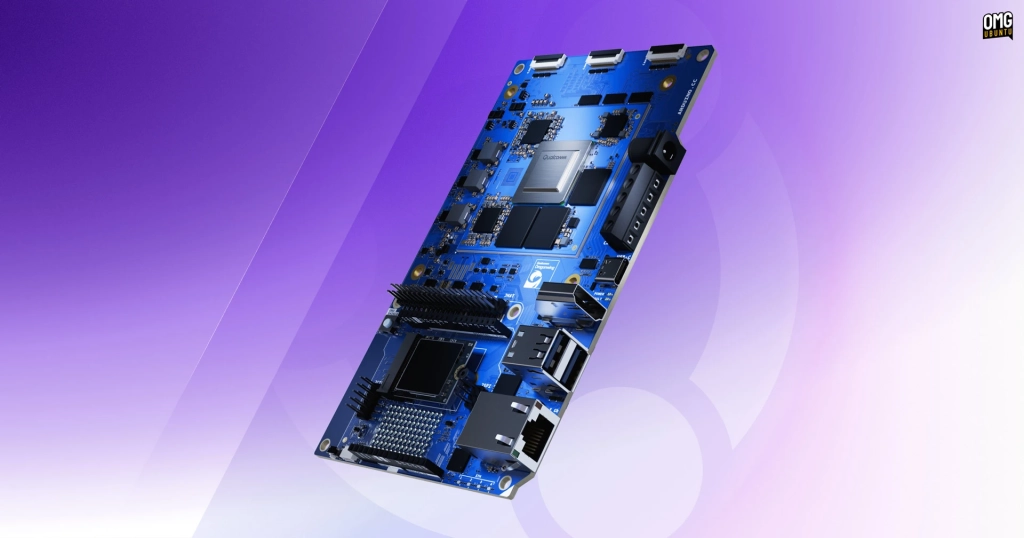
Arduino Unveils Ventuno Q: The Single-Board Computer That Brings 40 TOPS of AI Power to the Edge
In a bold move that blurs the lines between hobbyist tinkering and industrial-grade AI computing, Arduino—now a subsidiary of Qualcomm—has officially launched the Ventuno Q, a single-board computer that arrives with Ubuntu pre-installed and a promise to revolutionize edge AI workloads. This isn’t your average maker board; it’s a powerhouse engineered for the demands of modern robotics, industrial automation, and computer vision.
A Beast Under the Hood
At the heart of the Ventuno Q lies Qualcomm’s Dragonwing IQ-8275 processor, a cutting-edge system-on-chip that integrates CPU, GPU, and NPU (Neural Processing Unit) into a single, cohesive unit. This isn’t just about raw speed—it’s about intelligence. The NPU delivers a staggering 40 TOPS (trillions of operations per second) of AI compute, enabling the board to run large language models, visual language models, and complex computer vision workloads directly on the device. This means no more reliance on cloud processing; the Ventuno Q brings AI inference to the edge, where latency and connectivity can be critical.
Specs That Impress
The Ventuno Q doesn’t skimp on memory or storage. It comes equipped with 16GB of LPDDR5 RAM, doubling the capacity of its closest competitor, the Jetson Orin Nano Super. For storage, it features 64GB of eMMC, with the option to expand via an M.2 slot for NVMe drives. Connectivity is equally robust, with Wi-Fi 6, Bluetooth 5.3, and 2.5Gb Ethernet ensuring that the board can handle even the most demanding networked applications.
Software That Simplifies
Arduino has always been about making technology accessible, and the Ventuno Q is no exception. The board centers around the Arduino App Lab, a development environment that allows users to work with Arduino sketches, Python, and pre-built AI model integrations from a single interface. The pitch is simple: unbox the Ventuno Q, boot it up, and start running AI inference with minimal friction. But for those who prefer the flexibility of standard Linux tooling, the board is fully compatible with VS Code, Docker, Python, and more. The App Lab is optional, not mandatory.
Expandability and Compatibility
One of the standout features of the Ventuno Q is its expandability. The board is compatible with Arduino UNO shields, Raspberry Pi HATs, and Modulino nodes via a standard 40-pin GPIO header. This means that users can leverage a vast ecosystem of existing hardware and accessories, making the Ventuno Q a versatile platform for a wide range of applications.
Ubuntu at the Edge
Ubuntu, often associated with desktop Linux, has been making significant strides in the embedded and edge computing space. Canonical, the company behind Ubuntu, has been working closely with Qualcomm to bring Ubuntu to Dragonwing IoT devices. Now, with the Ventuno Q, they’re taking another step forward. Cindy Goldberg, Canonical’s VP of Silicon Alliances, emphasizes the importance of this partnership: “By providing a reliable Ubuntu foundation for VENTUNO Q, we ensure that a successful prototype can scale into a securely-designed industrial solution with 10 years of security maintenance.”
Fabio Violante, Vice President and General Manager of Arduino, adds that the combination of hardware and Ubuntu OS will enable “AI-driven decisions to be translated into physical action instantly.” This is a powerful statement, underscoring the potential of the Ventuno Q to bridge the gap between digital intelligence and physical action.
Who Is This For?
Let’s be clear: the Ventuno Q is not aimed at casual makers or tech tinkerers looking for a new Raspberry Pi project. This is a board designed for professionals working in robotics, industrial automation, and computer vision. It’s for those who need the power of AI at the edge, where every millisecond counts. If you’re building a smart factory, a autonomous robot, or a computer vision system, the Ventuno Q is worth a look.
Availability and Pricing
As of now, there’s no official release date or pricing for the Ventuno Q. However, the board is on display at Embedded World 2026 in Germany (March 10–12), and interested parties can sign up for availability alerts on the Arduino website.
Conclusion
The Arduino Ventuno Q is more than just a single-board computer; it’s a statement of intent. It’s a declaration that the future of AI is at the edge, and that Arduino, in partnership with Qualcomm and Canonical, is ready to lead the charge. Whether you’re a seasoned professional or a curious enthusiast, the Ventuno Q is a device that demands attention. It’s a glimpse into a future where AI is not just in the cloud, but in the palm of your hand—or, in this case, on a single board.
Tags & Viral Phrases
- 40 TOPS AI compute
- Edge AI revolution
- Ubuntu pre-installed
- Qualcomm Dragonwing IQ-8275
- LPDDR5 RAM powerhouse
- Industrial automation AI
- Computer vision on-device
- Robotics edge computing
- Single-board AI powerhouse
- Arduino Ventuno Q launch
- AI inference at the edge
- M.2 NVMe expansion
- Wi-Fi 6 and Bluetooth 5.3
- 2.5Gb Ethernet speed
- Arduino App Lab simplicity
- VS Code and Docker ready
- 16GB RAM beast
- 64GB eMMC storage
- Embedded World 2026 showcase
- Canonical Ubuntu partnership
- AI-driven physical action
- Secure industrial solutions
- 10 years of security maintenance
- Raspberry Pi HAT compatibility
- Modulino nodes support
- 40-pin GPIO header
- Dragonwing IoT certified
- Large language models on-device
- Visual language models processing
- Computer vision workloads
- AI at the edge
- Single-board computer game-changer
- Industrial AI workloads
- Edge computing powerhouse
- Ubuntu edge computing
- Qualcomm and Arduino partnership
- AI compute revolution
- Ventuno Q availability alerts
- Embedded computing future
- AI-driven decisions instantly
- Single-board computer innovation
- Edge AI computing
- AI inference without latency
- Industrial automation future
- Computer vision edge device
- Robotics AI computing
- Ubuntu for embedded systems
- Qualcomm Dragonwing processor
- AI at the edge of innovation
- Single-board computer for professionals
- Edge AI device launch
- AI compute for industrial use
- Ubuntu edge computing solution
- Qualcomm and Arduino collaboration
- AI-driven physical systems
- Edge AI for robotics
- Computer vision on-device processing
- Industrial AI edge device
- Single-board computer for AI
- Edge AI computing device
- AI inference on-device
- Ubuntu for AI edge computing
- Qualcomm Dragonwing IoT
- Arduino Ventuno Q specs
- Edge AI device specs
- Industrial AI computing
- Computer vision edge AI
- Robotics edge computing device
- Ubuntu edge computing device
- Qualcomm and Arduino edge AI
- AI-driven physical systems device
- Edge AI for industrial use
- Computer vision on-device AI
- Industrial automation edge AI
- Robotics edge AI computing
- Ubuntu edge computing solution
- Qualcomm Dragonwing edge AI
- Arduino Ventuno Q features
- Edge AI device features
- Industrial AI device features
- Computer vision edge device features
- Robotics edge device features
- Ubuntu edge device features
- Qualcomm edge device features
- AI-driven physical systems features
- Edge AI for industrial features
- Computer vision on-device features
- Industrial automation edge features
- Robotics edge features
- Ubuntu edge features
- Qualcomm edge features
- AI-driven physical systems features
- Edge AI for industrial features
- Computer vision on-device features
- Industrial automation edge features
- Robotics edge features
- Ubuntu edge features
- Qualcomm edge features
- AI-driven physical systems features
,


Leave a Reply
Want to join the discussion?Feel free to contribute!