
Fifty years of sexing up tech: Apple’s epic hits – and misses | Apple
Apple at 50: The Revolutionary Hits and Embarrassing Misses That Shaped Tech History
The Revolutionary Hits That Changed Everything
Apple II (1977): The Computer That Brought Tech to the Masses
The Apple II wasn’t just a computer—it was a cultural revolution disguised as beige plastic. When Steve Wozniak designed this machine, he wasn’t thinking about hobbyists soldering circuit boards; he was thinking about everyday people who wanted to compute without a PhD in electrical engineering.
This was Apple’s first mass-market personal computer, and it came ready to use right out of the box. Unlike the intimidating bare circuit boards that dominated home computing at the time, the Apple II combined everything—electronics, keyboard, power supply—into one sleek case that could plug straight into a monitor. Suddenly, computing felt approachable rather than terrifying.
The genius was in the details: color graphics when monochrome was the norm, BASIC programming built right into read-only memory, and expansion slots that created a thriving ecosystem of third-party hardware and software. From games to the VisiCalc spreadsheet that made it indispensable for businesses, the Apple II transformed from a toy into a tool.
Apple’s aggressive education discounts put these machines in classrooms across America, making the Apple II the first computer many students ever touched. It wasn’t just a product—it was Apple’s coming-out party, transforming the company from a garage startup into a defining force in the PC revolution.
Macintosh (1984): The Machine That Made Computers Friendly
If the Apple II made computing possible for the masses, the Macintosh made it delightful. This wasn’t another boring black-and-white command-line machine that required memorizing arcane text commands. The Mac—named by Apple employee Jef Raskin after his favorite apple variety—brought the graphical user interface to the mainstream.
Windows, icons, menus, and a mouse weren’t new concepts, but the Macintosh packaged them into an affordable, self-contained consumer product that anyone could use. Ridley Scott’s legendary “1984” Super Bowl commercial positioned it as the cool, rebellious alternative to IBM’s corporate gray world.
The Macintosh established Apple’s core philosophy: control the human-computer interface, and you control the experience. Every click, every drag, every visual element was designed to feel intuitive and friendly. Computers weren’t just tools anymore—they were companions.
iMac G3 (1998): When Computers Got Fun Again
A decade after the Macintosh, Apple did the unthinkable: they made computers sexy again. The iMac G3 ditched the boring beige boxes that had dominated computing for years and replaced them with translucent all-in-one machines available in a rainbow of bright colors. These weren’t just computers—they were design statements.
The timing was perfect. The internet was the new frontier, and the iMac G3 was built for it. Those vibrant candy colors grabbed attention, but the real magic was inside: everything you needed to connect to the internet was built in, and it took just two cables. The ads showed exactly that—how many cables it took to connect to the internet, and the answer was two.
This simplicity made technology feel approachable and fun. The design was elevated, the user experience was streamlined, and suddenly computers weren’t intimidating gray boxes anymore—they were colorful companions that you wanted in your home.
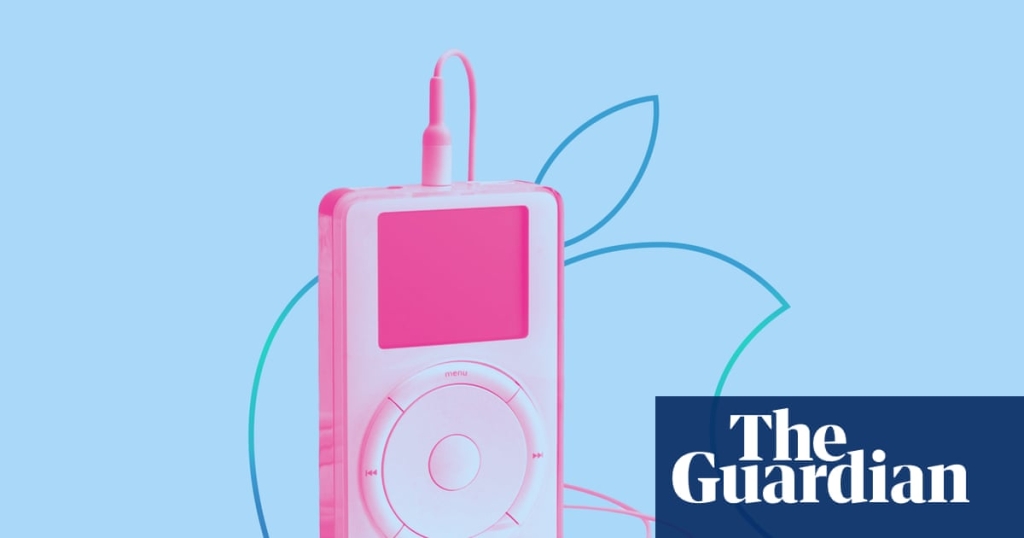
iPod (2001): 1,000 Songs in Your Pocket Changed Everything
Before smartphones, before streaming, there was the iPod—a device so revolutionary it changed how we think about music itself. “1,000 songs in your pocket” wasn’t just a marketing slogan; it was a promise that transformed from impossible to everyday reality.
The iPod wasn’t the first MP3 player, but it was the first that felt mainstream. Its white, pocketable design, tight integration with iTunes, and that revolutionary scroll wheel made navigating massive music libraries painless. Suddenly, carrying your entire music collection wasn’t just possible—it was convenient.
The iconic ads with dancing silhouettes and white earbuds became cultural touchstones. But the iPod’s real genius was creating an ecosystem: hardware, software, and content working seamlessly together. It trained millions of people to buy digital media through Apple’s ecosystem, paving the way for the iPhone and App Store that would follow.
iPhone (2007): The Device That Redefined Reality
When Steve Jobs unveiled the iPhone in 2007, some people thought the demo was fake. How could a touchscreen device respond so smoothly, scroll so naturally, pinch-to-zoom so intuitively? It seemed impossible—until you held one in your hands.
The iPhone didn’t invent the smartphone (that honor goes to IBM’s Simon Personal Communicator from 1994), but it perfected it. The multi-touch interface with its natural gestures—scrolling, swiping, tapping, pinching—became the new normal. What once required physical keyboards and styluses now happened with just your fingers.
But the iPhone’s true power was its ecosystem. The App Store standardized how services worked on the device, controlling not just functionality but the entire user experience. Apple’s near-absolute control over its ecosystem became its superpower, creating what analysts call “the garden”—whether you like its walls or not, it’s a pretty damn nice place to spend time.
The Embarrassing Misses That Still Make Us Cringe
Apple III (1980): When Success Went to Their Heads
The Apple III was supposed to be the business-focused upgrade that would dominate corporate America. Instead, it became a cautionary tale about what happens when you rush a product to market.
Designed as an improvement over the wildly successful Apple II, the Apple III suffered from catastrophic hardware flaws. Steve Jobs’ insistence on a fanless design led to severe overheating problems. Chips would literally pop out of their sockets due to thermal expansion, forcing Apple to recommend that users lift the machine several inches and drop it to reseat the components. Yes, you read that right—the official fix was to drop your $4,340 computer.
The machine also had bizarre design choices for an Apple product, including upper-case-only displays that frustrated users. Priced way above the Apple II and plagued with reliability issues, the Apple III was discontinued within two years. It remains one of Apple’s most expensive failures.
Macintosh Portable (1989): The Laptop That Wasn’t Portable
The Macintosh Portable was Apple’s first attempt at a battery-powered Macintosh, and it foreshadowed the laptops that would eventually dominate computing. But this first attempt was so bad it’s almost impressive.
Apple launched it with a million-dollar glitzy event in a California amphitheater, bringing 5,000 tastemakers to see the product—unusual for the time. They aimed to sell 50,000 units at up to $8,000 for fully specced models. The verdict from critics and consumers alike? “It’s too big, too heavy and too expensive.”
By 1990, the price had been slashed to $1,000. It still didn’t sell. Apple had stopped producing it by 1991. The Macintosh Portable taught Apple that mobility requires more than just a battery—it requires thoughtful design about weight, size, and usability.
Newton MessagePad (1993): The Tablet Before Its Time
The Newton MessagePad was Apple’s first attempt at a tablet-like device, and it was genuinely revolutionary. It had a touchscreen, stylus handwriting recognition, email, fax, and calendar features—all in a handheld device that would feel familiar to modern users.
But its notoriously inaccurate handwriting recognition became the stuff of legend. The Newton would mangle simple words in hilarious ways, famously mocked on The Simpsons for turning “Beat up Martin” into “Eat up Martha.” These weren’t just minor errors—they made the device feel unreliable and frustrating to use.
Priced at $700 and suffering from battery life issues, the Newton struggled to find its audience. When Steve Jobs returned to Apple in 1997, he killed the Newton line, though its principles would eventually inspire the iPhone and iPad.
Apple Pippin (1996): The Console That Never Stood a Chance
Yes, Apple made a game console in the 90s, and no, you probably didn’t know about it. The Apple Pippin was a bizarre hybrid: part game machine, part CD player, part internet appliance. Branded as “@world” in the US, it promised multimedia versatility with its custom controller and modem connectivity.
But the Pippin launched with only 18 games, many of them Japan-only titles. Compare that to the PlayStation, Nintendo 64, and Sega Dreamcast, which were battling it out with hundreds of titles and established franchises. The Pippin was too expensive at $599, too slow, and crucially, it lacked games.
In the US, only 12,000 units sold. In gaming-mad Japan, it managed 30,000. By comparison, the PlayStation sold millions. Jobs killed the Pippin upon his return to Apple in 1997, refocusing the company on its core strengths. The lesson? When Apple doesn’t control the entire ecosystem, success becomes much harder.
Apple Vision Pro (2024): The Future That Wasn’t Ready
Apple’s most recent high-profile stumble is the Vision Pro, its $3,499 “spatial computing” headset launched with enormous fanfare. Tim Cook claimed it would redefine how we work and interact with technology. Two years later, it’s becoming a cautionary tale about products too far ahead of consumer appetite.
Production was halted by partner Luxshare in early 2025 after dismal sales. Analysts estimate 390,000 units shipped in 2024, followed by just 45,000 in the fourth quarter of 2025. Compare that to the nearly 250 million iPhones Apple sold in 2025, and you see the scale of the problem.
The Vision Pro isn’t a nice device to wear. It’s heavy, has short battery life, and can cause visual discomfort after extended use. The demos were impressive, but real-world practicality lagged behind. Sound familiar? It’s similar to the Newton’s problem of being ahead of its time.
But some analysts think we shouldn’t count out the Vision Pro just yet. “It was a dead end for Meta. It was a dead end for a lot of companies—but maybe it’s still too early,” says one expert. Give it another half-century, maybe?
Viral Tags and Phrases
- “1,000 songs in your pocket”
- “Beat up Martin” becomes “Eat up Martha”
- The garden with walls
- Spatial computing revolution
- Too big, too heavy, too expensive
- Drop your $4,000 computer to fix it
- @world console disaster
- Vision Pro’s visual discomfort
- Newton’s handwriting recognition nightmare
- iMac’s colorful revolution
- iPhone’s fake demo
- Apple III’s overheating chips
- Macintosh’s friendly interface
- Pippin’s 18-game library
- Portable’s million-dollar launch
- “It’s still too early” for VR
- Apple’s ecosystem control
- The $3,499 headset flop
- 390,000 units shipped
- 45,000 units in Q4 2025
- Nearly 250 million iPhones in 2025
- “Too slow, too expensive, lacking games”
- “Make it easy to use”
- Control the human-computer interface
- The beige box rebellion
- Apple’s garage-to-giant journey
- Tech’s most embarrassing dead ends
- Revolutionary hits and spectacular misses
- 50 years of Apple innovation
- From circuit boards to spatial computing
- The products that defined generations
- When Apple got it spectacularly wrong
- The failures that taught the biggest lessons
,

Leave a Reply
Want to join the discussion?Feel free to contribute!