
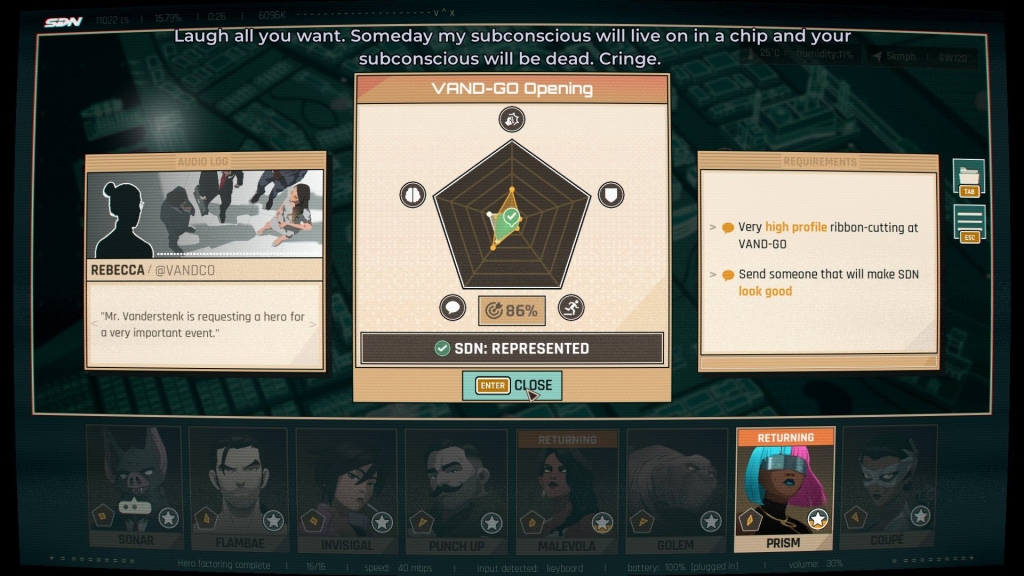
Just like XCOM, superhero comedy Dispatch cheats random percentages of success in the player’s favor: ‘anything that had over a 76% success chance would automatically succeed’
How XCOM and Dispatch Secretly Rig Their Randomness to Keep Players Happy
In the high-stakes world of tactical games, nothing sparks outrage quite like a missed 95% shot. One moment, you’re brimming with confidence—your elite sniper locked in, the target exposed, victory seemingly guaranteed. The next? Your soldier whiffed, the alien lives, and suddenly the entire universe is conspiring against you. This phenomenon has become so common that it’s practically a meme in gaming culture, with players convinced that developers like Firaxis are personally tweaking the odds to ruin their day.
But here’s the twist: the math is being manipulated—just not in the way players think. In fact, it’s rigged in their favor.
The Great RNG Conspiracy (That Isn’t)
When XCOM first launched, forums exploded with accusations that the game’s random number generator (RNG) was “cheating.” Players swore the numbers were lying, that a 95% chance should never miss. And while it’s true that XCOM’s RNG feels…off…at times, the reality is far more nuanced.
As the developers later revealed, XCOM doesn’t punish players—it protects them. On lower difficulties, the game subtly boosts your odds behind the scenes, ensuring that those near-certain shots actually land. Why? Because true randomness feels unfair. In reality, even a 95% chance means failure 1 in 20 times. But in a game where every decision matters, that kind of unpredictability can feel like a slap in the face.
Firaxis understood this, and so did Adhoc, the indie studio behind the superhero comedy Dispatch. During a recent GDC talk, Adhoc’s directors Nick Herman and Dennis Lenart spilled the beans on how they engineered their own “fair” randomness—and the results are both hilarious and enlightening.
How Dispatch Cheats (For Your Own Good)
In Dispatch, players assign heroes to missions based on their abilities, with success chances calculated on how well-suited your squad is for the task. Sounds straightforward, right? Wrong. Like XCOM, Dispatch secretly fudges the numbers—but with a twist.
Here’s how it works:
-
Over 76% chance? Auto-win. That’s right—if your odds are better than 3 in 4, the game just says, “Congrats, you win.” No dice roll, no drama. Herman admitted this would “make so many people sad,” but it keeps the game feeling fair.
-
Under 15% chance? Bumped up to 15%. Because missing 14% of the time feels worse than missing 1 in 7. It’s psychological warfare, but in your favor.
-
Winning streak? The game pulls back. After three auto-wins, it gives you “true odds” again. Fail once, and the safety net returns. It’s like having a guardian angel who occasionally lets you fall to keep things interesting.
But here’s where it gets really clever: in the final episode of Dispatch, when the city is literally on fire and everything that can go wrong does go wrong, Adhoc disables all these safety nets. For the first time, players face the raw, unfiltered chaos of true randomness. The result? A finale that feels brutally hard—exactly what the story demanded.
Why This Matters
This isn’t just about making games easier. It’s about managing player expectations and emotions. As Herman put it, “People told us the game felt fair, if a bit easy at times.” And that’s the point. Fairness isn’t about raw probability—it’s about perception.
Think about it: how many times have you rolled a die in a tabletop game and sworn it was cursed? How often have you blamed the game, the dice, or even the universe for your misfortune? The truth is, humans are terrible at understanding probability. We see patterns where none exist, and we remember losses far more vividly than wins.
By subtly manipulating the odds, developers like Firaxis and Adhoc are doing more than just making games fun—they’re protecting players from their own flawed intuition. It’s a delicate balance, and when done right, it’s invisible. When done wrong, well…you get the comments section.
The Takeaway
Next time you miss a 95% shot in XCOM or barely scrape by in Dispatch, remember: the game might be cheating, but it’s cheating for you. And if you still feel hard done by? Well, there’s always a 5% chance you’re right.
Tags & Viral Phrases:
- “The RNG is rigged (in your favor)”
- “XCOM’s secret math hacks”
- “Why true randomness feels unfair”
- “How games manipulate probability to keep you happy”
- “The 95% shot that broke the internet”
- “Adhoc’s genius fairness tweaks”
- “When games cheat…for your own good”
- “The psychology of probability in gaming”
- “Why you’re bad at understanding odds”
- “The invisible safety nets in your favorite games”
- “How Dispatch’s finale went full chaos mode”
- “The dark art of making randomness feel fair”
- “Why gamers are superstitious about dice rolls”
- “The 76% auto-win rule that saved my sanity”
- “When the game pulls back the training wheels”
,

Leave a Reply
Want to join the discussion?Feel free to contribute!