
Why the world’s militaries are scrambling to create their own Starlink
Starlink’s Global Dominance Sparks Satellite Arms Race as Nations Scramble to Build Their Own Internet Networks
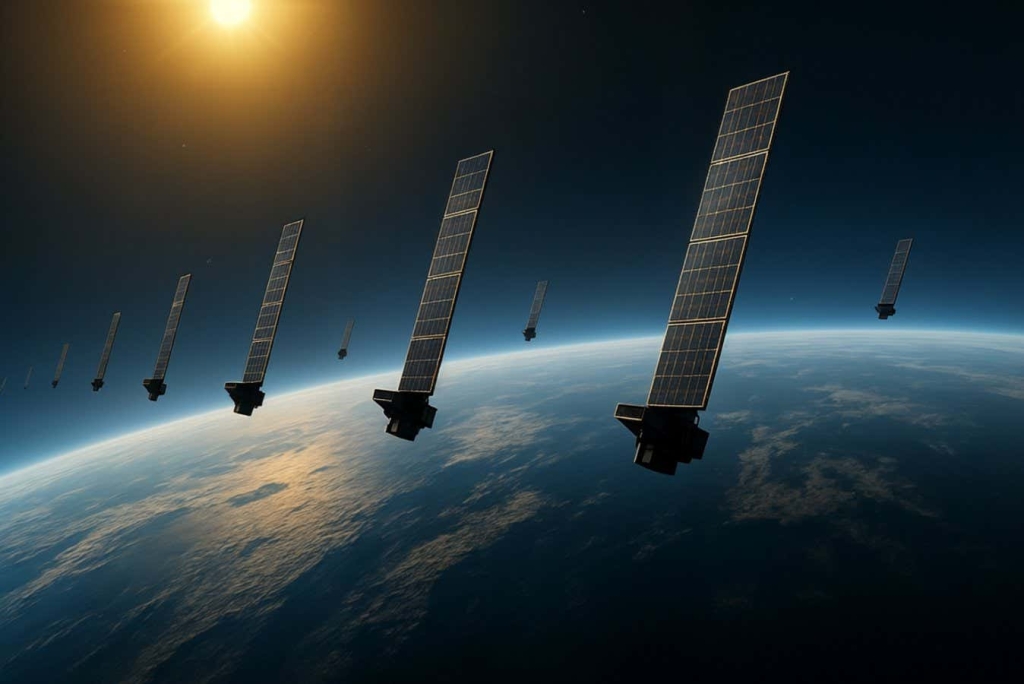
In a stunning twist of modern warfare and global geopolitics, Starlink—Elon Musk’s sprawling satellite internet empire—has become the unexpected kingmaker on the battlefield. With nearly 10,000 satellites blanketing the Earth, the system offers a near-unbreakable internet connection that has revolutionized military communications. But as tensions rise and nations seek digital sovereignty, the world is now racing to build its own versions of the Starlink network—before it’s too late.
The Starlink Advantage: A Game-Changer in Modern Warfare
Starlink’s constellation isn’t just a tech marvel; it’s a strategic weapon. Unlike traditional radio signals, which can be easily jammed by adversaries, Starlink’s signals beam directly from ground stations to space, making them incredibly robust. This has made it a lifeline for militaries worldwide, enabling real-time intelligence sharing, drone control, and video feeds in the heat of battle.
Since Russia’s invasion of Ukraine in 2022, both sides have relied heavily on Starlink. Ukraine, in particular, has used it to devastating effect, coordinating troops and drones with precision. But in a dramatic February move, Starlink restricted access to registered users, effectively cutting off Russian forces. The result? A significant blow to Russia’s military coordination and a clear advantage for Ukraine—at least for now.
The Global Satellite Scramble: Nations Race to Catch Up
The power of Starlink has sent shockwaves through the global community. No country wants to find itself at the mercy of a single private company, especially one controlled by a figure as unpredictable as Elon Musk. As a result, nations are now pouring resources into building their own satellite networks.
The European Union is leading the charge with IRIS², a constellation of 300 satellites set to launch in 2030. Meanwhile, China is rapidly expanding its Guowang network, which aims to deploy 13,000 satellites, and its Qianfan constellation, though both are still in their early stages. Russia’s Sfera project has faced delays, leaving it trailing behind.
Even individual European nations are taking matters into their own hands. Germany is in talks to create its own network, while the UK retains a stake in Eutelsat OneWeb and is backing a British start-up, OpenCosmos, with CIA funding. The message is clear: no one wants to be left behind in the satellite arms race.
The Cost of Independence: A Sky-High Challenge
Building a satellite network isn’t just a matter of launching a few satellites and calling it a day. It’s a long-term, expensive commitment that requires constant maintenance and the replacement of aging satellites. For countries like the UK, which lack their own launch capabilities, the challenge is even greater.
Barry Evans, a satellite communications expert at the University of Surrey, warns that even Russia and China are far behind Starlink. “You’ve got governments relying on an individual, which is one of the things that worries Europe,” he says. “Musk turns it off in various countries at various times. For the UK, it’s quite worrying because we don’t have the funding, really, to launch our own system.”
The Future of Warfare: A Satellite-Fueled Battlefield
As militaries shrink and budgets tighten, satellite communications have become the backbone of modern warfare. Starlink’s low-cost, high-capacity system has made it the go-to choice for armies worldwide. But its dominance has also raised alarms about the risks of relying on a single private company.
Ian Muirhead, a military communications veteran at the University of Manchester, explains that Starlink’s sheer scale makes it nearly impossible for adversaries to neutralize. “Because there are lots of them, they can’t just destroy a satellite and call it done—they’re always overhead,” he says.
The Verdict: A New Era of Digital Sovereignty
Starlink’s rise has ushered in a new era of digital sovereignty, where control over satellite networks could determine the outcome of future conflicts. As nations scramble to build their own systems, the question remains: can they catch up to Starlink’s dominance, or will they forever be playing catch-up in the satellite arms race?
One thing is certain: the battlefield of the future will be fought not just on land, sea, and air, but in the skies above, where thousands of satellites will determine who controls the flow of information—and who wins the war.
Tags & Viral Phrases:
- Starlink’s global dominance
- Satellite arms race
- Digital sovereignty
- Elon Musk’s unpredictable control
- Ukraine’s battlefield advantage
- Russia’s military coordination crisis
- IRIS²: Europe’s answer to Starlink
- Guowang: China’s 13,000-satellite network
- Sfera: Russia’s delayed project
- Eutelsat OneWeb: UK’s stake in the game
- OpenCosmos: CIA-backed British start-up
- The cost of satellite independence
- Space warfare: A new frontier
- The future of military communications
- Starlink’s unbreakable signals
- The risks of relying on a single company
- The satellite-fueled battlefield of tomorrow
,


Leave a Reply
Want to join the discussion?Feel free to contribute!