
NASA astronauts to venture into the void on a historic day
NASA Set to Launch First Spacewalk in Nearly a Year After Health Scare Forces Cancellation
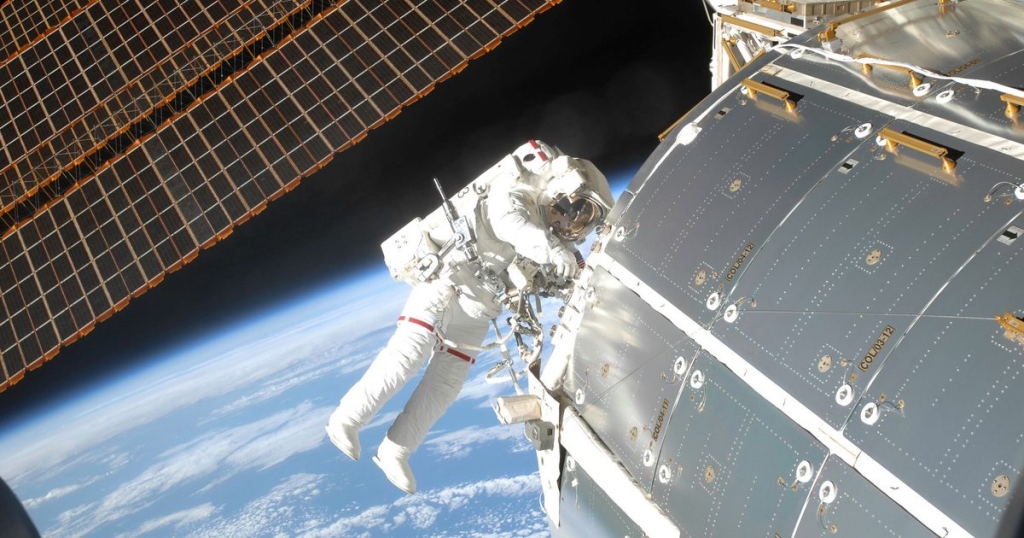
NASA is gearing up for a highly anticipated return to extravehicular activity (EVA), with the first spacewalk at the International Space Station (ISS) in nearly a year scheduled for March 18, 2025. The mission marks a significant milestone, not only for the agency but also for the two astronauts set to step outside the orbiting laboratory: Jessica Meir and Chris Williams.
A Year-Long Hiatus Ends
The upcoming spacewalk will break an unusually long pause in ISS EVAs, which has lasted almost 12 months. The last spacewalk took place in March 2024, when astronauts conducted routine maintenance and upgrades. However, NASA’s plans for a January 2025 spacewalk were abruptly canceled after one of the two participating astronauts experienced a serious health issue that ultimately forced the early return to Earth of a SpaceX crew.
While NASA has not disclosed the specific nature of the health scare, sources close to the agency suggest it involved a cardiac-related condition that required immediate medical attention. The incident underscored the inherent risks of space travel and the importance of astronaut health monitoring.
A Historic Date in Space Exploration
Coincidentally, the March 18 spacewalk is scheduled for the 61st anniversary of the first-ever spacewalk in human history. On March 18, 1965, Soviet cosmonaut Alexei Leonov exited his spacecraft during the Voskhod 2 mission, spending approximately 10 minutes in the vacuum of space. This groundbreaking achievement was followed just three months later by the first U.S. spacewalk, performed by NASA astronaut Ed White during the Gemini 4 mission in June 1965.
Meet the Astronauts
Jessica Meir: The Experienced Spacewalker
For Jessica Meir, this will be her fourth spacewalk. Meir first made history in October 2019 when she participated in the first all-female spacewalk alongside fellow NASA astronaut Christina Koch. The pair spent seven hours outside the ISS replacing a faulty battery charge/discharge unit. Meir completed two additional spacewalks later that year, bringing her total EVA time to over 21 hours.
The 47-year-old astronaut arrived at the ISS last month as part of SpaceX’s Crew-12 mission, which launched on February 15, 2025, aboard the Crew Dragon capsule Endurance. Meir, who holds a Ph.D. in marine biology, has been an astronaut since 2013 and previously spent 205 days in space during Expeditions 60/61.
Chris Williams: A Debut in the Void
For Chris Williams, the upcoming spacewalk will be his first time venturing outside the ISS. The 38-year-old astronaut is on his first space mission after being selected as part of NASA’s 2021 astronaut class. Williams arrived at the ISS in November 2024 aboard a Russian Soyuz spacecraft, launching from the Baikonur Cosmodrome in Kazakhstan.
A former U.S. Navy test pilot with over 2,500 flight hours in more than 40 different aircraft, Williams brings a wealth of experience to the mission. His selection for this spacewalk underscores NASA’s confidence in his abilities and training.
Preparation and Training
In the weeks leading up to the March 18 EVA, both Meir and Williams have been undergoing rigorous preparation. This includes:
- Suit inspections: Each astronaut has thoroughly examined their Extravehicular Mobility Unit (EMU) spacesuit, checking for any signs of wear or damage.
- Fit checks: The astronauts have tried on their suits multiple times to ensure proper fit and functionality.
- Airlock familiarization: Meir and Williams have conducted detailed walkthroughs of the Quest airlock, the primary exit point for U.S.-sponsored spacewalks.
- Tool familiarization: The pair has reviewed and practiced with all tools they’ll use during the EVA.
The Mission: Installing Roll-Out Solar Arrays
The primary objective of the March 18 spacewalk is to install a modification kit and route cables on the port side of the ISS. This work is part of preparations for a future roll-out solar array installation, which will significantly boost the station’s power generation capabilities.
The ISS currently relies on eight large solar array wings, which have been in operation since the first components of the station were launched in 1998. However, these arrays are degrading over time, and NASA plans to augment them with new iROSA (ISS Roll-Out Solar Array) units.
The upcoming spacewalk will lay the groundwork for the seventh iROSA installation, which is scheduled for a later EVA. Once fully implemented, the new arrays will increase the ISS’s power generation by 20-30%, ensuring the station can continue to support scientific research and technological demonstrations well into the 2030s.
The Spacewalk Timeline
The EVA is expected to last approximately six-and-a-half hours, during which Meir and Williams will:
- Exit the Quest airlock and perform initial safety checks
- Move to the designated work site on the port truss
- Install the modification kit, which includes brackets and struts to support the future iROSA unit
- Route power and data cables to connect the new array to the station’s power system
- Conduct a visual inspection of nearby equipment and report any anomalies to Mission Control
Throughout the spacewalk, the astronauts will be tethered to the ISS to prevent accidental detachment. They’ll also wear helmet cameras, allowing Mission Control to monitor their progress and provide real-time guidance if needed.
The Broader Context
This spacewalk comes at a pivotal time for the ISS program. The orbiting laboratory, which has been continuously occupied since November 2000, is now in its 24th year of operation. While NASA and its international partners have committed to operating the ISS through at least 2030, discussions are already underway about the station’s eventual retirement and replacement.
The upcoming EVA represents not just routine maintenance, but also the ongoing investment in extending the ISS’s operational life. By upgrading the power system, NASA ensures that the station can continue to serve as a unique microgravity laboratory for scientific research, technology development, and international cooperation.
Looking Ahead
As the March 18 spacewalk approaches, anticipation is building both within NASA and among space enthusiasts worldwide. The mission represents a return to normal operations after a year of challenges, including the aforementioned health scare and the complexities of managing the ISS during a period of transition in human spaceflight.
For Meir, it’s another opportunity to add to her impressive spaceflight resume. For Williams, it’s the culmination of years of training and the beginning of what promises to be a distinguished career as an astronaut. And for NASA, it’s a step forward in maintaining and upgrading humanity’s only permanent outpost in space.
As we count down to this historic spacewalk, one thing is certain: the spirit of exploration that drove Leonov and White to take those first tentative steps into the void continues to inspire new generations of astronauts to push the boundaries of what’s possible in space.
Tags: NASA, spacewalk, International Space Station, Jessica Meir, Chris Williams, space exploration, EVA, iROSA, SpaceX, Soyuz, Quest airlock, extravehicular activity, space technology, astronaut training, ISS upgrades, solar arrays, space mission, March 2025, space anniversary, human spaceflight, microgravity research
Viral Phrases: “First spacewalk in nearly a year,” “Historic date in space exploration,” “All-female spacewalk pioneer,” “Navy test pilot’s first EVA,” “Power boost for the ISS,” “Roll-out solar arrays,” “Six-and-a-half hours in the void,” “Tethering to prevent detachment,” “Helmet cameras for Mission Control,” “Extending the ISS operational life,” “Return to normal operations,” “Spirit of exploration continues,” “Pushing boundaries in space,” “Humanity’s outpost in orbit,” “Countdown to March 18 spacewalk”
,

Leave a Reply
Want to join the discussion?Feel free to contribute!