
Old NASA Spacecraft Crashes Back to Earth in Uncontrolled Reentry : ScienceAlert
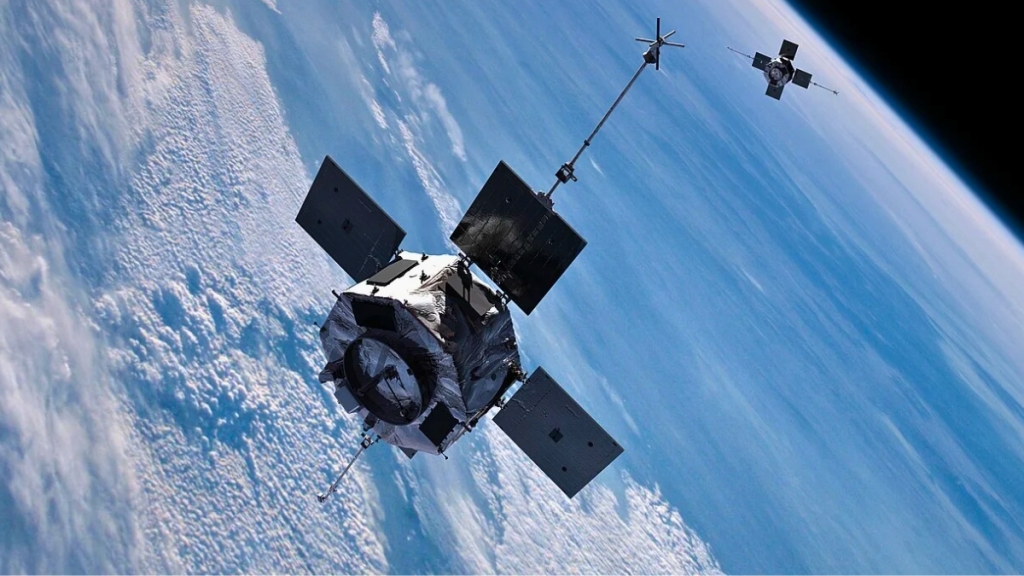
In a dramatic and long-anticipated finale to a pioneering mission, one of NASA’s Van Allen Probes has returned to Earth in a fiery descent, marking the end of an era in space exploration. The satellite, known as Van Allen Probe A, plunged uncontrolled from orbit and reentered the atmosphere over the Pacific Ocean on Wednesday, creating a brief but spectacular celestial spectacle.
The reentry occurred west of the Galapagos Islands, according to the U.S. Space Force, which tracked the spacecraft’s final moments. NASA confirmed that the 1,323-pound (600-kilogram) satellite was expected to largely burn up upon reentry, though some fragments were likely to survive the fiery descent. The space agency calculated the risk of any debris causing bodily harm at an extremely low 1-in-4,200, underscoring the minimal danger posed by the event.
This uncontrolled reentry was not entirely unexpected. The Van Allen Probe A, launched in 2012 alongside its twin, Probe B, was designed to study the Van Allen radiation belts—two doughnut-shaped regions of charged particles that surround Earth. These belts, named after astrophysicist James Van Allen, play a crucial role in protecting our planet from harmful solar radiation. For seven years, the twin probes ventured into these hazardous zones, gathering invaluable data that has reshaped our understanding of space weather and its impact on Earth.
The mission, however, officially ended in 2019 when the probes exhausted their fuel reserves. At that time, NASA anticipated that both satellites would remain in orbit until around 2034. Yet, the unpredictable nature of space, coupled with intense solar activity over the past several years, hastened Probe A’s demise. Solar storms and heightened radiation levels caused the satellite’s orbit to decay more rapidly than expected, bringing its journey to a premature but scientifically significant conclusion.
Probe B, the surviving twin, continues to orbit Earth, though it is no longer operational. Unlike its sibling, Probe B is not expected to reenter the atmosphere until 2030, giving scientists additional time to monitor its trajectory and study the long-term effects of space exposure on decommissioned spacecraft.
The reentry of Van Allen Probe A is a reminder of the challenges and uncertainties inherent in space exploration. Dutch scientist Marco Langbroek noted that predicting the exact reentry point of such objects is notoriously difficult, particularly for satellites with eccentric, lopsided orbits like the Van Allen Probes. This unpredictability adds an element of drama to the event, as observers and scientists alike eagerly await updates on the satellite’s final moments.
The Van Allen Probes’ mission has left an indelible mark on the field of space science. By braving the harsh conditions of the radiation belts, these spacecraft provided critical insights into how solar activity affects Earth’s magnetosphere, satellite operations, and even power grids on the ground. Their data has been instrumental in improving space weather forecasting, which is vital for protecting astronauts, satellites, and technological infrastructure from the Sun’s volatile outbursts.
As Probe A’s fiery descent came to an end over the Pacific, it symbolized both the culmination of a successful mission and the transient nature of human endeavors in space. While the satellite’s physical form may have disintegrated, its legacy endures in the wealth of knowledge it has contributed to humanity’s understanding of the cosmos.
The story of the Van Allen Probes is a testament to human ingenuity and the relentless pursuit of discovery. As we continue to explore the final frontier, the lessons learned from these intrepid spacecraft will undoubtedly guide future missions, ensuring that the spirit of exploration lives on.
Tags: NASA, Van Allen Probes, space exploration, satellite reentry, Pacific Ocean, U.S. Space Force, space weather, radiation belts, solar activity, spacecraft, orbit decay, space science, magnetosphere, technological infrastructure, space debris, celestial spectacle, scientific legacy.
Viral Phrases: “Fiery descent over the Pacific,” “Pioneering mission comes to an end,” “Uncontrolled reentry creates celestial spectacle,” “NASA’s Van Allen Probes reshaped space science,” “Satellite’s final moments tracked by U.S. Space Force,” “Solar activity hastens satellite’s demise,” “Twin probes braved Earth’s radiation belts,” “Legacy of exploration endures in space,” “Unpredictable nature of space reentry,” “Human ingenuity in the final frontier.”
,

Leave a Reply
Want to join the discussion?Feel free to contribute!