
Start-up is building the first data centre to use human brain cells
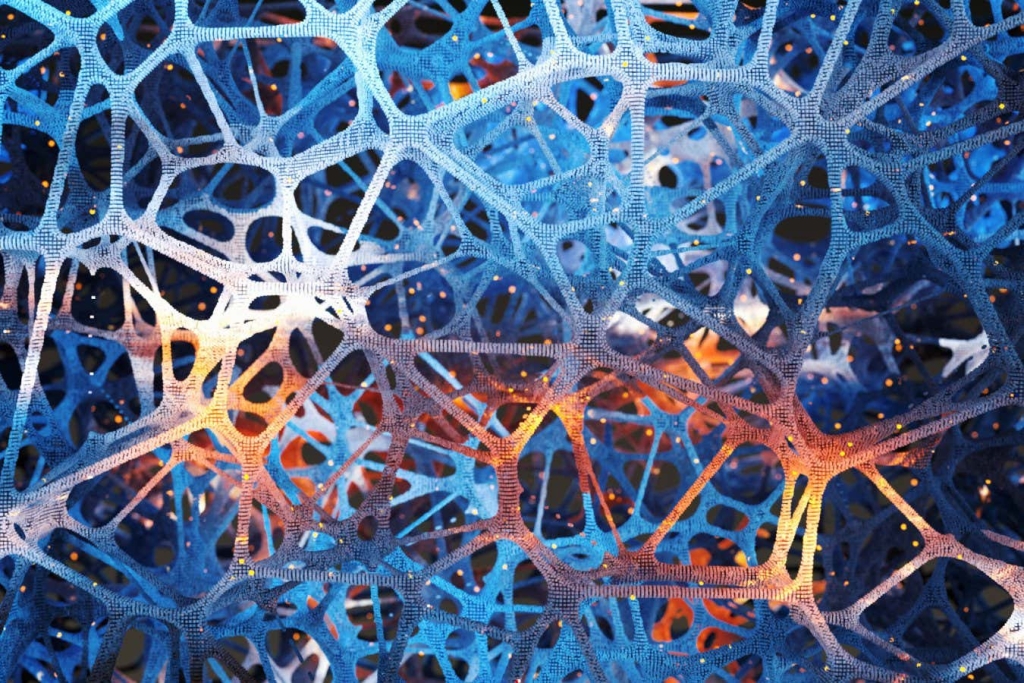
BREAKING: Biological Data Centers Revolutionize Computing – Human Brain Cells Play Doom in 7 Days!
In a stunning leap that blurs the line between science fiction and reality, Australian tech startup Cortical Labs has unveiled plans to build the world’s first biological data centers, powered by living human brain cells capable of learning complex tasks in record time. The announcement, made earlier this month, sent shockwaves through the tech industry and sparked intense debate about the future of computing.
The CL1: A Living Computer That Learns Like a Human Brain
At the heart of Cortical Labs’ revolutionary technology lies the CL1, a biological computer chip containing actual human neurons grown in laboratory conditions. These neurons are connected to microelectrode arrays that can both stimulate the cells and measure their responses when fed data. In a jaw-dropping demonstration, the company showed that a CL1 unit could learn to play the classic video game Doom in just seven days – a feat that would take conventional AI systems weeks or even months to achieve.
“This isn’t just another incremental improvement in computing,” says Michael Barros, a researcher at the University of Essex who has been using Cortical Labs’ cloud services. “We’re witnessing the birth of an entirely new paradigm in computing. The CL1 doesn’t just process information; it learns and adapts in ways that mimic biological intelligence.”
Melbourne and Singapore: The Epicenters of Biological Computing
Cortical Labs has announced plans to construct two massive biological data centers – one in Melbourne, Australia, and another in collaboration with the National University of Singapore. The Melbourne facility will house approximately 120 CL1 units, while the Singapore center will start with 20 units but aims to expand to 1,000 units once regulatory approvals are secured.
“The scale of this undertaking is unprecedented,” explains Paul Roach from Loughborough University. “We’re talking about creating environments where living brain cells are maintained and operated at industrial scale. It’s like building a farm, but instead of crops, we’re cultivating intelligence.”
Energy Efficiency That Defies Belief
One of the most compelling aspects of biological computing is its potential for massive energy savings. According to Cortical Labs, each CL1 unit requires only about 30 watts of power – a fraction of the thousands of watts needed by state-of-the-art conventional AI chips. When scaled up to data center size, the energy savings could be astronomical.
“Imagine data centers that consume a tiny fraction of the electricity of traditional facilities,” says Roach. “The environmental impact could be transformative. We’re not just talking about cost savings; we’re talking about making computing sustainable at a scale we’ve never seen before.”
The Science Behind the Magic
The technology works by growing human neurons in controlled laboratory conditions and connecting them to sophisticated electrode arrays. These arrays can send electrical signals to the neurons and measure their responses, effectively creating a two-way communication channel with living brain tissue.
“Think of it as creating a very basic form of brain,” explains Reinhold Scherer of the University of Essex. “These neurons can form connections, learn patterns, and respond to stimuli. The challenge is figuring out how to harness this biological intelligence for practical computing tasks.”
Beyond Gaming: The Real-World Applications
While playing Doom makes for an impressive demonstration, the real potential of biological computing extends far beyond entertainment. Researchers are exploring applications in drug discovery, financial modeling, climate prediction, and even advanced robotics.
“The beauty of biological systems is their ability to handle uncertainty and adapt to new situations,” says Tjeerd olde Scheper from Oxford Brookes University. “Traditional computers excel at precise calculations, but they struggle with the kind of fuzzy, pattern-based thinking that biological systems handle naturally.”
The Challenges Ahead
Despite the excitement, experts caution that biological computing is still in its infancy. Steve Furber from the University of Manchester points out that we’re still far from being able to run complex language models or perform general-purpose computing on these systems.
“We’re essentially trying to teach a new form of intelligence how to think,” Furber explains. “It’s not as simple as programming a computer. We’re still discovering the fundamental principles of how to communicate with and train these biological systems.”
Ethical Considerations and Public Concerns
The use of human brain cells in computing raises profound ethical questions. Where do these cells come from? What rights do they have? Could these systems develop consciousness?
“These are questions we need to address now, before the technology becomes widespread,” says an ethicist who requested anonymity. “We’re creating systems that blur the line between living tissue and computing hardware. The implications for our understanding of consciousness and intelligence are staggering.”
The Race to Biological Supremacy
Cortical Labs isn’t alone in pursuing biological computing. Competitors like FinalSpark are also developing similar technologies, and research institutions worldwide are racing to unlock the secrets of biological computation.
“This is shaping up to be the next great technological arms race,” says Barros. “The country or company that masters biological computing first could gain an insurmountable advantage in everything from artificial intelligence to scientific research.”
What This Means for You
For the average person, the rise of biological computing could mean faster, more efficient AI services, more powerful personal devices, and potentially even direct brain-computer interfaces in the future.
“The long-term vision is to create computers that think more like humans do,” explains Roach. “Imagine AI that can truly understand context, nuance, and ambiguity. That’s the promise of biological computing.”
The Bottom Line
Cortical Labs’ announcement represents more than just another tech breakthrough – it’s a fundamental shift in how we think about computing. By harnessing the power of living brain cells, we may be on the cusp of a computing revolution that could dwarf the impact of the silicon chip.
As the Melbourne and Singapore data centers come online in the coming months, all eyes will be on Cortical Labs to see if they can deliver on the immense promise of biological computing. One thing is certain: the future of computing will be alive in ways we’re only beginning to understand.
viral tags: biological data center, living computer chips, human brain cells computing, CL1 technology, Doom-playing neurons, sustainable computing, energy-efficient AI, Melbourne tech revolution, Singapore innovation hub, Cortical Labs breakthrough, biological intelligence, neuron-based computing, future of AI, brain-computer interface, ethical computing, next-gen technology, scientific revolution, tech startup success, computing paradigm shift, living technology
viral sentences: “Human brain cells are now playing video games in data centers.” “The future of computing is alive and learning.” “Forget silicon – the next chip revolution is biological.” “Melbourne becomes ground zero for living computers.” “Singapore leads the charge in neuron-based technology.” “Energy savings so massive they sound impossible.” “The line between biology and technology just disappeared.” “Computing that thinks more like a human brain.” “A technological revolution that’s actually sustainable.” “The race to build computers that can learn like living things.”
,


Leave a Reply
Want to join the discussion?Feel free to contribute!