
Apple buys “Silent Speech” AI startup for $2B, because talking is so 2025
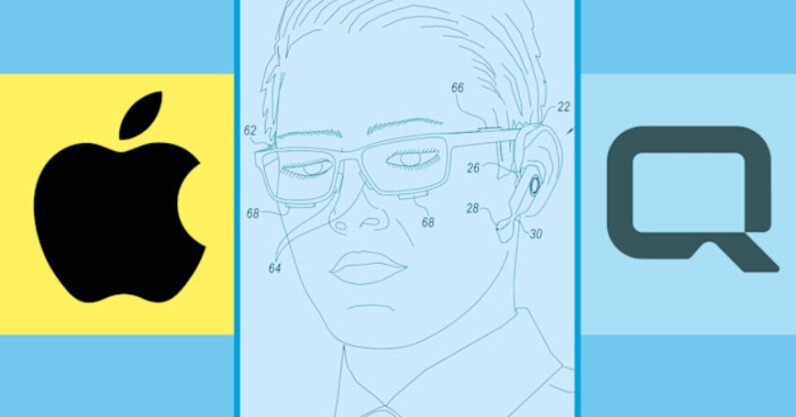
Apple has confirmed the acquisition of Israeli AI startup Q.ai in a deal valued at close to $2 billion, marking one of the largest purchases in the company’s history—second only to the $3 billion Beats acquisition in 2014. But before you start imagining a new line of premium headphones, think again. This isn’t a repeat of Beats 2.0. Apple isn’t buying a brand to flex; it’s investing in a technology that could let your devices understand you without you ever saying a word.
In a world where we mute our phones to avoid interruptions, the future may be one where our devices mute us—figuratively speaking—so they can anticipate our needs without us having to speak at all. That’s the promise of “silent speech” technology, and it’s precisely what Q.ai has been working on.
Q.ai specializes in AI-driven systems capable of interpreting non-verbal cues—gestures, micro-expressions, and even subtle shifts in posture—to infer intent and context. The startup’s technology leverages advanced machine learning models trained on vast datasets of human behavior, enabling devices to respond to unspoken commands. Imagine adjusting your smart home settings with a glance, pausing a video with a raised eyebrow, or sending a text by simply thinking about the words. It’s the kind of seamless interaction that feels ripped from science fiction but is now within reach.
Apple’s interest in this space isn’t new. The company has been quietly building its AI capabilities for years, from Siri’s early voice recognition to the more recent advancements in on-device processing with the Neural Engine. But Q.ai’s technology represents a leap forward—one that could redefine how humans interact with machines. By integrating silent speech into its ecosystem, Apple could make its devices more intuitive, personal, and, ultimately, indispensable.
The acquisition also underscores Apple’s broader strategy in the AI race. While competitors like Google and Amazon have focused on cloud-based AI assistants, Apple has consistently prioritized privacy and on-device processing. Silent speech technology aligns perfectly with this approach, as it could enable powerful AI interactions without the need to transmit sensitive data to external servers. Your device learns your habits, understands your needs, and responds—all without ever leaving your pocket or wrist.
Of course, the road to mainstream adoption won’t be without challenges. Silent speech technology is still in its infancy, and there are significant hurdles to overcome, from accuracy and reliability to user acceptance. Will people feel comfortable with devices that seem to read their minds? How will the technology handle cultural differences in non-verbal communication? And what about accessibility—could this be a game-changer for individuals with speech impairments or mobility challenges?
Apple’s track record suggests it’s well-equipped to tackle these questions. The company has a history of taking cutting-edge technology and making it accessible to the masses, from the graphical user interface to the smartphone itself. If anyone can turn silent speech into a mainstream reality, it’s Apple.
The timing of the acquisition is also noteworthy. As AI continues to evolve at breakneck speed, tech giants are scrambling to secure the talent and technology that will define the next decade. Apple’s move signals that it’s not content to play catch-up—it’s aiming to lead the charge into a future where talking to your devices might feel as outdated as dial-up internet.
For now, details about the acquisition remain sparse. Apple has not disclosed how it plans to integrate Q.ai’s technology into its products, nor has it provided a timeline for when we might see the fruits of this billion-dollar investment. But one thing is clear: the way we interact with technology is about to change in ways we can’t yet fully imagine.
As we look ahead, it’s worth pondering the implications of a world where our devices understand us without us having to say a word. Will it make us more connected, or will it blur the line between convenience and intrusion? Will it empower us, or will it make us reliant on machines in ways we haven’t yet considered?
One thing is certain: Apple’s acquisition of Q.ai is more than just a business deal. It’s a bold statement about the future of human-computer interaction—and a reminder that the next big revolution in technology might not come from what we say, but from what we don’t.
Tags, viral words, and phrases:
- Apple acquires Q.ai for $2 billion
- Silent speech technology
- AI startup acquisition
- Future of human-computer interaction
- Non-verbal communication AI
- Apple’s biggest acquisition since Beats
- Devices that understand without words
- Mind-reading technology
- Next-gen AI interactions
- Apple’s AI strategy
- Privacy-focused AI
- On-device processing
- Gesture recognition
- Micro-expression analysis
- Smart devices of the future
- Tech revolution 2.0
- Apple’s billion-dollar bet
- The end of talking to devices
- Seamless tech interactions
- AI that reads your mind
- Apple’s silent speech secret
- The future is silent
- Q.ai acquisition details
- Apple’s AI dominance
- Innovation in non-verbal tech
- The next big thing in AI
- Apple’s game-changing move
- Silent commands are the future
- Apple’s billion-dollar AI play
- The end of Siri as we know it
- Apple’s quiet revolution
- AI that understands you without words
- The rise of silent tech
- Apple’s boldest acquisition yet
- The future of smart devices
- Apple’s AI-powered future
- Silent speech is here
- Apple’s secret AI weapon
- The end of voice commands
- Apple’s billion-dollar bet on AI
- The future of human-device interaction
- Apple’s silent speech acquisition
- The next frontier in AI
- Apple’s AI acquisition spree
- The end of talking to machines
- Apple’s silent speech revolution
- The future is non-verbal
- Apple’s billion-dollar AI gamble
- The rise of silent technology
- Apple’s AI-powered future is here
,

Leave a Reply
Want to join the discussion?Feel free to contribute!