
Centuries before the Inca, Peru’s wealthy imported parrots from afar
Ancient Andean Trade Networks Revealed: How Parrots Bridged Continents Long Before the Inca
In a stunning revelation that’s reshaping our understanding of pre-Columbian civilizations, archaeologists have uncovered evidence that vibrant parrot feathers served as the ultimate status symbol across ancient Andean cultures for centuries before the rise of the Inca Empire. These colorful blue, green, and red feathers weren’t merely decorative—they were “essential for communicating status, power, and cosmology,” according to researchers Olah and colleagues.
The Feather Economy That Connected Empires
From the misty highlands of the Andes to the arid coastal deserts, parrot feathers dominated the ancient luxury trade. The Wari civilization—predecessors to the Inca—and later the Inca themselves imported millions of these bright rainforest birds over several centuries. Meanwhile, coastal cultures like the Moche and Nasca pursued similar feather fever with equal intensity.
Archaeological evidence reveals these birds’ remarkable journey from tropical forests to desert tombs. Parrot feathers adorned elaborate headdresses and magnificent tunics crafted from thousands of individually sewn feathers attached to cotton cloth. The birds themselves became sacred offerings, appearing as mummified specimens in tombs and temples, while their likenesses were immortalized in sculptures and painted onto pottery across generations.
A Tomb That Changed Everything
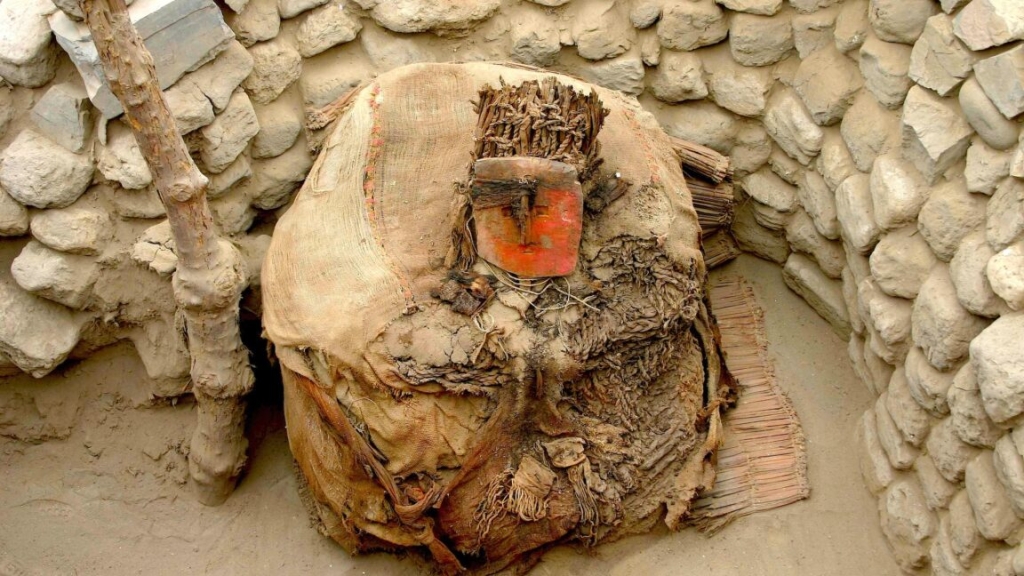
The discovery of parrot feathers on funerary headdresses from one of the few remaining unlooted, intact tombs at Pachacamac provided the crucial link that connected the Ychsma culture to an expansive trade network spanning two continents and hundreds of kilometers. This single find challenged everything archaeologists thought they knew about pre-Inca commerce.
Crossing Mountains and Continents
Before this research, archaeologists understood that connections must have existed between the Amazon basin and the coastal deserts of Chile and Peru, extending north to Mexico and the southwestern United States. However, the mechanics of this trade—particularly how live parrots managed to traverse one of Earth’s most formidable mountain ranges—remained shrouded in mystery for centuries before the Inca Empire established its famous road networks.
The prevailing assumption held that the period between the Wari Empire’s collapse and the Inca’s rise represented a fragmented era where smaller kingdoms and confederations, like the Ychsma and their neighbors, engaged primarily in local squabbles with influence rarely extending beyond their immediate regions. Parrot feathers, however, tell a dramatically different story.
Sophisticated Networks Without Central Authority
Based solely on these avian artifacts, archaeologists now recognize that between-empires Andean cultures maintained complex, thriving, and remarkably sophisticated trade relationships without requiring the imposition of a central imperial government. This revelation fundamentally alters our understanding of pre-Columbian political and economic organization.
Born in the Rainforest, Raised in the Desert
Analysis of headdress feathers identified four distinct parrot species: scarlet macaws, red-and-green macaws, blue-and-yellow macaws, and mealy amazons. The latter, despite their unfortunate “mealy” designation (referring to the dusty “powder down” created by disintegrating feather tips), are charming green birds that deserve better recognition.
All four species naturally inhabit lowland tropical forests and palm swamps throughout the Amazon Basin. The stark contrast between their preferred wet, lush habitats and Peru’s coastal deserts—practically their environmental opposite—makes their presence there all the more remarkable.
Viral Tags & Phrases:
- Ancient feather trade secrets revealed
- Parrots as prehistoric luxury goods
- How birds conquered the Andes
- The colorful currency of ancient empires
- Pre-Inca globalization uncovered
- Feather diplomacy across continents
- Rainforest birds in desert tombs
- Status symbols that shaped civilizations
- The Amazon’s most unexpected export
- Archaeological feathers that flew across empires
- Trading macaws before the Inca roads
- Colorful clues to ancient connections
- Birds that built bridges between cultures
- The parrot network that predated the internet
- Feathers that flew farther than expected
- When birds were worth more than gold
- The original bird-based economy
- Tropical treasures in desert tombs
- How parrots changed history
- The feathered thread connecting ancient worlds
,


Leave a Reply
Want to join the discussion?Feel free to contribute!