
Anthropic-Pentagon battle shows how big tech has reversed course on AI and war | AI (artificial intelligence)
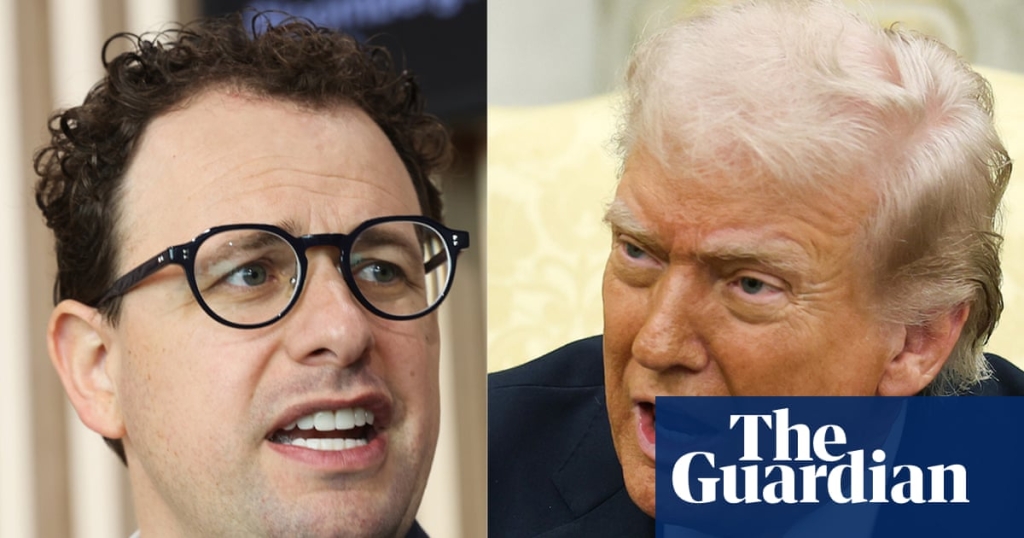
Anthropic’s High-Stakes Legal Battle with the Pentagon: A Defining Moment for AI Ethics in the Age of Militarism
In a dramatic escalation of tensions between Silicon Valley and Washington, AI safety pioneer Anthropic has launched a landmark lawsuit against the Department of Defense, challenging the Pentagon’s attempt to force the company to abandon its ethical guardrails. The legal showdown—which has ignited fierce debate across the tech industry—centers on Anthropic’s refusal to remove restrictions prohibiting its AI model from being used for domestic mass surveillance or fully autonomous lethal weapons.
The dispute erupted after the Pentagon blacklisted Anthropic from government contracts, citing concerns over the company’s “supply chain risks.” Anthropic counters that the government’s demands would violate its constitutional rights and core founding principles, which explicitly prohibit certain military applications of its technology. The lawsuit represents a pivotal moment in the ongoing struggle to define the ethical boundaries of artificial intelligence in an era of intensifying geopolitical competition.
From Google’s Maven Protests to Military Contracts: How Big Tech’s Stance Has Shifted
The conflict underscores a dramatic transformation in Silicon Valley’s relationship with the military-industrial complex. Less than a decade ago, thousands of Google employees staged high-profile protests against Project Maven, a Pentagon initiative to analyze drone footage using AI. Over 3,000 workers signed an open letter declaring “Google should not be in the business of war,” forcing the tech giant to abandon the project and publish policies prohibiting technology that could “cause or directly facilitate injury to people.”
Today, that landscape looks radically different. Google has fired over 50 employees for protesting its military ties to the Israeli government, removed its 2018 restrictions on weapon-related technology from company policies, and announced plans to provide its Gemini AI to the military for creating AI agents for unclassified projects. The company’s chief executive, Sundar Pichai, has explicitly stated that Google is a business, not a forum for “fighting over disruptive issues or debate politics.”
OpenAI has undergone a similar transformation. After maintaining a blanket ban on military access to its models, the company now has its chief product officer serving as a lieutenant colonel in the US military’s “executive innovation corps” and signed a contract worth up to $200 million to integrate its technology into military systems. This week, OpenAI secured a deal with the DoD allowing its tech to be used in classified military systems.
Meanwhile, companies like Palantir and Anduril have built their entire business models around military partnerships, with Palantir’s CEO Alex Karp publishing a book advocating for closer integration of tech and AI with the US military, even accusing the Google workers who protested in 2018 of being “nihilists.”
Anthropic’s Ethical Stand: Drawing a Line in the Sand
Anthropic’s lawsuit represents one of the most significant public challenges to the military’s expanding use of AI technology. The company argues that removing its safety guardrails would violate its founding principles and potentially enable abuse, including domestic mass surveillance and autonomous weapons systems that can select and engage targets without human intervention.
However, Anthropic’s position reveals the complex moral terrain of modern AI development. While refusing to remove certain restrictions, the company has stated it wants to continue working with the Defense Department and has already made significant accommodations. Anthropic’s lawsuit acknowledges that “Claude Gov is less prone to refuse requests that would be prohibited in the civilian context, such as using Claude for handling classified documents, military operations, or threat analysis.”
The government has reportedly been using Claude for target selection and analysis in its bombing campaign against Iran—a use case that Anthropic has given no indication of having an issue with. In his public statements, Anthropic’s CEO Dario Amodei has emphasized that the company and the government “have much more in common than we have differences,” supporting the use of AI for national defense “in all ways except those which would make us more like our autocratic adversaries.”
The Broader Implications: AI Ethics in an Age of Great Power Competition
The Anthropic-Pentagon standoff reflects broader tensions in the tech industry as companies navigate the intersection of ethical principles, business opportunities, and national security concerns. The Trump administration’s push to overhaul federal agencies using artificial intelligence has created lucrative opportunities for AI firms to integrate their products into government and military operations, while looming concerns over China’s technological advancement have shifted attitudes toward closer collaboration with the military.
Margaret Mitchell, chief ethics scientist at Hugging Face, captured the complexity of the situation: “If people are looking for good guys and bad guys, where a good guy is someone who doesn’t support war, then they’re not going to find that here.” The reality is that even companies taking ethical stands are deeply entangled with military applications of their technology.
Amodei’s public statements reveal a worldview that balances concerns about AI safety with a hawkish stance on great power competition. In a lengthy essay published in January, he warned against potential harms of AI such as the creation of deadly bioweapons and threats from China, while simultaneously arguing that companies should arm democratic governments and militaries with the most advanced AI possible to combat autocratic adversaries.
The Future of AI Ethics: Setting Boundaries in an Unregulated Frontier
Anthropic’s legal challenge raises fundamental questions about corporate responsibility, government power, and the ethical development of transformative technologies. As AI systems become increasingly capable and their applications more consequential, the tech industry faces mounting pressure to establish clear boundaries around their use in warfare, surveillance, and other sensitive domains.
The outcome of this dispute could have far-reaching implications for how other AI companies approach military contracts and ethical restrictions. Will Anthropic’s stand inspire other firms to maintain similar guardrails, or will the lure of lucrative government contracts and pressure from the Trump administration push the industry toward a more permissive stance on military applications?
As the lawsuit unfolds, it has become clear that the tech industry’s relationship with the military has entered a new phase—one where ethical considerations must be balanced against national security imperatives, business opportunities, and the competitive pressures of an AI arms race with China. The Anthropic-Pentagon standoff may well become a defining moment in determining how artificial intelligence will be governed and deployed in the service of both war and peace.
Tags: Anthropic, Pentagon, AI ethics, military AI, tech industry, Silicon Valley, Project Maven, Google, OpenAI, Palantir, Anduril, Trump administration, national security, autonomous weapons, mass surveillance, great power competition, AI arms race, ethical guardrails, supply chain risk, classified systems, target selection, defense contracts, corporate responsibility
Viral Phrases:
- “Google should not be in the business of war”
- “Anthropic has much more in common with the Department of War than we have differences”
- “We have said to the department of war that we are OK with all use cases”
- “Basically 98 or 99% of the use cases they want to do, except for two”
- “If people are looking for good guys and bad guys… then they’re not going to find that here”
- “The tech industry’s relationship with the military has entered a new phase”
- “AI ethics in an age of great power competition”
- “Setting boundaries in an unregulated frontier”
- “The lure of lucrative government contracts”
- “AI arms race with China”
- “Transformative technologies”
,
Leave a Reply
Want to join the discussion?Feel free to contribute!