
Intel Xe Driver In Linux 7.1 Preps For Intel Nova Lake P, Introduces VM_BIND DECOMPRESS
Intel Unleashes Next-Gen Power: Xe Driver Gets Decompression Boost and RAS Overhaul for Linux 7.1
The Linux graphics world is buzzing with excitement as Intel drops a bombshell of updates to its Xe driver, setting the stage for the highly anticipated Linux 7.1 kernel. This week’s pull request to DRM-Next is more than just a routine patch—it’s a treasure trove of cutting-edge features, performance optimizations, and hardware enablement that promises to redefine the graphics experience for Intel users everywhere.
Nova Lake P: The Future is Now
At the heart of this update lies relentless support for Intel’s next-generation hardware, specifically the enigmatic Nova Lake P series. For months, whispers have circulated about Nova Lake’s revolutionary Xe3P graphics architecture, and now, those rumors are turning into reality. This week’s patches introduce new workarounds and platform-level stepping information, ensuring that Nova Lake P devices will hit the ground running when they finally arrive.
But Nova Lake isn’t the only star of the show. Intel’s broader Nova Lake enablement efforts are in full swing, with Linux developers working tirelessly to integrate support across the entire stack. From kernel drivers to user-space applications, the Nova Lake ecosystem is shaping up to be a game-changer for gamers, creators, and professionals alike.
VM_BIND DECOMPRESS: A Game-Changer for GPU Performance
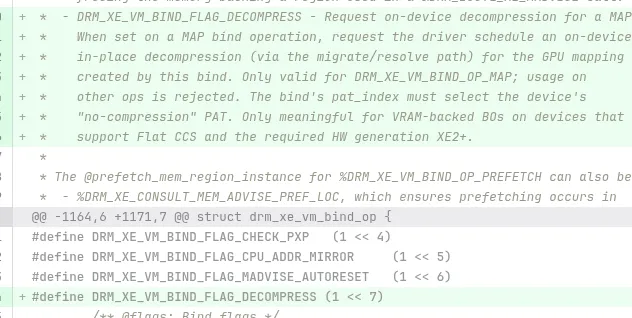
If there’s one feature that’s stealing the spotlight this week, it’s the introduction of the VM_BIND DECOMPRESS flag. This groundbreaking addition to the Linux DRM’s VM_BIND interface unlocks the potential for in-place decompression on the GPU, a capability that could revolutionize how graphics data is processed.
Here’s how it works: the DECOMPRESS flag allows user-space applications to signal the graphics driver that they want on-device, in-place decompression for GPU mappings. In practical terms, this means that compressed textures and other graphics assets can be decompressed directly on the GPU, eliminating the need to shuttle data back and forth between system memory and the GPU. The result? Faster load times, smoother frame rates, and a more responsive overall experience.
Intel’s Compute Runtime is already gearing up to take advantage of this new feature, with code pending to integrate VM_BIND DECOMPRESS support. For now, the Intel Xe driver is the only Linux DRM driver leveraging this capability, and it’s limited to Xe2 and newer hardware. But given the performance gains on offer, it’s only a matter of time before other drivers and hardware vendors follow suit.
RAS Overhaul: Bringing Hardware Reliability to the Masses
In a move that’s been years in the making, Intel is finally rolling out its RAS (Reliability, Availability, and Serviceability) infrastructure over generic Netlink in Linux 7.1. This long-awaited feature introduces a standardized way for drivers to expose RAS nodes and their associated error counters to user-space, paving the way for more robust hardware monitoring and error management.
The new interface is designed to be both structured and extensible, allowing each drm_ras node to register its own set of error counters. These counters are then discoverable and queryable through Netlink operations, providing developers and system administrators with unprecedented insight into the health of their hardware. While the initial implementation focuses on error-counter nodes, the framework is flexible enough to accommodate future enhancements, such as support for accelerated devices.
This is a big deal for anyone who relies on their hardware to perform at its best, whether they’re running a high-stakes gaming rig, a content creation workstation, or a mission-critical server. By standardizing RAS reporting across different DRM drivers, Intel is making it easier than ever to identify and address hardware issues before they escalate into full-blown failures.
What’s Next?
With Linux 7.1’s merge window just around the corner, the stage is set for these features to make their debut in the mainline kernel. For Intel users, this means a future filled with faster, more reliable, and more capable graphics hardware. For developers, it’s an opportunity to push the boundaries of what’s possible with GPU computing.
But the story doesn’t end here. As Nova Lake hardware begins to ship and more drivers adopt features like VM_BIND DECOMPRESS, we can expect to see a wave of innovation sweep through the Linux graphics ecosystem. Whether you’re a gamer chasing the highest frame rates, a creator working with massive 3D models, or a developer building the next generation of GPU-accelerated applications, the future looks brighter than ever.
So buckle up, because the next chapter in Intel’s graphics journey is just getting started—and it’s going to be one wild ride.
Tags: Intel, Xe Driver, Linux 7.1, Nova Lake P, Xe3P Graphics, VM_BIND DECOMPRESS, GPU Decompression, RAS Infrastructure, Generic Netlink, DRM Driver, Hardware Enablement, Kernel Development, Graphics Performance, Intel Compute Runtime, Error Counters, Hardware Reliability, Linux Graphics, Next-Gen Hardware
Viral Sentences:
- “Intel’s VM_BIND DECOMPRESS is about to change the game for GPU performance!”
- “Nova Lake P is coming, and it’s bringing Xe3P graphics that will blow your mind.”
- “Linux 7.1 is set to deliver the most robust RAS infrastructure yet—hardware reliability just got a major upgrade.”
- “Intel’s latest Xe driver pull is a treasure trove of next-gen features you won’t want to miss.”
- “The future of Linux graphics is here, and it’s powered by Intel’s relentless innovation.”
,

Leave a Reply
Want to join the discussion?Feel free to contribute!