
Future AI chips could be built on glass
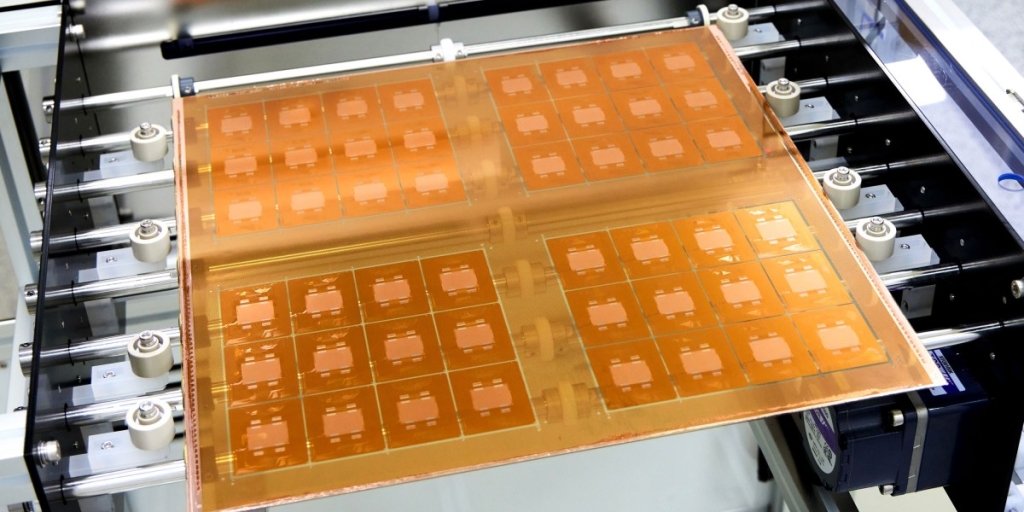
Glass Revolution: The Material Poised to Transform AI Chip Performance
In the high-stakes world of semiconductor innovation, where every nanometer counts and energy efficiency can make or break the next generation of artificial intelligence, a seemingly humble material is emerging as a potential game-changer: glass. What was once primarily associated with windows and smartphone screens is now being reimagined as a revolutionary substrate for AI chips, promising to address some of the most pressing challenges in modern computing.
The promise of glass as a semiconductor substrate lies in its extraordinary properties. Researchers have discovered that glass can be polished to an almost unimaginable smoothness—5,000 times smoother than traditional organic substrates. This level of precision isn’t just impressive; it’s transformative. Xiaoxi He, a research analyst at IDTechEx, explains that this exceptional smoothness could eliminate microscopic defects that plague current semiconductor manufacturing. These defects, which occur when metal layers are deposited onto semiconductor materials, can degrade chip performance or render entire batches unusable.
But the potential of glass extends far beyond mere smoothness. The material’s unique optical properties open up entirely new architectural possibilities for chip design. Unlike traditional copper-based interconnects, glass can guide light, enabling chip designers to create high-speed signal pathways directly within the substrate itself. Kulkarni at AMD describes this as “holding enormous potential for the future of energy-efficient AI compute.” The implications are profound: a light-based system could move data with dramatically less energy than current copper pathways, which are notoriously power-hungry.
This breakthrough comes at a critical moment in the evolution of artificial intelligence. As AI models grow increasingly complex and demanding, the energy consumption of data centers has become a significant concern. The ability to move signals with minimal energy loss could be the key to unlocking more powerful, efficient AI systems without the massive power draw that currently limits their scalability.
The journey of glass substrates from laboratory curiosity to potential industry standard is a testament to the power of academic-industrial collaboration. The story begins in 2009 at the 3D Systems Packaging Research Center at the Georgia Institute of Technology, where pioneering research into glass packaging first took root. What started as academic exploration eventually blossomed into a strategic partnership between Georgia Tech and Absolics, a subsidiary of SKC, a South Korean leader in advanced materials.
The collaboration reached a significant milestone in 2024 when SKC constructed a dedicated semiconductor facility in Covington, Georgia, specifically for manufacturing glass substrates. This wasn’t just any facility—it represented a $600 million investment in American semiconductor manufacturing, supported by two grants totaling $175 million through the US government’s CHIPS for America program, established under President Joe Biden’s administration.
Absolics, now at the forefront of this technological revolution, is moving decisively toward commercialization. The company plans to begin manufacturing small quantities of glass substrates for customers this year, marking a critical transition from research to real-world application. According to Yongwon Lee, a research engineer at Georgia Tech, Absolics has led the way in commercializing glass substrates, though he notes that the company isn’t alone in recognizing the material’s potential.
The current manufacturing capacity at Absolics’ facility—12,000 square meters of glass panels annually—might seem modest, but the implications are substantial. Lee estimates this volume could provide glass substrates for between 2 million and 3 million chip packages the size of Nvidia’s H100 GPU, one of the most advanced AI accelerators on the market.
However, the glass substrate ecosystem is rapidly evolving from a single-player field to a competitive industrial race. Multiple major manufacturers, including Samsung Electronics, Samsung Electro-Mechanics, and LG Innotek, have “significantly accelerated” their research and pilot production efforts in glass packaging over the past year. This surge of interest suggests that the industry recognizes glass substrates as more than just an interesting alternative—they represent a potential paradigm shift in how we build and power the next generation of computing.
The timing of this innovation couldn’t be more critical. As artificial intelligence continues to advance at breakneck speed, the limitations of current semiconductor technology become increasingly apparent. Energy efficiency, performance bottlenecks, and manufacturing defects all stand as barriers to further progress. Glass substrates, with their unique combination of smoothness, optical properties, and potential for energy savings, could be the key to overcoming these obstacles.
What makes this development particularly exciting is that it represents a fundamental rethinking of how we approach chip design. Rather than simply making incremental improvements to existing technologies, the glass substrate approach opens up entirely new architectural possibilities. The ability to guide light through the substrate itself could lead to three-dimensional chip designs that were previously impossible, potentially revolutionizing everything from AI training to real-time inference.
As we stand on the brink of this potential revolution, the semiconductor industry finds itself at a fascinating crossroads. The convergence of academic research, industrial investment, and government support has created the perfect conditions for breakthrough innovation. Whether glass substrates will ultimately live up to their promise remains to be seen, but one thing is certain: the race to transform AI computing has entered an exciting new phase.
Tags: Glass substrates, AI chips, semiconductor innovation, energy efficiency, 3D packaging, optical interconnects, CHIPS Act, Georgia Tech, Absolics, Samsung, LG Innotek, Nvidia H100, AI compute, power consumption, chip manufacturing, technological breakthrough
Viral Phrases: “Glass revolution in AI,” “5,000 times smoother than organic substrates,” “Light-based signal pathways,” “Energy-efficient AI compute,” “Semiconductor paradigm shift,” “The future of chip design,” “Glass substrates: The next big thing,” “Transforming how AI thinks,” “Manufacturing defect elimination,” “Optical properties breakthrough,” “Academic-industrial collaboration success,” “Government-backed semiconductor innovation,” “Competitive glass substrate race,” “Three-dimensional chip architecture,” “The smoothness that changes everything”
,


Leave a Reply
Want to join the discussion?Feel free to contribute!