
Why physical AI is becoming manufacturing’s next advantage
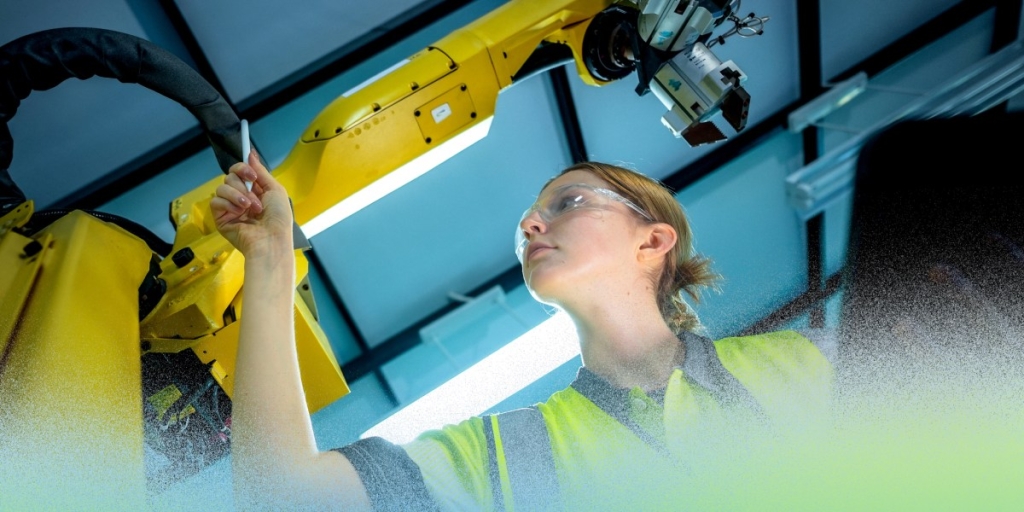
Microsoft and NVIDIA: Accelerating Physical AI at Scale
In the rapidly evolving landscape of industrial technology, a new paradigm is emerging that promises to revolutionize how factories operate, products are developed, and supply chains are managed. At the forefront of this transformation are two tech giants—Microsoft and NVIDIA—who have joined forces to accelerate the deployment of physical AI systems at an unprecedented scale.
The Foundation: Beyond Point Solutions
Physical AI cannot be delivered through point solutions. It requires agentic-driven, enterprise-grade development, deployment, and operations toolchains and workflows that connect simulation, data, AI models, robotics, and governance into a coherent system. This holistic approach represents a fundamental shift from traditional automation to intelligent systems that can perceive, reason, plan, and take action in the physical world.
NVIDIA is building the AI infrastructure that makes physical AI possible, including accelerated computing, open models, simulation libraries, and robotics frameworks and blueprints that enable the ecosystem to build autonomous robotics systems. These systems go beyond simple automation—they can understand their environment, make decisions based on complex data inputs, and execute actions with precision and adaptability.
Microsoft complements this with a cloud and data platform designed to operate physical AI securely, at scale, and across the enterprise. The company’s Azure cloud infrastructure provides the backbone for deploying these intelligent systems across diverse environments, from manufacturing floors to distribution centers.
A Symbiotic Partnership
Together, Microsoft and NVIDIA are enabling manufacturers to move beyond pilots toward production-ready physical AI systems that can be developed, tested, deployed, and continuously improved across heterogeneous environments spanning the product lifecycle, factory operations, and supply chain. This partnership represents more than just technological integration—it’s a complete reimagining of how industrial operations can function in an increasingly complex and competitive global marketplace.
The collaboration leverages NVIDIA’s expertise in GPU-accelerated computing and AI model development with Microsoft’s strengths in cloud infrastructure, enterprise software, and data management. This combination creates a powerful ecosystem where physical AI can thrive, evolve, and deliver tangible business value.
From Intelligence to Action: Human-Agent Teams in the Factory
At the industrial frontier, AI is not a standalone system, but a digital teammate. When AI agents are grounded in the proper operational data, embedded in human workflows, and governed end to end, they can assist with tasks that were previously impossible or impractical to automate.
Manufacturers are beginning to use simulation-grounded AI agents to evaluate production changes virtually before deploying them on the factory floor, reducing risk while accelerating decision-making. These agents can simulate thousands of scenarios in minutes, identifying potential bottlenecks, quality issues, or efficiency opportunities that human planners might miss.
Crucially, frontier manufacturers design these systems so humans remain in control. AI executes, monitors, and recommends, while people provide intent, oversight, and judgment. This balance allows organizations to move faster without losing confidence or control. The result is a symbiotic relationship where human creativity and strategic thinking are amplified by AI’s computational power and tireless execution.
Real-World Applications Taking Shape
The practical applications of this human-agent teaming are already emerging across industries. In automotive manufacturing, AI agents are coordinating complex assembly line operations, adjusting conveyor speeds, robotic arm movements, and quality inspection timing in real-time to optimize throughput without compromising safety or quality standards.
In electronics manufacturing, AI systems are predicting component failures before they occur, scheduling preventive maintenance during optimal windows, and even suggesting design modifications that could improve reliability or reduce costs. These systems learn continuously from operational data, becoming more accurate and valuable over time.
Supply chain optimization represents another critical area where physical AI is making an impact. AI agents can monitor global logistics networks, predict disruptions from weather, political events, or market changes, and automatically reroute shipments or adjust production schedules to maintain service levels. This level of responsiveness was simply impossible with traditional systems.
The Role of Trust in Scaling Physical AI
As physical AI systems scale, trust becomes the limiting factor. Organizations must have confidence that these systems will operate safely, make sound decisions, and remain under human control. This requires robust governance frameworks, transparent decision-making processes, and fail-safe mechanisms that prevent catastrophic failures.
Trust also extends to data security and privacy. Physical AI systems often process sensitive operational data, intellectual property, and potentially personal information about workers. Ensuring this data remains protected while still enabling the AI to learn and improve is a delicate balance that both Microsoft and NVIDIA are addressing through advanced encryption, secure multi-party computation, and privacy-preserving machine learning techniques.
The Path Forward
The journey toward widespread physical AI adoption is still in its early stages, but the trajectory is clear. As these systems mature, become more reliable, and demonstrate clear ROI, adoption will accelerate. The partnership between Microsoft and NVIDIA provides a solid foundation for this evolution, offering enterprises a proven path from pilot projects to full-scale deployment.
The future of manufacturing and industrial operations is not about replacing humans with machines, but about creating powerful partnerships between human creativity and AI-driven execution. This collaboration between Microsoft and NVIDIA is lighting the way forward, showing how physical AI can transform industries while maintaining the human touch that remains essential to innovation and progress.
Tags: #PhysicalAI #IndustrialRevolution #MicrosoftNVIDIA #SmartManufacturing #AIinIndustry #DigitalTransformation #Robotics #AutonomousSystems #FactoryOfTheFuture #Industry40 #CloudComputing #AcceleratedComputing #HumanAICollaboration #SupplyChainOptimization #ManufacturingInnovation
Viral Phrases: “AI that thinks and acts,” “digital teammates on the factory floor,” “intelligence meets action,” “the future of manufacturing is here,” “human-agent teams,” “simulation-grounded AI,” “trust as the limiting factor,” “beyond pilots to production,” “autonomous robotics systems,” “accelerated computing power,” “enterprise-grade AI infrastructure,” “physical world reasoning,” “continuous improvement at scale,” “real-time optimization,” “predictive maintenance revolution,” “secure AI deployment,” “governance in the age of AI,” “the symbiosis of human and machine,” “industrial AI transformation,” “scalable physical intelligence,” “next-generation manufacturing,” “AI-powered supply chains,” “the digital factory reimagined,” “intelligent automation ecosystem,” “frontier manufacturing,” “AI that learns and adapts,” “the new industrial partnership,” “from concept to reality,” “building trust in AI systems,” “the path to production-ready AI,” “transforming industries through partnership.”
,


Leave a Reply
Want to join the discussion?Feel free to contribute!