
The MacRumors Show: MacBook Neo First Impressions
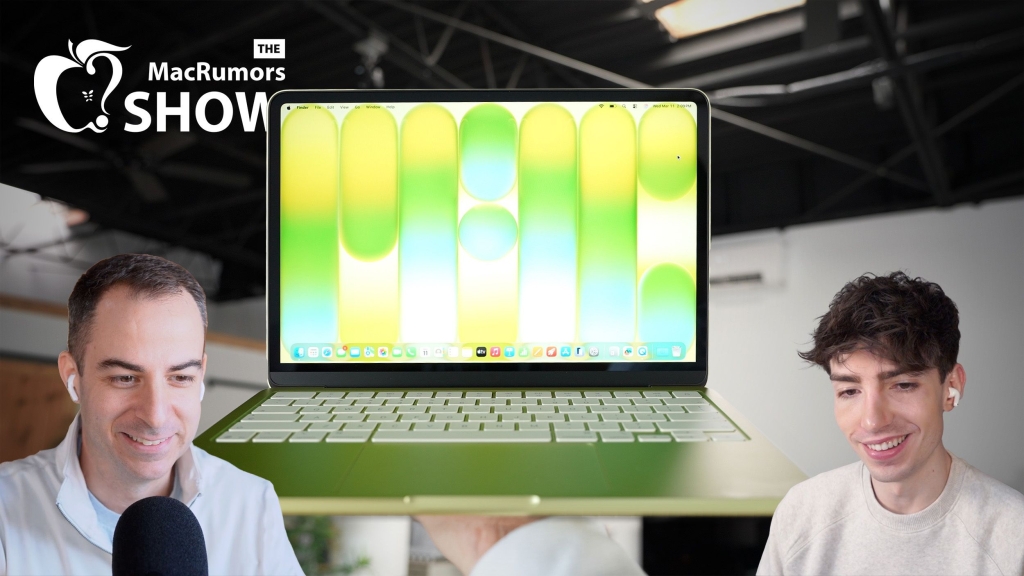
The MacBook Neo Arrives: Apple’s Bold $599 Gamble with iPhone Tech
Apple has done it again. Just when we thought we’d seen every possible permutation of their product lineup, the tech giant has dropped a bombshell: the MacBook Neo, a $599 laptop powered by the iPhone’s A18 Pro chip. This isn’t just another Mac—it’s Apple’s most daring hardware experiment in years, and it’s already sending shockwaves through the tech world.
The Revolutionary A18 Pro Inside a MacBook
Let’s cut to the chase: the MacBook Neo is the first Mac ever to run on an iPhone-class processor. While every other Apple silicon Mac has used the M-series chips, Apple has taken a radically different approach with the Neo. The A18 Pro, which debuted in the iPhone 16 Pro, now finds itself in a laptop form factor, delivering performance that’s surprisingly competitive for its price point.
But here’s the kicker: Apple isn’t just repurposing old iPhone silicon. The A18 Pro in the MacBook Neo has been optimized for laptop workloads, with enhanced thermal management and sustained performance capabilities that make it viable for everyday computing tasks. Early benchmarks suggest it can handle everything from web browsing to light content creation without breaking a sweat.
The Trade-Offs That Make It Possible
At $599, the MacBook Neo is $500 cheaper than the base MacBook Air. That price difference isn’t magic—it’s the result of some serious compromises that might make purists cringe but budget-conscious consumers cheer.
The Neo skips keyboard backlighting, the haptic trackpad, P3 wide color support, True Tone display technology, ambient light sensing, and the camera indicator LED. There’s no MagSafe charging, no Thunderbolt connectivity, and the base model comes with just 8GB of unified memory. The webcam is a basic 720p affair (no Center Stage), and Touch ID isn’t standard on lower-end configurations.
It’s also physically thicker than the MacBook Air, with slightly reduced battery life and larger bezels around a slightly smaller display. But here’s the thing: for many users, these omissions won’t matter. The Neo isn’t trying to be the best MacBook—it’s trying to be the most accessible one.
Real-World Performance: Surprisingly Capable
The big question everyone’s asking: can an iPhone chip really power a laptop? The answer, based on early reviews, is a qualified yes. The A18 Pro handles everyday tasks with ease—browsing with dozens of tabs, streaming video, light photo editing, and even some gaming. The 8GB memory configuration is the main bottleneck, but for users who primarily work in web apps and light productivity software, it’s more than sufficient.
What’s particularly impressive is how cool and quiet the Neo runs. Without the power-hungry components of higher-end Macs, the Neo stays whisper-quiet even under load, and battery life, while slightly reduced from premium models, still delivers a full workday for most users.
The Studio Display XDR: Pro Display’s Successor
While the MacBook Neo steals headlines, Apple quietly introduced the Studio Display XDR, replacing the aging Pro Display XDR. This new 27-inch 5K mini-LED powerhouse features a 120Hz refresh rate, HDR brightness up to 2,000 nits, and Thunderbolt 5 connectivity. It’s positioned as the ultimate companion for creative professionals, offering color accuracy and brightness that rivals standalone reference monitors costing thousands more.
iPhone 17e: The Budget King Gets a Major Upgrade
Apple’s also refreshed its budget iPhone lineup with the iPhone 17e, which retains the $599 price point but adds the A19 chip, MagSafe support, Apple’s second-generation C1X modem, and doubles base storage to 256GB. It’s a significant upgrade that makes the cheapest iPhone more capable than ever, directly competing with budget Android offerings while maintaining Apple’s premium ecosystem benefits.
The Strategy Behind Apple’s Budget Offensive
Here’s what makes this move so fascinating: Apple is intentionally fragmenting its product lineup to capture markets it previously ignored. The MacBook Neo isn’t just a cheaper laptop—it’s a strategic weapon aimed at Windows laptops and Chromebooks in education, business, and developing markets where Apple’s premium pricing was previously a barrier.
By using iPhone silicon, Apple can achieve economies of scale that make this pricing possible. The A18 Pro is already produced in massive quantities for iPhones, so adapting it for laptops reduces development and manufacturing costs. This vertical integration is something no Windows manufacturer can match.
Early Market Reaction: Sold Out Everywhere
The market has spoken, and it’s buying what Apple’s selling. Reports indicate the MacBook Neo is already experiencing supply constraints, with many Apple Stores showing “sold out” status for same-day pickup. The combination of that $599 price tag and Apple’s brand appeal has created a perfect storm of demand.
Education institutions are particularly interested, seeing the Neo as a way to deploy Apple devices at Chromebook price points. Small businesses are eyeing it as a capable secondary machine or for frontline workers who need reliable computing without premium features.
The Bottom Line: A New Chapter for Apple
The MacBook Neo represents something bigger than just another product launch. It’s Apple acknowledging that the premium-only strategy has limits, and that there’s room for a truly affordable Apple device that doesn’t feel like a compromise.
For $599, you’re getting an Apple laptop with genuine performance, a quality display, and that intangible “Apple experience” that keeps users coming back. The compromises are real, but for the target audience, they’re the right compromises.
This could be the beginning of a new era where Apple competes across all price points, not just the premium segment. If the Neo succeeds, expect to see more iPhone silicon in unexpected places, more aggressive pricing strategies, and Apple finally going head-to-head with budget manufacturers on their own turf.
The tech world just got a lot more interesting.
Tags: MacBook Neo, A18 Pro, Apple Silicon, $599 laptop, iPhone chip in Mac, budget MacBook, Studio Display XDR, iPhone 17e, Apple budget strategy, mini-LED display, Thunderbolt 5, Chromebook competitor, education tech, Apple vertical integration
Viral Phrases: “Apple’s $599 bombshell,” “iPhone chip powers laptop,” “the compromises that aren’t,” “budget MacBook that doesn’t feel cheap,” “Apple’s budget offensive,” “sold out everywhere already,” “education’s new favorite,” “the Mac lineup just got interesting,” “iPhone silicon goes laptop,” “premium experience at Chromebook prices”
,


Leave a Reply
Want to join the discussion?Feel free to contribute!