
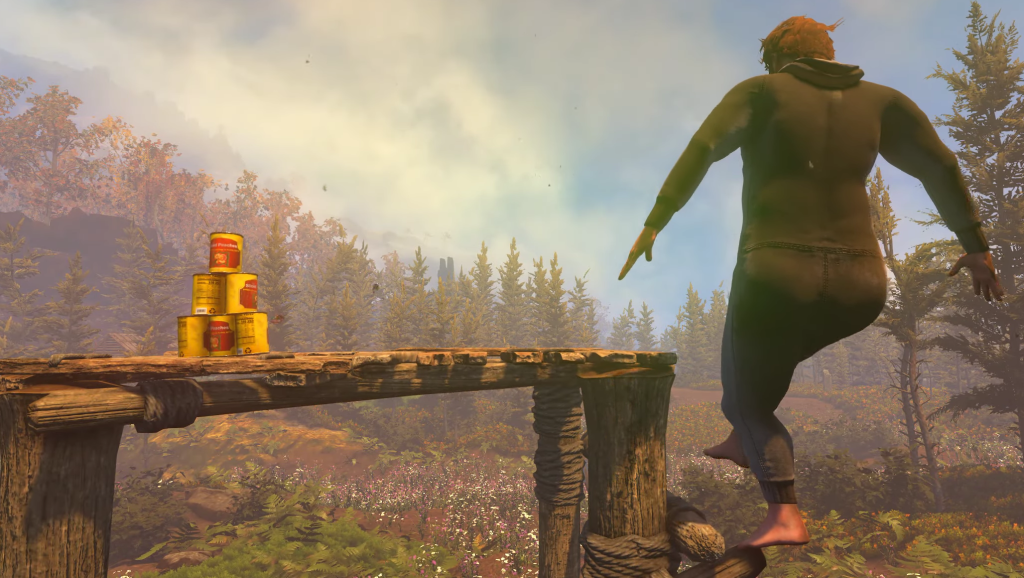
Baby Steps’ designers trolled players by placing stacks of cans at the top of ‘plausible’ climbing challenges they didn’t even bother testing, and players managed to climb them all—except one
Baby Steps: The Art of Indifference in Game Design
In an era where game design often revolves around meticulously crafted experiences—where every challenge is carefully calibrated to keep players engaged without overwhelming them—Baby Steps stands as a defiant outlier. This 2025 indie gem, developed by Gabe Cuzzillo and his team, embraces a philosophy of “indifference to the player,” creating a game that is as frustrating as it is fascinating.
A Philosophy of Indifference
At its core, Baby Steps is a physics-driven climbing game where players control Nate, a character voiced by Cuzzillo himself. The game’s design philosophy is rooted in a rejection of the “theme parky” approach to level design, where every element is designed to guide players seamlessly from one point to the next. Cuzzillo explains, “I felt that singleplayer level design was largely about getting players to go where you wanted them to go, and to know what you want them to know. There’s this dumbing down that occurs in this kind of theme parky version of level design. You’re so concerned with the possibility that players might hurt themselves with your level design that you’re losing something really big. I was really bored with that flavor and that approach.”
The Can Stacks: A Test of Patience
One of the most iconic elements of Baby Steps is the ubiquitous can stacks scattered throughout the game world. These piles of cans serve as both a visual and philosophical statement. Players can kick them over, but they offer no tangible rewards—no points, no collectibles, no progression. Cuzzillo describes them as “the ultimate expression of this idea. All you can do is kick them over, and they’re not even very satisfying.”
The developers took this concept to the extreme by placing can stacks on anything that looked remotely climbable, daring players to attempt the impossible. Most of these stacks were reachable, but one was deliberately placed in an unreachable spot. Watching players struggle to reach this stack initially filled Cuzzillo with anxiety, but he later found beauty in the way it pushed players to try new things. “Putting cans on things we haven’t climbed is asking an open question to our players,” he said. “These open questions are the opposite of traditional singleplayer level design, where we’re trying to communicate something we know to the player. This is more like asking the player what they can find that’s new, to communicate back to us. And you know, players surprise you.”
The Tower of Disappointment
Another standout feature of Baby Steps is its towering structures, which players can spend hours climbing. At the base of one such tower, a character warns players that there’s nothing at the top. True to the game’s philosophy, reaching the summit reveals that the warning was accurate—there’s nothing there. This design choice is a stark contrast to the typical game design ethos, where every challenge is rewarded with some form of progression or loot.
The Beauty of Frustration
Baby Steps thrives on frustration, but it’s a frustration that feels purposeful. By stripping away the usual rewards and hand-holding, the game forces players to engage with its world on its own terms. It’s a game that doesn’t care if you succeed or fail, and that indifference is both its greatest strength and its most polarizing feature.
As Cuzzillo puts it, “Life finds a way.” Even when players are faced with seemingly insurmountable challenges, they often find creative solutions or simply enjoy the process of trying. This open-ended approach to design is a refreshing departure from the tightly controlled experiences that dominate the gaming landscape.
Conclusion
Baby Steps is more than just a game—it’s a statement about the nature of play and the role of the designer. By embracing indifference, Cuzzillo and his team have created a game that is as thought-provoking as it is challenging. It’s a reminder that sometimes, the most rewarding experiences come from the games that don’t try to hold your hand.
Tags: Baby Steps, game design, indie games, physics-based climbing, indifference, frustration, collectibles, open-ended design, Gabe Cuzzillo, 2025 games, viral gaming, game development, level design, player experience, challenge, creativity, innovation, gaming philosophy, indie dev, climbing games, can stacks, towers, disappointment, beauty in frustration, open questions, player surprise, life finds a way, theme park design, dumbing down, communication, new ideas, rewarding experiences, hand-holding, controlled experiences, thought-provoking, challenging, statement, nature of play, role of designer, refreshing departure, tightly controlled, gaming landscape, rewarding, most rewarding, experiences, games, don’t try, hold your hand.
,

Leave a Reply
Want to join the discussion?Feel free to contribute!