
Allen Institute for AI CEO Ali Farhadi steps down as nonprofit navigates shifting AI landscape
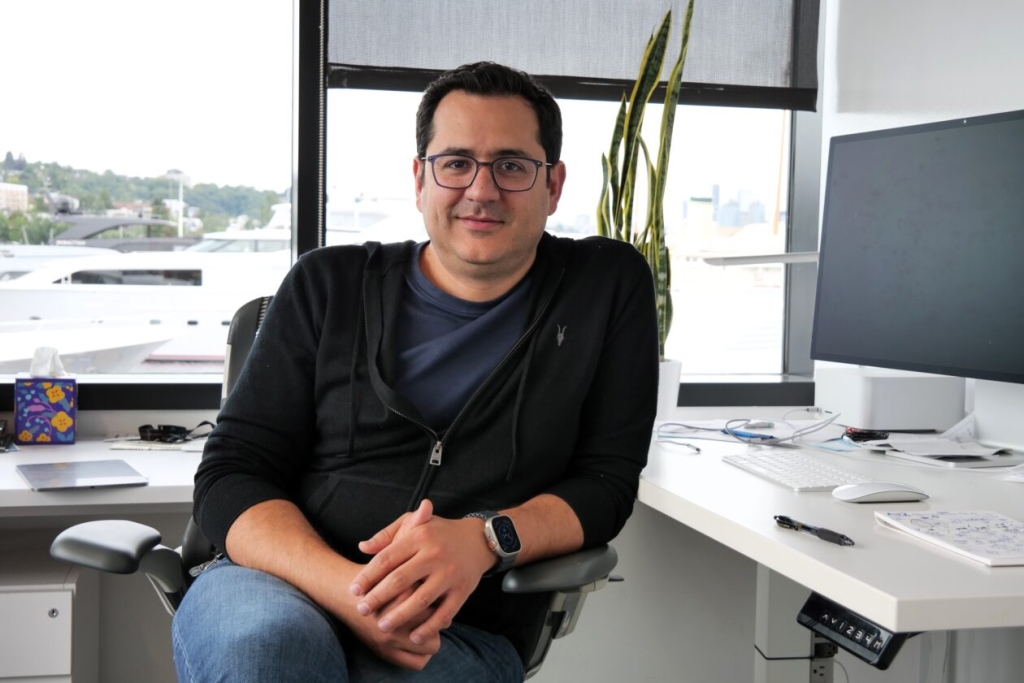
Ali Farhadi Steps Down as CEO of Allen Institute for AI, Citing the Challenges of Competing with Tech Giants
In a significant move that has sent ripples through the artificial intelligence community, Ali Farhadi has announced his departure as CEO of the Allen Institute for AI (Ai2), a Seattle-based nonprofit research institute that has been at the forefront of open-source AI development. Farhadi’s resignation, effective Friday, marks the end of a transformative two-and-a-half-year tenure during which Ai2 solidified its position as a key player in the global AI landscape.
The announcement was made to Ai2’s approximately 200-person team on Thursday morning by board chair Bill Hilf, who revealed that Farhadi would be replaced on an interim basis by Peter Clark, a founding member of Ai2. This leadership transition comes at a critical juncture for the institute, which has been navigating the increasingly competitive and resource-intensive world of AI research.
Farhadi’s decision to step down stems from his desire to pursue research ambitions at the cutting edge of large-scale AI development. In an interview with GeekWire, Hilf explained that Farhadi’s vision extends to areas where for-profit companies are investing billions of dollars annually in computing power and infrastructure. The board chair acknowledged the financial realities of competing against tech giants as a nonprofit, stating, “The cost to do extreme-scale open model research is extraordinary. It’s really hard to do extreme-scale model work inside of a nonprofit.”
This candid assessment highlights a growing challenge in the AI industry: the widening gap between well-funded corporate research labs and nonprofit institutions. As AI models become increasingly complex and resource-intensive, the ability of smaller organizations to keep pace with industry leaders has become more difficult. Hilf’s comments underscore the difficult decisions that nonprofit research institutes must make in allocating their limited resources.
Despite these challenges, Hilf emphasized that Ai2 will continue its work on various fronts, including the development of OLMo, its open-source AI models, and its focus on applying AI to real-world problems in areas such as climate, conservation, and health. This commitment to practical applications of AI research reflects Ai2’s founding mission to advance AI for the common good.
Farhadi’s journey with Ai2 spans nearly a decade. He joined the institute in 2015 and co-founded the Ai2 spinout Xnor.ai, which was acquired by Apple in 2020 for an estimated $200 million. This acquisition marked one of Ai2’s most significant commercial successes and demonstrated the institute’s ability to translate research into marketable technologies. Farhadi’s return to Ai2 as CEO in July 2023 brought him full circle, combining his experience in both academic and corporate AI development.
Throughout his tenure, Farhadi has been credited with expanding Ai2’s influence and visibility in the AI community. Under his leadership, the institute released more than 300 models and artifacts, which have been downloaded over 33 million times. These contributions have had a tangible impact on various fields, including health, science, and environmental research. Farhadi also highlighted investments from the National Science Foundation and Nvidia, as well as initiatives such as the Cancer AI Alliance, as evidence of Ai2’s growing influence and impact.
In a statement, Farhadi reflected on his time at Ai2, saying, “Leading Ai2 has been a true privilege.” He expressed excitement about the institute’s future, noting that it is “entering its next phase from a position of real strength, with growing global adoption of our work and an extraordinary team driving innovation.” Farhadi’s optimism about Ai2’s future underscores the strong foundation he helped build during his tenure.
The leadership transition at Ai2 comes with some organizational changes. Chief Operating Officer Sophie Lebrecht is also leaving the institute. Lebrecht had worked alongside Farhadi at Xnor.ai and Apple before joining him at Ai2, highlighting the close-knit nature of the team Farhadi has assembled.
Hilf provided reassurance about Ai2’s stability during this transition, noting that all programs planned for 2026 are fully funded. He emphasized that Farhadi wanted to ensure this financial stability before stepping down, demonstrating a commitment to the institute’s long-term success. Existing commitments, including a $152 million, five-year initiative backed by the National Science Foundation and Nvidia to build open AI models for scientific research, and Ai2’s role in the Cancer AI Alliance led by Seattle’s Fred Hutch Cancer Center, remain unaffected by the leadership change.
Ai2 was founded in 2014 by the late Microsoft co-founder Paul Allen, reflecting his vision for advancing AI research for the benefit of society. The institute receives major funding from the Foundation for Science and Technology, an Allen entity, with Jody Allen serving on the Ai2 board. This connection to Paul Allen’s legacy adds a layer of significance to the current leadership transition and the institute’s future direction.
Peter Clark, who will serve as interim CEO, brings a wealth of experience to the role. As a founding member of Ai2, he has been integral to the institute’s development from its inception. In his statement, Clark affirmed the continuity of Ai2’s mission, saying, “Our mission remains unchanged: advancing AI research and engineering for the common good, and turning our open breakthroughs into lasting, real-world impact.”
The search for a permanent CEO presents both challenges and opportunities for Ai2. Hilf noted that the board is looking for a candidate who combines scientific depth with nonprofit management experience and a passion for open science. This combination of skills is rare in the AI field, reflecting the unique position that Ai2 occupies at the intersection of cutting-edge research and public benefit.
As Ai2 navigates this leadership transition, the broader AI community will be watching closely. The institute’s ability to maintain its position as a leader in open-source AI development while competing with well-funded corporate entities will be a key test of the sustainability of nonprofit AI research models. Farhadi’s departure raises important questions about the future of open AI development and the role of nonprofit institutions in an increasingly commercialized field.
The story of Ai2 and Ali Farhadi’s tenure as CEO encapsulates many of the tensions and opportunities in contemporary AI research. It highlights the rapid pace of technological advancement, the growing importance of open-source development, and the challenges faced by nonprofit institutions in a field dominated by tech giants. As the search for a new CEO begins, Ai2 stands at a crossroads, with the potential to shape the future of AI research and its applications for the benefit of society.
Tags and Viral Phrases:
- Ali Farhadi steps down
- Allen Institute for AI leadership change
- Nonprofit AI research challenges
- Open-source AI development
- Tech giants vs. nonprofits in AI
- Seattle AI community
- AI research funding
- OLMo open-source models
- Cancer AI Alliance
- Paul Allen’s AI legacy
- Nonprofit AI sustainability
- AI for common good
- AI model development costs
- University of Washington AI research
- Apple acquisition of Xnor.ai
- NSF and Nvidia AI initiatives
- Fred Hutch Cancer Center collaboration
- AI climate and conservation applications
- AI health research advancements
- Open science in AI development
- AI research commercialization tensions
- Future of nonprofit AI institutions
- AI model downloads and impact
- AI research team stability
- Interim CEO Peter Clark
- AI research for societal benefit
- Balancing research and nonprofit management
- AI industry resource disparities
- Open AI community building challenges
,


Leave a Reply
Want to join the discussion?Feel free to contribute!