
MidnightBSD Bans Users in Brazil and California, Warns More Regions Could Follow
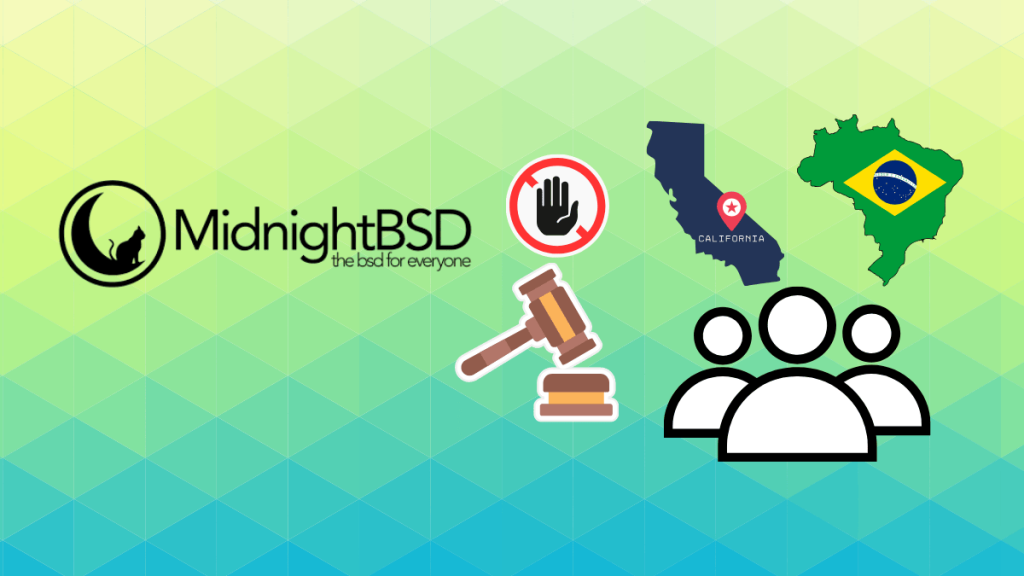
MidnightBSD Takes Bold Stand Against Age Verification Laws: Bans Users from Certain Regions
In a dramatic move that’s sending shockwaves through the open-source community, MidnightBSD—the popular FreeBSD-based desktop operating system—has implemented an unprecedented geographic restriction that bars users from regions with mandatory age verification laws from using their software.
A Defiant Response to Growing Legislative Pressure
The MidnightBSD project, which has been serving the open-source community since 2006, has quietly but firmly updated its licensing terms to exclude users from any country, state, or territory requiring age verification for operating systems. This bold decision comes as a direct response to what the project describes as an “increasingly invasive” wave of legislation sweeping across multiple jurisdictions.
“We cannot, in good conscience, subject our users to these draconian requirements,” stated an anonymous MidnightBSD developer. “Age verification for an operating system is not just impractical—it’s a fundamental violation of privacy and digital freedom.”
Which Regions Are Affected?
As of the latest update, the ban affects:
- Brazil (effective March 17, 2026)
- California (effective January 1, 2027)
- Colorado (pending House vote)
- Illinois (proposed legislation)
- New York (proposed legislation)
The project has explicitly stated that this list will expand as more regions pass similar legislation, creating a dynamic restriction that evolves with the legal landscape.
The Legal Landscape: A Perfect Storm
The timing of MidnightBSD’s decision coincides with a perfect storm of age verification legislation across the United States and internationally. Brazil’s Digital Statute of the Child and Adolescent, California’s Digital Age Assurance Act (AB 1043), and Colorado’s Senate Bill 26-051 represent a coordinated effort by lawmakers to implement what critics call “digital surveillance” under the guise of protecting children.
“These laws are multiplying like a virus,” observed a cybersecurity analyst who wished to remain anonymous. “They’re popping up everywhere, and they all share the same fundamental flaw: they assume that age verification at the operating system level is both possible and desirable.”
The MidnightBSD Project: Small but Mighty
MidnightBSD isn’t just any open-source project. Founded in 2006 by Lucas Holt as a fork of FreeBSD 6.1, it was specifically designed to create a user-friendly BSD experience for everyday desktop users. The operating system ships with the popular Xfce desktop environment and features its own package manager, mport, targeting both i386 and amd64 hardware architectures.
What makes this decision particularly significant is that MidnightBSD operates without corporate backing. It’s a community-driven project where developers contribute their time and expertise out of passion for open-source principles. The potential fines—up to $7,500 per minor for intentional violations—represent an existential threat to a project of this scale.
Enforcement Challenges and Technical Workarounds
The million-dollar question remains: how will this ban actually be enforced? Industry experts suggest several possibilities:
- Geographic IP blocking on official websites and download mirrors
- Regional restrictions on package repositories
- Detection of regional settings during installation
However, the MidnightBSD community is known for its technical sophistication. “Anyone tech-savvy enough to use MidnightBSD will likely know how to bypass such restrictions,” noted a security researcher. “VPNs, proxy servers, and other anonymization techniques make geographic enforcement largely symbolic.”
A Call to Action
In a move that underscores their commitment to digital freedom, MidnightBSD has included a direct appeal to affected users: “We urge users to write their representatives to get these laws repealed or replaced.” This transforms the project from a passive victim of legislation into an active participant in the political process.
The Broader Implications
MidnightBSD’s decision represents a watershed moment for the open-source community. It’s the first major project to take such a definitive stand against age verification laws, potentially inspiring similar actions from other projects facing the same regulatory pressure.
The move also highlights the growing tension between government regulation and technological innovation. As one developer put it, “We’re being asked to build digital walls and checkpoints into the very foundation of computing. That’s not progress—that’s regression.”
What This Means for Users
For users in affected regions, the immediate impact is clear: they cannot legally use MidnightBSD without violating either the project’s terms or local laws. However, the practical implications are more nuanced:
- Existing installations may continue to function
- Users might seek alternative BSD distributions
- The community may develop unofficial mirrors or workarounds
- Some users may choose to engage politically rather than technically
The Future of Digital Freedom
MidnightBSD’s bold stance raises fundamental questions about the future of computing in an increasingly regulated digital landscape. Will other projects follow suit? How will lawmakers respond to such defiance? And most importantly, what does this mean for the principle of open access to technology?
As one MidnightBSD contributor noted, “This isn’t just about age verification. It’s about who controls the digital future—governments, corporations, or the community of users and developers who actually build these tools.”
The MidnightBSD controversy represents more than just a licensing change; it’s a flashpoint in the ongoing battle over digital rights, privacy, and the fundamental nature of open-source software. As age verification laws continue to spread, we can expect more projects to face similar dilemmas, and MidnightBSD’s decision may well become a template for resistance.
The question now is not whether other projects will face this choice, but how they’ll respond when they do.
Tags: #MidnightBSD #AgeVerification #OpenSource #DigitalRights #Privacy #BSD #FreeBSD #TechPolicy #DigitalFreedom #SoftwareLicensing #AgeVerificationLaws #TechNews #Cybersecurity #DigitalPrivacy #OperatingSystems
Viral Phrases: “Age verification laws are multiplying like a virus,” “We cannot, in good conscience,” “Digital surveillance under the guise of protecting children,” “Who controls the digital future,” “Building digital walls and checkpoints into the very foundation of computing,” “The community of users and developers who actually build these tools”
,

Leave a Reply
Want to join the discussion?Feel free to contribute!