
NASA Has No Plan to Rescue Lunar Astronauts in Case of Emergency
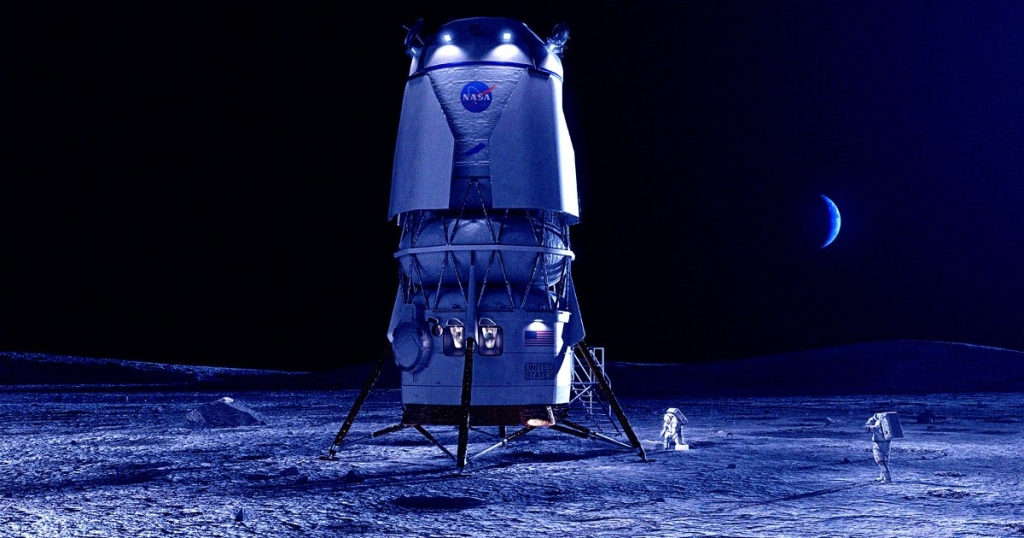
NASA’s Artemis Moon Landing Plans Face Major Safety Concerns, Inspector General Report Reveals
In a stunning revelation that has sent shockwaves through the aerospace community, NASA’s ambitious Artemis program to return humans to the Moon faces significant safety challenges that could jeopardize upcoming missions. The agency’s Inspector General has released a comprehensive report highlighting critical vulnerabilities in the Human Landing System (HLS) contracts with SpaceX and Blue Origin, raising serious questions about astronaut safety and mission viability.
The report, completed before NASA’s recent announcement to restructure its Artemis timeline, paints a sobering picture of the extreme risks involved in lunar exploration. Despite the agency’s commitment to “achievable objectives” and “reliability and standardization,” the document reveals that NASA currently lacks the capability to rescue astronauts stranded on the lunar surface in case of a life-threatening emergency.
This finding echoes a chilling historical precedent from 1969, when presidential speechwriter William Safire drafted a contingency speech for President Richard Nixon in case the Apollo 11 mission ended in disaster. The speech, which thankfully never had to be delivered, acknowledged the grim reality that astronauts Neil Armstrong and Buzz Aldrin would be left to perish on the Moon with no hope of rescue.
The current situation is equally precarious. The Inspector General’s report identifies critical gaps in NASA’s risk reduction methodology, particularly concerning the manual control systems that would allow crew members to take over spacecraft operations during emergencies. These manual control capabilities represent a “key element of HLS’s human-rating certification” and are described as essential for crew survival.
The technical challenges facing both SpaceX and Blue Origin are staggering. SpaceX’s Starship, standing at an imposing 171 feet tall – equivalent to a 14-story building – requires a complex refueling operation involving up to ten Starship tankers delivering propellant to low Earth orbit. This depot must be established and filled at least 200 days before the planned lunar mission. The entire operation involves multiple launches from Kennedy Space Center, orbital rendezvous, refueling, and finally the journey to the Moon.
Blue Origin faces similar challenges with its Blue Moon lander, though at a more modest 53 feet in height. Both companies must overcome significant engineering hurdles to ensure their landers can safely touch down on the lunar surface. NASA requires a maximum tilt tolerance of just eight degrees at the landing site to prevent these massive structures from tipping over – a constraint that becomes even more critical given the unprecedented scale of these modern landers compared to the Apollo-era lunar modules.
The report also highlights specific vulnerabilities in the landing systems. SpaceX’s Starship will require an elevator system to transport crew members from the spacecraft to the lunar surface. Alarmingly, the Inspector General notes that “currently, there is no other method for the crew to enter the vehicle from the lunar surface in the event of an elevator failure.” This single-point failure mode represents a significant safety risk that NASA must address before proceeding with crewed missions.
Adding to the complexity, both landing systems face challenges with landing stability and crew safety during critical operations. The Blue Moon lander, despite being shorter than Starship, still exceeds the height of any previous lunar module and faces similar risks of exceeding safe tilt tolerances during landing and crew operations.
These revelations come at a critical juncture for NASA’s lunar ambitions. The agency plans to conduct extensive testing of both landers in lunar orbit before attempting surface operations, but questions remain about whether either company can deliver on their ambitious timelines. SpaceX, in particular, has yet to successfully launch its Starship into space and recover it, let alone perform the complex orbital refueling operations required for the Artemis missions.
The Inspector General’s findings suggest that NASA’s revised approach of conducting multiple test missions before attempting a crewed landing may be prudent, but they also raise fundamental questions about whether the current architecture can safely support human lunar exploration. The report’s conclusions indicate that while NASA is taking steps to mitigate risks, significant work remains to ensure astronaut safety and mission success.
As NASA moves forward with its Artemis program, these safety concerns will likely influence both the timeline and approach to returning humans to the Moon. The space agency must balance its ambitious goals with the practical realities of ensuring crew safety in an environment where rescue is currently impossible. This delicate balance between exploration and safety will define the future of lunar exploration and could determine whether NASA maintains its leadership in space exploration or cedes ground to international competitors like China.
The coming years will be critical as NASA, SpaceX, and Blue Origin work to address these safety concerns while pushing the boundaries of human space exploration. The success or failure of these efforts will not only determine the fate of the Artemis program but could also shape the future of human spaceflight for decades to come.
#NASA #Artemis #MoonLanding #SpaceX #BlueOrigin #SpaceSafety #LunarExploration #HumanLandingSystem #AstronautSafety #SpaceTechnology #MoonRace #SpaceExploration #NASAInspectorGeneral #LunarMission #SpaceEngineering
lunar landing emergency rescue capability
NASA moon landing safety concerns
Starship refueling challenges
Blue Origin Blue Moon lander risks
Artemis program timeline delays
spacecraft manual control systems
lunar surface rescue limitations
SpaceX Starship testing failures
moon landing tilt tolerance requirements
orbital propellant depot operations
elevator failure lunar surface access
Apollo era vs modern lunar landers
space exploration risk assessment
NASA HLS contract management issues
international space race competition,


Leave a Reply
Want to join the discussion?Feel free to contribute!