
Where Tech Leaders and Students Really Think AI Is Going
The Future Is Now: AI Has Infiltrated Every Corner of Our Lives—And It’s Just Getting Started
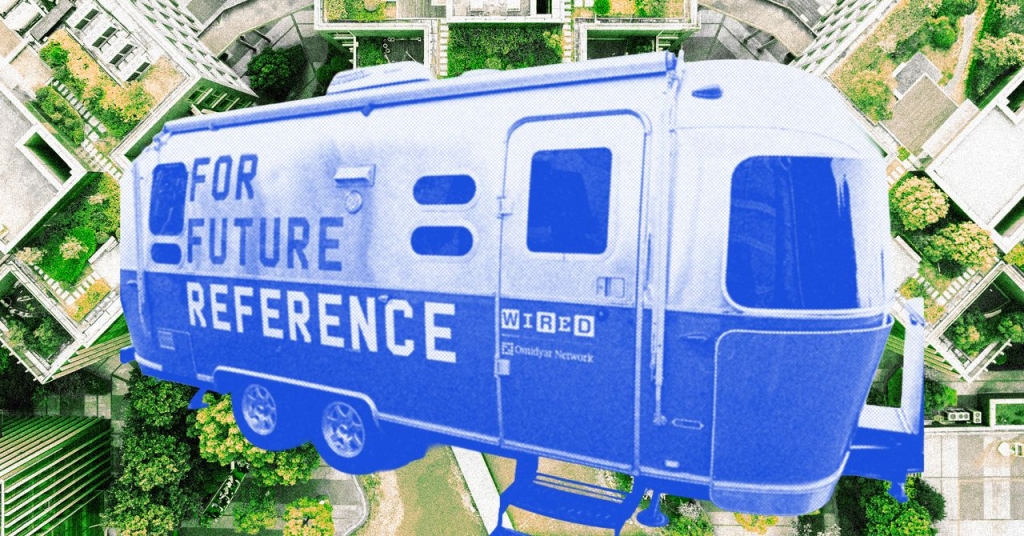
The future has always been a moving target, but in this moment of unprecedented transformation—political upheaval, technological revolution, cultural shifts, and scientific breakthroughs—it feels more elusive than ever. At WIRED, we’re obsessed with what comes next. Our mission has always been to not just report on the future, but to help shape it. That’s why we recently adopted our new tagline: For Future Reference. We’re laser-focused on stories that illuminate what’s ahead while actively participating in building that tomorrow.
To capture this zeitgeist, we recently gathered insights from an eclectic mix of visionaries who participated in our Big Interview event in San Francisco, alongside students who have never known a world without the technologies that are now poised to fundamentally disrupt their lives and careers. While artificial intelligence dominated the conversation, we explored the broader landscape of culture, technology, and politics. Think of this as a cultural barometer—a snapshot of how we collectively envision the future today, and perhaps even a rough blueprint for where we’re headed.
AI Everywhere, All the Time
What’s immediately clear is that AI has achieved the same level of integration into daily life that search engines enjoyed since the Alta Vista era. But unlike search, which primarily served as an information retrieval tool, AI has become a constant companion, advisor, and problem-solver.
“I use a lot of LLMs to answer any questions I have throughout the day,” says Angel Tramontin, a student at UC Berkeley’s Haas School of Business. This sentiment echoes across demographics—from tech-savvy students to industry leaders.
The pervasiveness is staggering. Several respondents admitted they had interacted with AI within hours, sometimes minutes, of our conversation. Anthropic cofounder and president Daniela Amodei revealed she’s been using her company’s Claude chatbot for something surprisingly intimate: childcare. “Claude actually helped me and my husband potty-train our older son,” she shared. “And I’ve recently used Claude to do the equivalent of panic-Googling symptoms for my daughter.”
She’s far from alone. Wicked director Jon M. Chu turned to LLMs for parental guidance, acknowledging, “just to get some advice on my children’s health, which is maybe not the best,” he admits. “But it’s a good starting reference point.”
The healthcare sector is taking notice. OpenAI recently launched ChatGPT Health, revealing that “hundreds of millions of people” use their chatbot weekly for health and wellness queries. The new service includes enhanced privacy protections, recognizing the sensitive nature of medical questions. Meanwhile, Anthropic’s Claude for Healthcare is targeting hospitals and healthcare systems as enterprise customers.
Yet not everyone has embraced this AI immersion. UC Berkeley undergraduate student Sienna Villalobos maintains a more cautious approach. “I try not to use it at all,” she says. “When it comes down to doing your own work, it’s very easy to have an opinion. AI shouldn’t be able to give you an opinion. I think you should be able to make that for yourself.”
This perspective may soon become increasingly rare. A recent Pew Research study found that nearly two-thirds of US teens use chatbots, with about 30% engaging daily. Given how deeply Google Gemini is now woven into search functionality, the actual number of AI users—many unaware they’re even using AI—is likely much higher.
Ready to Launch?
The velocity of AI development and deployment shows no signs of slowing, despite mounting concerns about its potential impacts on mental health, the environment, and society at large. In this regulatory vacuum, companies largely govern themselves. So what critical questions should AI companies be asking before every launch, in the absence of governmental guardrails?
“‘What might go wrong?’ is a really good and important question that I wish more companies would ask,” says Mike Masnick, founder of the influential tech and policy news site Techdirt. This deceptively simple question cuts to the heart of responsible innovation—a principle that seems increasingly overlooked in the race to market.
The stakes couldn’t be higher. We’re not just talking about buggy software or security vulnerabilities. We’re discussing technologies that could reshape human cognition, decision-making, and social structures. The “move fast and break things” ethos that once fueled Silicon Valley’s rise now feels dangerously inadequate when the things being broken include mental health, environmental stability, and democratic institutions.
Consider the environmental cost: AI systems require massive computational resources, contributing significantly to carbon emissions. The mental health implications are equally concerning, with studies linking excessive AI interaction to anxiety, depression, and decision-making paralysis. And the societal impact—from job displacement to the amplification of misinformation—threatens the very fabric of our communities.
Yet the momentum continues. Companies are racing to integrate AI into every conceivable product and service, from education and healthcare to entertainment and governance. The question isn’t whether AI will transform our world—it’s whether we’ll have the wisdom and foresight to guide that transformation toward beneficial outcomes rather than catastrophic ones.
As we stand at this technological crossroads, the choices we make today will echo for generations. Will we approach AI development with the caution and responsibility it demands? Will we prioritize human wellbeing over shareholder value? Will we ensure that the benefits of AI are distributed equitably rather than concentrated among the already privileged?
These aren’t just technical questions—they’re fundamentally human ones. And as AI becomes increasingly woven into the fabric of our daily existence, the answers we collectively arrive at will determine not just what kind of future we create, but what kind of humans we become in the process.
The future isn’t just something that happens to us—it’s something we actively construct, decision by decision, innovation by innovation. And right now, we’re all co-authors of a story that’s still being written.
Tags & Viral Phrases:
- AI is everywhere all the time
- ChatGPT Health revolutionizes medical advice
- Anthropic’s Claude potty-trained a child
- Teens are addicted to AI chatbots
- The future feels more uncertain than ever
- Move fast and break democracy?
- What could possibly go wrong?
- AI is the new search
- Self-regulation in the AI gold rush
- The environmental cost of intelligence
- Mental health in the age of algorithms
- Healthcare meets artificial intelligence
- Students vs. AI: the battle for original thought
- Silicon Valley’s responsibility problem
- The regulatory vacuum
- Building the future we deserve
- AI as constant companion
- The wisdom deficit in tech
- Who guards the AI guardians?
- The human questions behind the technology
- Co-authoring our technological destiny
,

Leave a Reply
Want to join the discussion?Feel free to contribute!