
An engineering thesis disguised as a coupe: A history of the Honda Prelude
Here’s a detailed, tech-focused rewrite with viral elements:
Honda Prelude’s Return: The Comeback of a Tech Icon That Defined an Era
In a stunning move that’s sent shockwaves through the automotive world, Honda has resurrected the Prelude name after a 23-year hiatus, bringing back one of the most influential sports coupes in automotive history. This isn’t just nostalgia—it’s a statement about where Honda believes the future of driving is headed.
The Prelude’s Legacy: When Honda Was the Ultimate Tech Trailblazer
To understand why the Prelude’s return matters, we need to rewind to 1978 when Honda first unleashed this revolutionary machine. The Prelude wasn’t just another sports coupe—it was Honda’s technological playground, a rolling testbed for innovations that would eventually cascade throughout the entire automotive industry.
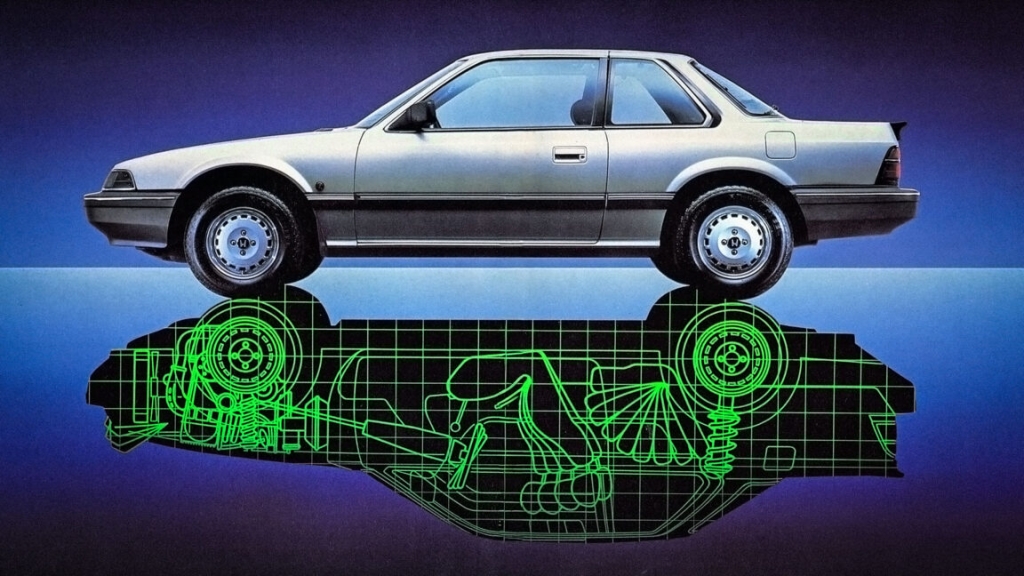
The original Prelude arrived with a groundbreaking mechanical achievement: Honda’s first-ever four-wheel independent suspension system. This wasn’t just about handling—it was about precision engineering that would influence every Honda that followed. The car’s double-wishbone suspension design became the gold standard for performance-oriented vehicles, delivering a level of road feel and responsiveness that competitors could only dream about.
The 1980s: When Four-Wheel Steering Changed Everything
The second-generation Prelude, launched in 1982, introduced what would become the car’s signature feature: four-wheel steering (4WS). This wasn’t some gimmick—it was genuine engineering wizardry that fundamentally altered how cars could be driven.
Honda’s 4WS system used a hydraulic mechanism to steer the rear wheels in the opposite direction of the front wheels at low speeds, effectively shortening the wheelbase for incredible maneuverability. At higher speeds, the rear wheels turned slightly in the same direction as the front, enhancing stability during lane changes and high-speed cornering. This technology, which cost Honda millions to develop, would later appear on everything from the Acura NSX to various Nissan and Mazda models.
The system was so effective that automotive journalists of the era struggled to describe the sensation. It felt like the car was reading your mind, anticipating your inputs before you even made them. For a generation of driving enthusiasts, the Prelude with 4WS wasn’t just a car—it was a revelation.
The 1990s: When VTEC and Active Systems Redefined Performance
By the third generation in 1987, Honda had refined the Prelude into a technological masterpiece. The car now featured Honda’s revolutionary VTEC (Variable Valve Timing and Lift Electronic Control) system, which could essentially transform the engine’s personality based on RPM. At low revs, it prioritized efficiency; at high revs, it unleashed maximum power. This technology would eventually become standard across the entire Honda lineup and influence engine design worldwide.
The fourth-generation Prelude, introduced in 1991, pushed boundaries even further. Honda equipped it with an integrated navigation system that, while primitive by today’s standards, was revolutionary for its time. More importantly, the car featured the world’s first production active differential system, which could automatically adjust torque distribution to maximize grip and handling.
The Final Chapter: When Market Forces Ended an Era
The fifth-generation Prelude, launched in 1996, represented both the pinnacle and the beginning of the end. While it featured Honda’s innovative Active Torque Transfer System (ATTS)—essentially early torque vectoring technology—it also marked the disappearance of four-wheel steering, a telling sign of changing priorities.
By 2001, when Honda finally pulled the plug on Prelude production, the automotive landscape had fundamentally shifted. SUVs were dominating sales charts, and the market for dedicated sports coupes was shrinking rapidly. Honda sold just 3,500 Preludes in the first five months of 2001, compared to the 79,841 units that flew off dealer lots in 1986.
The Comeback: Why Now?
So why bring back the Prelude in 2025? The answer lies in understanding how dramatically the automotive industry has evolved since 2001. Electric vehicles have rewritten the rules of performance, with instant torque and sophisticated electronic control systems making traditional internal combustion engineering seem almost quaint.
Honda’s new Prelude is positioned as a showcase for the company’s latest technological achievements. While specific details remain closely guarded, industry insiders suggest the new model will feature advanced driver assistance systems, potentially including Level 3 autonomous capabilities, and cutting-edge battery technology that could deliver performance rivaling traditional sports cars.
The timing is particularly interesting given Honda’s recent partnership with Sony to form Sony Honda Mobility, a joint venture focused on electric and autonomous vehicles. The new Prelude could serve as a halo vehicle for this collaboration, demonstrating how traditional Japanese engineering can merge with cutting-edge electronics.
The Cultural Impact: More Than Just a Car
The Prelude’s return isn’t just about selling vehicles—it’s about reclaiming Honda’s identity as an innovation leader. For decades, Honda was the company that took risks, that pushed boundaries, that made technology accessible and exciting. The Prelude embodied all of these qualities.
Today’s automotive market is dominated by conservative designs and incremental improvements. By bringing back the Prelude, Honda is making a bold statement: that there’s still room for genuine innovation, for cars that make drivers excited about technology rather than intimidated by it.
What This Means for the Future
The automotive industry is at a crossroads, with traditional manufacturers racing to adapt to electric powertrains, autonomous driving, and connected technologies. Honda’s decision to revive the Prelude suggests the company believes there’s still a place for enthusiast-focused vehicles in this new landscape.
If the new Prelude succeeds, it could signal a broader renaissance for Honda, inspiring the company to take more risks and push boundaries across its entire lineup. If it fails, it might confirm that the era of the technological trailblazer is truly over.
Either way, the return of the Prelude is more than just the revival of a model name—it’s a referendum on the soul of the automotive industry itself.
Honda #Prelude #AutomotiveHistory #Technology #Innovation #VTEC #FourWheelSteering #TorqueVectoring #ElectricVehicles #AutonomousDriving #HondaPrelude #SportsCar #AutomotiveEngineering #CarCulture #JapaneseCars
Viral Tags & Phrases:
- “Honda just changed the game again”
- “The Prelude is BACK and better than ever”
- “This isn’t your dad’s Prelude”
- “Honda’s secret weapon revealed”
- “The return of Japanese engineering dominance”
- “When tech meets passion on four wheels”
- “The car that defined a generation returns”
- “Honda’s electric revolution starts here”
- “The Prelude phenomenon explained”
- “Why this matters for car enthusiasts everywhere”
- “The most important car launch of 2025”
- “How Honda is beating Tesla at its own game”
- “The perfect blend of nostalgia and innovation”
- “What the new Prelude means for the future of driving”
- “The car that made Honda legendary is back”
,

Leave a Reply
Want to join the discussion?Feel free to contribute!