
Samsung Galaxy S26 review: The smartphone status quo
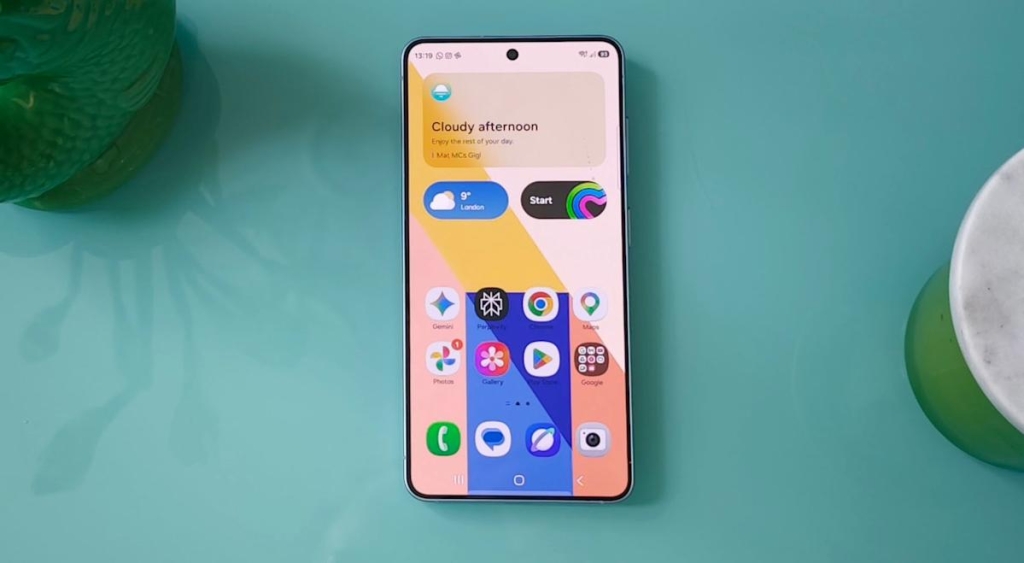
Samsung’s S26 Series: Incremental Upgrades Meet AI Ambitions in 2026’s Smartphone Season
The smartphone industry’s annual arms race has reached a curious inflection point. As manufacturers push toward increasingly specialized flagship experiences, Samsung’s 2026 lineup reveals both the promise and limitations of iterative design. The Galaxy S26 series—comprising the S26 Ultra ($1,300), S26 ($899), and S26+ ($999)—represents Samsung’s latest volley in a market where true innovation grows increasingly difficult to achieve.
The S26 Ultra commands attention with its Privacy Screen technology, a frontier-pushing feature that addresses growing consumer concerns about shoulder surfing and digital privacy. However, it’s the more modest S26 that embodies the current state of smartphone evolution: solid, competent, but struggling to justify its existence in a market where last year’s models remain remarkably capable.
The Familiar Form Factor
Holding the Galaxy S26 immediately evokes a sense of déjà vu. At 6.3 inches, the display represents a modest increase from the S25’s 6.2-inch panel, yet maintains the same FHD+ (2,340 x 1,080) resolution. This consistency proves Samsung’s confidence in its display technology—there’s simply no perceptible drop in sharpness despite the slight size increase.
The 3,000-nit peak brightness represents a meaningful improvement for outdoor visibility, addressing one of the few remaining pain points in modern smartphone displays. Combined with the battery increase to 4,300mAh from 4,000mAh, these changes suggest Samsung’s engineers focused on practical usability rather than chasing spec-sheet supremacy.
Design-wise, the S26 continues Samsung’s premium glass-and-metal construction. The camera module’s evolution to a unified circular island represents the year’s most visible aesthetic change—a subtle refinement that speaks volumes about the current state of smartphone design. When the most notable visual update involves rearranging camera lenses, we’ve clearly entered an era of design maturity bordering on stagnation.
The Silicon Split
Samsung’s decision to bifurcate the S26’s processor strategy based on geography reveals the complex realities of global smartphone manufacturing. In the United States, consumers receive the Snapdragon 8 Elite Gen 5 for Galaxy, matching the S26 Ultra’s silicon. Elsewhere, including Europe and the UK, Samsung’s in-house Exynos 2600 powers the device.
The Exynos 2600 marks Samsung’s first 2nm chip, promising significant power efficiency improvements. Initial benchmarks suggest Samsung’s claims of 50 percent better performance across single and multi-core tasks hold merit. The Xclipse 960 GPU reportedly delivers double the graphical performance of its predecessor, positioning the S26 as a capable gaming and content creation device.
Real-world performance validates these specifications. The Exynos-powered S26 handled demanding games and video editing tasks without breaking a sweat. Geekbench 6 scores of 3,151 (single-core) and 10,664 (multi-core) place it competitively against Snapdragon alternatives, with GPU performance within striking distance at 24,425.
However, battery life reveals the first crack in Samsung’s regional strategy. In controlled rundown tests, the Exynos version lasted approximately 28 hours watching looped video at 50 percent brightness, while the Snapdragon variant achieved nearly 30 hours. Given the larger battery capacity, this discrepancy suggests the Exynos 2600, despite its efficiency improvements, hasn’t yet matched Qualcomm’s power management prowess.
Camera System: Evolution, Not Revolution
The S26’s camera configuration remains unchanged from its predecessor: 50MP main, 12MP ultrawide, and 10MP telephoto lenses. This consistency underscores a fundamental truth about smartphone photography—the hardware has largely matured, with software and computational photography now driving meaningful improvements.
Image quality improvements prove subtle, requiring careful comparison and pixel-level scrutiny to discern. The S26 demonstrates marginally faster capture speeds for bursts and high-resolution video, addressing one of the few remaining pain points in mobile photography. Color accuracy shows slight improvement, with the S26 producing warmer, more natural-looking selfies compared to the S25.
Samsung’s AI-powered editing suite expands with natural language text prompts, allowing users to request specific adjustments through conversational commands. The system proves surprisingly capable, quickly executing complex edits that would challenge casual users. However, this feature highlights a broader industry trend: as hardware reaches maturity, software and AI capabilities become the primary differentiators.
Video capabilities receive meaningful upgrades through Super Steady mode’s enhanced versatility and the new Autoframing feature. Super Steady now maintains consistent horizontal lock regardless of camera movement, delivering gimbal-like stabilization previously impossible in smartphone form factors. Autoframing automatically tracks subjects, cropping and adjusting to maintain focus—a feature that works best with stationary setups but shows promise for dynamic content creation.
The AI Assistant Arms Race
Samsung’s “era of agentic AI” marketing belies the current reality: we remain several evolutionary steps from truly autonomous digital assistants. The S26’s AI features represent incremental improvements rather than revolutionary capabilities.
Now Brief expands its data sources, attempting to generate more comprehensive daily summaries. However, the feature still relies heavily on predictable inputs: weather updates, calendar events, and basic productivity metrics. The promise of AI that truly understands context and anticipates needs remains unfulfilled.
The new Now Nudge feature offers a glimpse of potential utility, suggesting actions based on on-screen content. While occasionally helpful for tasks like sharing contact information or scheduling meetings, the feature often feels like a slightly smarter version of existing predictive text and suggestion systems.
Perplexity’s integration represents Samsung’s most intriguing AI experiment. The S26 series now supports three AI assistants: Google’s Gemini, Samsung’s Bixby, and Perplexity. This multiplicity creates both opportunity and confusion, as users must navigate different interfaces and capabilities depending on their chosen assistant.
Perplexity integration requires app installation and login, then allows users to designate it as their primary assistant. However, early testing reveals significant limitations. The promised integration with Samsung’s Browser app remains incomplete, preventing access to Perplexity’s most compelling features like multi-tab browsing and summarization. Voice commands using the “Hey Plex” wake phrase proved unreliable in pre-release software, suggesting Samsung and Perplexity have substantial integration work remaining.
Software Strategy and Market Positioning
Samsung’s software approach with the S26 reveals a company balancing multiple priorities. The device must appeal to users seeking cutting-edge features while maintaining compatibility with Samsung’s broader ecosystem. This balancing act results in a phone that feels simultaneously advanced and conservative.
The S26’s positioning within Samsung’s lineup raises questions about the company’s strategic priorities. With the S26 Ultra pushing technological boundaries and foldable devices generating significant buzz, the standard S26 occupies an increasingly ambiguous middle ground. It’s neither the most advanced nor the most affordable option, instead representing a “safe choice” for consumers who prioritize reliability over innovation.
This positioning strategy makes sense from a business perspective. Samsung can allocate research and development resources toward its most profitable and attention-grabbing products while maintaining a competent baseline offering. However, it leaves the S26 feeling somewhat superfluous in a lineup where last year’s model remains highly capable.
The Value Proposition
At $899, the S26 faces intense competition not just from other manufacturers but from Samsung’s own product lineup. The S25, now discounted to $799, offers nearly identical performance, display quality, and camera capabilities. This one-hundred-dollar price difference represents a significant consideration for budget-conscious consumers.
The S26’s upgrades—slightly larger battery, marginally better display brightness, and modest performance improvements—struggle to justify the premium over last year’s model. This value proposition becomes even more challenging when considering the rapid advancement of mid-range devices, many of which now offer 80-90 percent of flagship performance at 60-70 percent of the price.
Final Assessment
The Galaxy S26 represents a competent execution of modern smartphone design principles, but struggles to establish a compelling reason for existence beyond filling a lineup slot. Its strengths—reliable performance, solid battery life, capable cameras, and premium build quality—are matched by its weaknesses: minimal design innovation, incremental improvements over the previous generation, and a value proposition that’s difficult to justify.
For consumers upgrading from devices older than two generations, the S26 offers a meaningful step forward. The combination of improved battery life, better display visibility, and enhanced AI features addresses many common pain points. However, for users of recent flagship devices, the S26’s appeal diminishes considerably.
Samsung’s strategy with the S26 reflects broader industry trends. As smartphone technology matures, true generational leaps become increasingly rare. Manufacturers must now compete on software ecosystems, AI capabilities, and brand loyalty rather than hardware specifications alone. The S26’s competent but unremarkable nature suggests Samsung is positioning itself for this future while maintaining a solid foundation for users who prioritize reliability over cutting-edge features.
The smartphone market has entered an era where “good enough” has become remarkably good indeed. The Galaxy S26 embodies this reality—a device that won’t disappoint but also won’t inspire. In a market where true innovation grows increasingly difficult to achieve, perhaps that’s the most honest assessment possible.
Samsung #GalaxyS26 #Smartphone2026 #AndroidFlagship #TechReview #MobileTechnology #SamsungExynos #Snapdragon8Elite #AIFeatures #SmartphoneEvolution #MobilePhotography #TechNews #GadgetReview #AndroidUpdates #SmartphoneSeason
Tags: Samsung S26 review, Galaxy S26 specs, Exynos 2600 performance, Snapdragon 8 Elite comparison, smartphone battery life 2026, AI smartphone features, Perplexity integration, Samsung camera improvements, mobile gaming performance, flagship smartphone value, iterative smartphone design, tech industry trends, Android flagship comparison, smartphone innovation plateau, mobile technology evolution
,


Leave a Reply
Want to join the discussion?Feel free to contribute!