
AI is changing PC graphics. Microsoft wants DirectX ready
Microsoft Pushes the Boundaries of Gaming with AI-Powered DirectX Revolution
In a bold move that could redefine the future of gaming graphics, Microsoft has unveiled two groundbreaking technologies that embed artificial intelligence directly into the heart of its DirectX graphics programming interface. The company is betting big on a future where machine learning isn’t just an afterthought or a visual enhancement—it’s an integral part of how games are rendered, optimized, and experienced.
Dubbed DirectX Linear Algebra and the DirectX Compute Graph Compiler, these innovations signal Microsoft’s vision of a gaming ecosystem where AI and traditional rendering workloads coexist seamlessly. This isn’t just a tweak to existing tools—it’s a fundamental shift in how graphics pipelines are designed and executed.
AI is No Longer a Niche—It’s the New Normal
In a detailed blog post, Adele Parsons, a graphics manager at Microsoft, made it clear: “Machine learning is no longer a niche optimization or a post-process trick. It’s increasingly embedded throughout the graphics pipeline, influencing how frames are generated, how content is authored, and how game developers realize their artistic vision.”
For years, gamers and developers alike have seen AI creep into graphics through techniques like upscaling and frame generation. Upscaling allows GPUs to render games at lower resolutions and then intelligently upscale them to higher quality, while frame generation creates smooth motion by interpolating frames between rendered ones. Both have become critical in enabling budget and integrated GPUs—like Intel’s new Panther Lake—to punch above their weight, competing with older, high-end discrete GPUs.
But Microsoft’s new DirectX technologies take this a step further, embedding AI directly into the rendering pipeline itself.
DirectX Linear Algebra: The Math Behind the Magic
At its core, DirectX Linear Algebra is about supporting the complex mathematical operations that AI workloads require. Traditional GPUs have long relied on vector-matrix operations to handle 3D shapes and lighting. However, AI-focused processors—such as Nvidia’s Tensor cores—use matrix-matrix math, which is far more efficient for machine learning tasks.
What makes DirectX Linear Algebra particularly interesting is its application to shaders. Shaders are the instructions that tell your GPU how to render each frame, and they’re typically pre-loaded before a game starts. By enabling matrix math directly within shaders, Microsoft is opening the door for more dynamic, AI-driven rendering techniques that can adapt on the fly.
This isn’t about giving developers direct control over AI, but rather about making AI-accelerated features—like temporal upscaling—more efficient and effective. The result? Smoother gameplay, better visual fidelity, and more accessible high-end graphics for a broader range of hardware.
DirectX Compute Graph Compiler: A Smarter Pipeline
While Linear Algebra focuses on the math, the DirectX Compute Graph Compiler is all about how that math is applied. Older upscaling techniques, like AMD’s first-generation FSR, worked on a per-pixel basis, analyzing changes from one frame to the next. Modern versions, however, use full-model integration, where the entire scene is examined to predict where pixels should be.
This is where the Compute Graph Compiler shines. By migrating this full-model approach into the DirectX pipeline, Microsoft is enabling games to construct their own shaders dynamically—potentially even for GPUs that don’t exist yet. This forward-looking approach could future-proof games, ensuring they remain visually competitive as hardware evolves.
Don Brittain, a distinguished engineer at Nvidia, highlighted the potential: games could essentially “talk” to the GPU, building custom rendering instructions tailored to the hardware at hand.
The Trade-Off: Authenticity vs. Accessibility
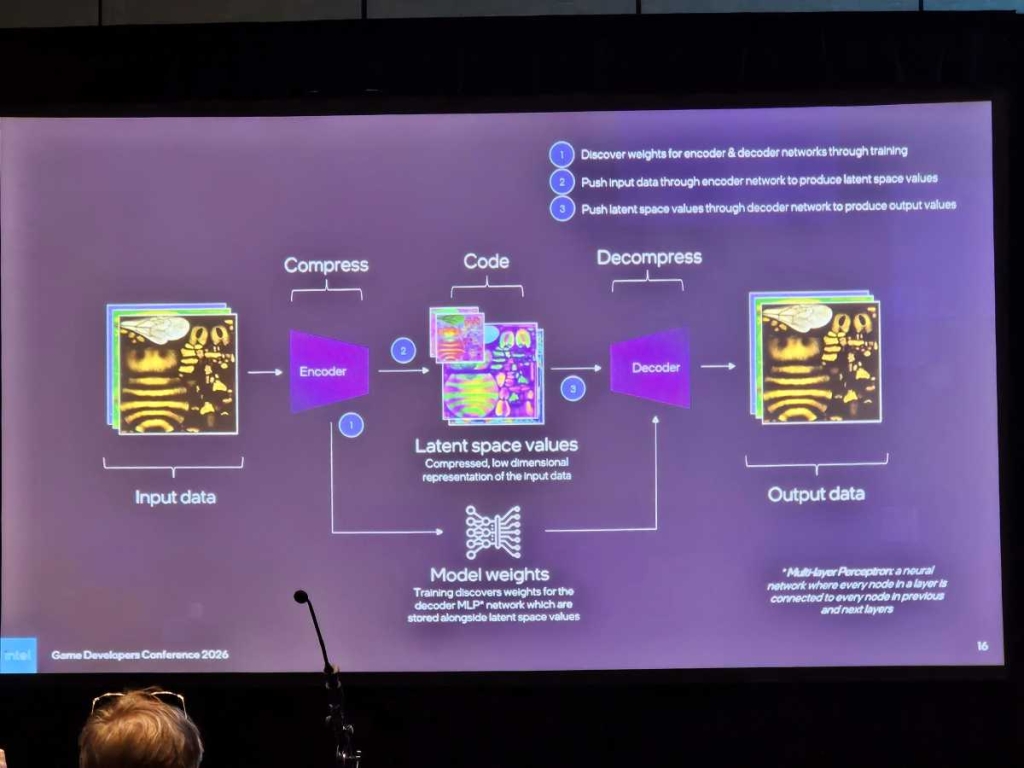
Of course, not everyone is thrilled about the rise of AI in gaming. Some purists reject the idea of “fake frames,” arguing that AI-generated content can never match the authenticity of traditionally rendered graphics. Microsoft’s technologies push this concept even further, with executives discussing possibilities like neural texture compression—where AI guesses how a compressed texture should look when uncompressed—and neural lighting, where AI calculates realistic light paths.
The trade-off is clear: by offloading more work to AI, games could become more accessible to a wider audience. Neural texture compression could reduce the massive memory and storage demands of high-resolution textures by up to 30%, according to Microsoft. Neural radiance could lessen the need for dedicated ray-tracing hardware, making photorealistic “path tracing” more attainable for mainstream gamers.
A Glimpse into the Future—But Not Quite Here Yet
Despite the excitement, it’s important to note that these technologies are still in their infancy. The DirectX Compute Graph Compiler will enter private preview this summer, while DirectX Linear Algebra will be available for public preview in April. It will likely be some time before they’re fully integrated into DirectX and widely adopted by the industry.
Still, the implications are enormous. With support from major players like AMD, Intel, and Nvidia—who all appeared on stage with Microsoft at the Game Developer Conference in San Francisco—it’s clear that the industry is ready to embrace this AI-driven future.
Conclusion: The Dawn of a New Era in Gaming
Microsoft’s latest DirectX innovations represent more than just technical upgrades—they’re a statement of intent. The company is positioning itself at the forefront of a new era in gaming, where AI isn’t just a tool for enhancement but a fundamental part of the creative process.
For gamers, this could mean more immersive experiences, better performance on a wider range of hardware, and a democratization of cutting-edge graphics. For developers, it opens up new possibilities for artistic expression and technical innovation.
As the lines between traditional rendering and AI-driven graphics continue to blur, one thing is certain: the future of gaming is here, and it’s smarter than ever.
Tags: DirectX, AI gaming, machine learning graphics, Microsoft DirectX, neural rendering, shader optimization, GPU AI, gaming technology, future of gaming, DirectX Linear Algebra, DirectX Compute Graph Compiler, Nvidia Tensor cores, AMD FSR, Intel Panther Lake, ray tracing, path tracing, neural texture compression, neural lighting, Game Developer Conference, gaming hardware, graphics pipeline, temporal upscaling, frame generation, photorealistic graphics, game development, PC gaming, console gaming.
Viral Sentences:
- “AI is no longer a niche—it’s the new normal in gaming graphics.”
- “Microsoft embeds machine learning directly into DirectX, redefining how games are rendered.”
- “The future of gaming is here, and it’s smarter than ever.”
- “Fake frames or not, AI is making high-end graphics accessible to everyone.”
- “DirectX Linear Algebra and Compute Graph Compiler: The math and magic behind the next-gen gaming revolution.”
- “Neural texture compression could cut game storage needs by 30%—a game-changer for developers and players alike.”
- “From shaders to full-model integration, AI is transforming every pixel of your favorite games.”
- “The lines between traditional rendering and AI-driven graphics are officially blurred.”
- “Budget GPUs are about to get a serious upgrade, thanks to Microsoft’s AI push.”
- “The gaming industry is ready to embrace an AI-driven future—are you?”
,


Leave a Reply
Want to join the discussion?Feel free to contribute!