
The science of how fireflies stay in sync
Fireflies Sync Up: Scientists Crack the Code of Nature’s Living Light Show
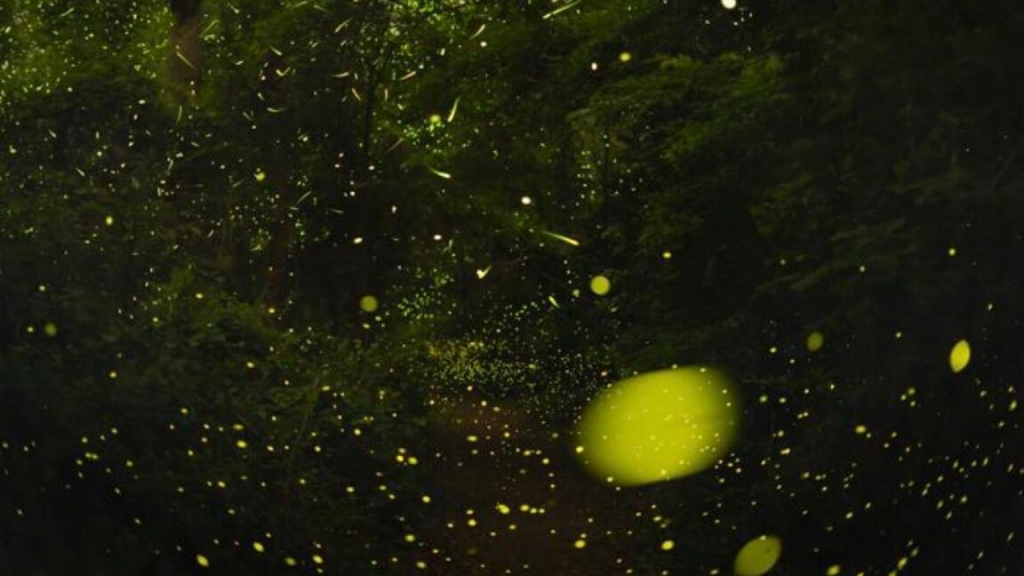
Deep in the swampy forests of South Carolina, something magical happens every May. As night falls, the air fills with a symphony of tiny, pulsing lights — not random flickers, but perfectly timed bursts of bioluminescence that ripple across the darkness like living constellations. This mesmerizing display, produced by Photinus carolinus fireflies, has captivated scientists and nature lovers for centuries. But now, a team of researchers from the University of Colorado Boulder has uncovered the secret behind this natural marvel, revealing how these tiny insects orchestrate one of the most beautiful examples of collective behavior in the animal kingdom.
The Mystery of Firefly Synchronization
For years, scientists have marveled at the ability of fireflies to flash in unison. Unlike the chaotic blinking of most insects, these fireflies create waves of synchronized light that sweep through the forest in perfect harmony. But how do they do it? How do hundreds, sometimes thousands, of individual insects coordinate their flashes without a conductor or central command?
The answer lies in a delicate dance of timing and interaction. Researchers discovered that even a small group of male fireflies can begin to sync their flashes, but the truly spectacular bursts of light only emerge when the group exceeds 15 individuals. These synchronized flashes aren’t just local phenomena — they’re correlated over several meters, suggesting that fireflies can influence each other across surprisingly long distances. This long-range interaction is a hallmark of emergent collective behavior, where simple rules followed by individuals give rise to complex, coordinated patterns at the group level.
But the story doesn’t end there. The team also observed that some fireflies seemed to act as early leaders, flashing more frequently and moving more actively than their peers. This hints at a competitive element, where certain individuals might try to establish dominance or attract mates by flashing first. It’s a fascinating glimpse into the social dynamics of these glowing insects, where cooperation and competition coexist in the same flickering display.
Fieldwork in the Dark: Four Years of Firefly Watching
To unravel the secrets of firefly synchronization, the researchers embarked on an ambitious field study at Congaree National Park in South Carolina. Each May from 2021 to 2025, they returned to the same swampy habitat, armed with tents, cameras, and a deep curiosity about the natural world. Their setup was simple but ingenious: a pop-up tent isolated from external light sources, where they could study the fireflies without interference from moonlight or human activity.
Inside the tent, the team exposed captured fireflies to a dim LED light that mimicked the flash of another firefly. By varying the timing of the LED’s blinks — from once every second to once every 300 milliseconds — they could observe how the insects responded to artificial cues. The results were striking. Fireflies were most likely to adjust their own flashing rhythm when the LED blinked almost, but not quite, in sync with their natural flashes. If the LED flashed just before a firefly’s turn, the insect would speed up its next flash to catch up. If the LED flashed just after, the firefly would wait a bit longer before flashing again.
This behavior is reminiscent of a person trying to clap along with a beat in a crowded concert hall, constantly adjusting their timing to match the group. It’s a delicate balance of perception and reaction, where each firefly is both a participant and an observer in the collective display.
The Human Side of Science: A Season in the Dark
For Owen Martin, a former graduate student and co-author on the study, the fieldwork was as much an emotional journey as a scientific one. “For a whole season, I spent pretty much every night in the dark watching lights blink at a fixed frequency,” Martin recalled. “Then, occasionally, I’d get this magical experience where I’d see the firefly just start syncing with the light. I would wonder if I was just seeing things.”
These moments of doubt and wonder are part of the scientific process, especially when studying phenomena as subtle and fleeting as firefly synchronization. But Martin’s careful observations were backed up by rigorous mathematical analysis. The team found that the individual flash dynamics of the fireflies followed a pattern known as a phase-response curve, a mathematical description of how an oscillating system (like a flashing firefly) responds to external stimuli. Using this insight, they developed an “integrate and fire” model that accurately reproduced the observed synchronized flashing patterns.
A Model for Collective Behavior
The implications of this research extend far beyond the world of fireflies. The phase-response curve and integrate-and-fire model developed by the team provide a powerful framework for understanding other forms of collective behavior in nature, from the synchronized swimming of fish schools to the coordinated movements of bird flocks. By revealing the simple rules that underlie these complex patterns, the study offers a window into the fundamental principles of self-organization and emergence.
Moreover, the research highlights the importance of field studies in understanding natural phenomena. While laboratory experiments can control for many variables, they often miss the subtle interactions and environmental cues that shape behavior in the wild. By immersing themselves in the fireflies’ natural habitat, the researchers were able to capture the full complexity of their synchronized displays.
The Beauty of Emergence
At its heart, the story of firefly synchronization is a story about emergence — the way simple, local interactions can give rise to complex, global patterns. Each firefly follows its own internal clock, but when these clocks are coupled through visual cues, they give rise to a breathtaking display that is much more than the sum of its parts. It’s a reminder that nature is full of hidden order, waiting to be discovered by those patient enough to look.
As the researchers continue to study these glowing insects, they hope to uncover even more secrets about the mechanisms of synchronization and the role of competition in shaping collective behavior. But for now, the fireflies of Congaree National Park continue their nightly light show, a living testament to the beauty and complexity of the natural world.
Tags: fireflies, bioluminescence, synchronization, collective behavior, emergence, phase-response curve, integrate-and-fire model, Congaree National Park, Photinus carolinus, Owen Martin, University of Colorado Boulder, field research, natural phenomena, mathematical modeling, self-organization
Viral Phrases: “Nature’s living light show,” “symphony of tiny, pulsing lights,” “mesmerizing display,” “living constellations,” “delicate dance of timing and interaction,” “magic of emergence,” “hidden order in nature,” “breathtaking display,” “glowing insects,” “self-organization,” “collective behavior,” “synchronized swimming of fish schools,” “coordinated movements of bird flocks,” “fieldwork in the dark,” “scientific wonder,” “patient enough to look,” “living testament to the beauty and complexity of the natural world.”
,


Leave a Reply
Want to join the discussion?Feel free to contribute!