
A petri dish of human brain cells is currently playing Doom. Should we be worried? | Games
Mind Uploading and Brain-on-a-Chip: Inside the Future of Biological Computing
In a development that sounds straight out of a science fiction film, US scientists have successfully uploaded a living fruit fly’s brain into a digital simulation. Meanwhile, in San Francisco, biotechnology company Eon Systems has created a virtual insect capable of walking, flying, grooming, and feeding in a simulated environment. On the other side of the world, Australian researchers have taught a petri dish containing 200,000 human brain cells to play the iconic 1990s shooter game Doom. These parallel breakthroughs represent two distinct approaches to the same fundamental question: can we bridge the gap between biological and artificial intelligence?
The Virtual Fly: Whole Brain Emulation
The San Francisco team’s achievement with the fruit fly represents what scientists call “whole brain emulation.” Using advanced electron microscopy, they scanned the entire brain of a living fruit fly—which contains approximately 140,000 neurons—and recreated it as a functioning digital model. When this emulated brain was placed back into a virtual body, the results were remarkable: the digital insect immediately knew how to perform complex behaviors without any training or programming.
“What we’ve essentially done is recreate the fly’s behavioral wiring,” explains Michael Andregg, CEO of Eon Systems. “The virtual insect already knew how to behave like a fly, which challenges a central assumption of modern AI: that intelligence must be acquired through learning and training.”
This built-in knowledge represents millions of years of evolutionary programming. The digital fly can navigate its virtual world, respond to stimuli, and perform tasks that would require extensive machine learning in traditional AI systems. However, the simulation isn’t perfect—the virtual environment lacks the complex sensory inputs of the real world, so the fly likely senses something is “off” about its existence.
The Brain-on-a-Chip: Playing Doom with Human Neurons
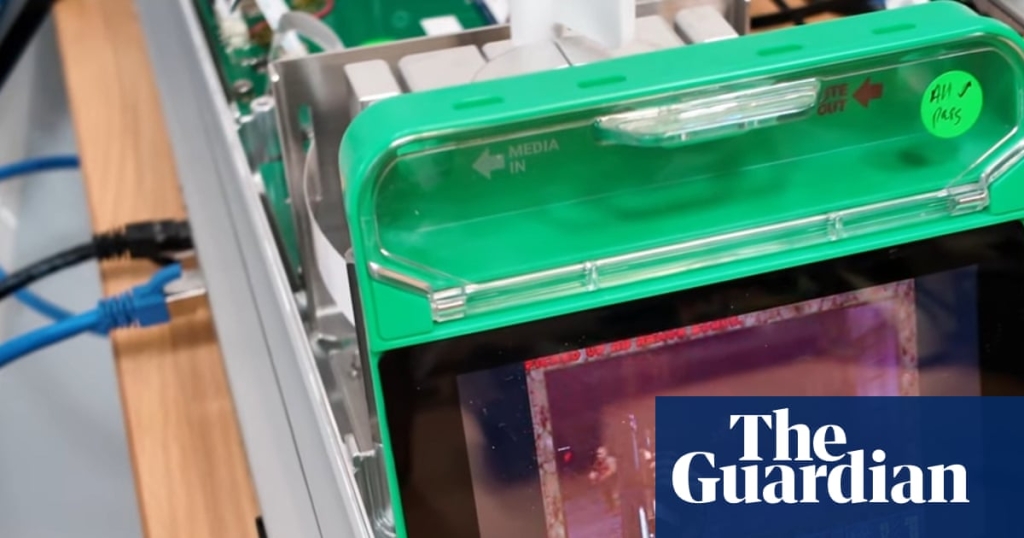
Meanwhile, in Melbourne, Australian startup Cortical Labs has developed what it describes as “the world’s first code-deployable biological computer.” This system runs on living human tissue rather than silicon chips. The company’s latest achievement involves teaching a petri dish of lab-grown neurons to play the classic video game Doom.
The process begins with something as simple as 10ml of blood—in this case, from Cortical Labs CEO Hon Weng Chong himself. From this sample, scientists harvest white blood cells and reprogram them into induced pluripotent stem cells (iPSCs) using a Nobel Prize-winning technique developed by Professor Shinya Yamanaka. These iPSCs are then reproduced and induced to become neurons, which are placed on a glass chip roughly the size of a 50p piece.
“The electricity is the common language between neurons and the computer system,” Chong explains. “Because they’re on a chip, we can interface with them and get them to play Doom.”
How Does a Brain Without Eyes Play Video Games?
The concept of a petri dish playing a video game raises obvious questions. How can cells without eyes or fingers interact with a digital world? The answer lies in sophisticated encoding and decoding systems.
The game state—information about the player’s health, enemy positions, and other variables—is captured as a snapshot and passed through a neural network. This information is converted into numerical data that the neurons can understand. The neurons then fire electrical signals that represent decisions: move left, move right, walk forward, shoot, or don’t shoot. These outputs are decoded back into actions within the game.
“It’s really no different from how humans operate,” Chong notes. “We have information going into our retina, which is converted into electrical signals, processed in the brain, and then an output happens.”
Learning Without Consciousness
When the neurons first began playing Doom, they struggled with basic tasks. “At first it didn’t know how to move, aim, or even shoot,” says Sean Cole, the 24-year-old Singaporean who wrote the code for the project. “Then it would shoot the first two enemies and stop—almost as if it was preserving itself. So it’s definitely learning.”
This learning process occurs through mechanisms that scientists are still working to fully understand. Cole suggests it might involve principles like the free energy principle—the idea that living systems act to minimize free energy—or Hebbian learning, where connections between neurons strengthen when they fire together.
Despite the apparent intelligence displayed by the system, Cole is adamant that it’s not conscious. “I definitely don’t think it’s conscious,” he says. “We’ve managed to control a brain to learn in a very controlled environment.”
The Future Applications: Beyond Gaming
While playing Doom makes for compelling headlines, the real future applications of this technology lie in medicine and scientific research. “People are looking at it from biomedical research angles, for disease modeling,” Chong explains. “Things like epilepsy, where drugs could be tested on neurons grown outside the body—not just to discover new drugs, but to tailor them at a personal level.”
The ability to grow and test on human neurons outside the body could revolutionize drug development, allowing for more accurate testing without the need for animal models or human trials in early stages.
Moravec’s Paradox and Biological Computing
The development of biological computing systems also relates to a well-known concept in robotics called Moravec’s paradox. This principle observes that what humans find difficult, computers find easy, and vice versa. Abstract reasoning, mathematics, and language—relatively recent developments in evolutionary terms—are areas where computers excel. However, motor control and probabilistic decision-making, which we’ve inherited through millions of years of evolution, remain challenging for traditional AI.
“Robots may be very good at solving math problems, but we’re still trying to build robots that can walk properly,” Chong points out. Biological systems like the fruit fly simulation might eventually power robots, drones, and other machines that need to navigate the messy unpredictability of the real world.
The Road Ahead: Uploading Human Consciousness?
While these developments are impressive, we’re still far from the science fiction scenarios of uploading human consciousness into computers, as depicted in films like “Devs” or “The Lawnmower Man.” One significant limitation is that the fly’s brain had to be removed from its body before scanning—a step that would be considerably more problematic for human volunteers.
Andregg’s team aims to eventually make the emulation of brain and body “feel indistinguishable from the natural biochemical body and brain.” If successful, this technology could allow humans to “flourish in a world with superintelligence,” though many ethical and technical hurdles remain.
Conclusion: The Beginning of a New Era
These parallel breakthroughs in biological computing and whole brain emulation represent the early stages of what could be a revolutionary shift in how we approach artificial intelligence and computing. By harnessing the power of biological systems—whether through emulating entire brains or growing neurons on chips—scientists are finding new ways to solve problems that have stumped traditional computing approaches.
For now, humanity’s first biological computer is busy doing what humans have always done with new technology: playing games. And somewhere in a Silicon Valley simulation, a fruit fly is living its second life, totally unaware that it’s become part of the insect Matrix.
The convergence of biology and computing opens up fascinating possibilities for the future, from personalized medicine to advanced robotics. As these technologies continue to develop, they may fundamentally change our understanding of intelligence, consciousness, and what it means to be alive in an increasingly digital world.
Tags: biological computing, brain emulation, whole brain emulation, neural networks, induced pluripotent stem cells, iPSCs, Moravec’s paradox, Eon Systems, Cortical Labs, Doom, fruit fly brain, virtual insect, human neurons, petri dish computing, Nobel Prize, Shinya Yamanaka, Sean Cole, Michael Andregg, Hon Weng Chong, biomedical research, disease modeling, epilepsy research, drug testing, evolutionary programming, consciousness, sentience, biological computer, human tissue computing, electron microscopy, free energy principle, Hebbian learning, robotics, motor control, probabilistic decision-making, digital consciousness, Matrix, Devs, The Lawnmower Man, Neuralink, Pokémon, Minecraft, Grand Theft Auto, kung fu learning, memory override, superintelligence, biochemical body, virtual world, sensory inputs, learning algorithms, machine learning, artificial intelligence, AI breakthrough, scientific breakthrough, biotechnology, Melbourne startup, San Francisco tech, gaming neurons, brain cells playing games, virtual reality, biological systems, evolutionary inheritance, abstract reasoning, mathematics, language processing, real-world navigation, drone technology, personalized medicine, animal testing alternatives, early-stage drug development, Nobel Prize-winning technique, reverse biological clock, embryonic state, glass chip technology, common language electricity, retina processing, electrical signals, biological clock, white blood cells, stem cell research, neuron reproduction, brain scanning, behavioral wiring, evolutionary programming, built-in knowledge, training-free AI, complex behaviors, virtual body, digital model, biological tissue, silicon chips, code-deployable biological computer, classic video game, 1990s shooter game, iconic game, neural network processing, game state capture, numerical data conversion, electrical signal firing, decision-making neurons, output decoding, controlled environment, human consciousness, science fiction scenarios, ethical hurdles, technical challenges, revolutionary shift, artificial intelligence approaches, biological systems harnessing, traditional computing limitations, fundamental understanding, digital world, fascinating possibilities, personalized medicine applications, advanced robotics development, consciousness understanding, intelligence definition, alive in digital world, convergence biology computing, early stages development, revolutionary shift computing, fundamental change understanding, increasingly digital world.
Viral Phrases: “uploading a living fruit fly’s brain,” “virtual insect capable of walking, flying, grooming, and feeding,” “teaching a petri dish containing 200,000 human brain cells to play Doom,” “the world’s first code-deployable biological computer,” “reverse the biological clock back to an embryonic state,” “electricity is the common language between neurons and the computer system,” “it’s definitely learning,” “built-in knowledge represents millions of years of evolutionary programming,” “the fly probably knows something’s off,” “flourish in a world with superintelligence,” “Moravec’s paradox,” “biological systems might eventually power robots,” “the insect Matrix,” “harnessing the power of biological systems,” “revolutionary shift in how we approach artificial intelligence,” “convergence of biology and computing,” “fundamentally change our understanding of intelligence,” “what it means to be alive in an increasingly digital world.”
,


Leave a Reply
Want to join the discussion?Feel free to contribute!