
The asteroid Ryugu has all of the main ingredients for life
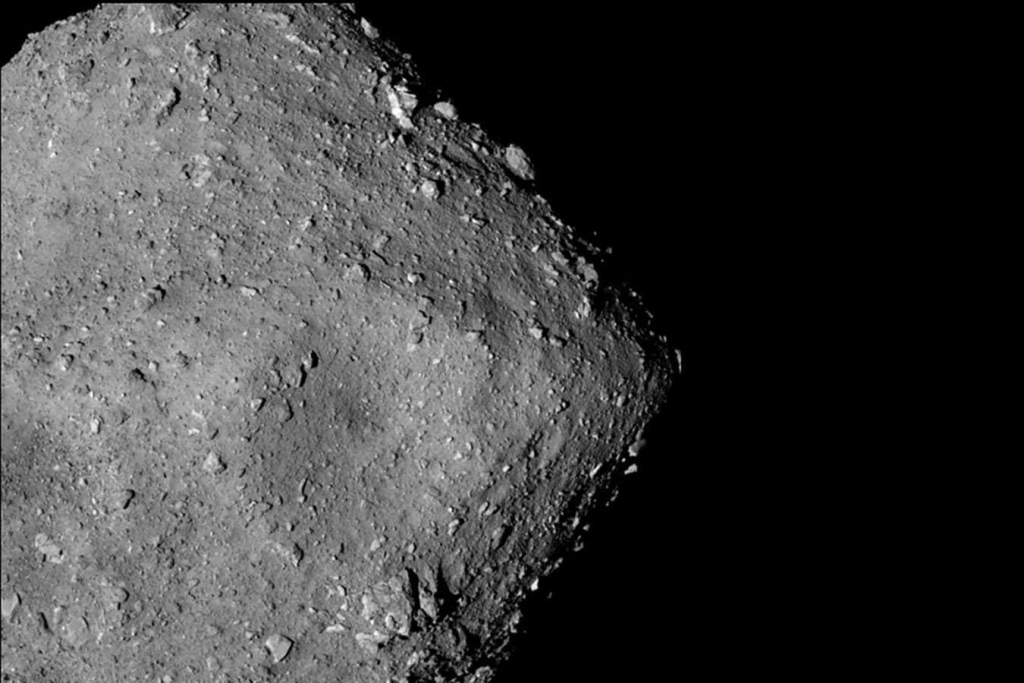
All Five DNA Building Blocks Found in Asteroid Samples: A Cosmic Clue to Life’s Origins
In a groundbreaking discovery that’s sending shockwaves through the scientific community, researchers have confirmed the presence of all five primary nucleobases—the fundamental building blocks of DNA and RNA—in samples collected from the asteroid Ryugu. This remarkable finding, published in a recent study, offers compelling new evidence that asteroids may have played a crucial role in seeding Earth with the essential ingredients for life billions of years ago.
The Hayabusa2 Mission: A Journey Through Space and Time
The story begins with Japan’s pioneering Hayabusa2 spacecraft, which embarked on an ambitious mission to explore Ryugu, a near-Earth asteroid, in 2018. Over the course of its mission, Hayabusa2 performed a series of daring maneuvers, including firing two projectiles—one small and one large—directly into Ryugu’s surface to collect precious samples from both the asteroid’s exterior and subsurface layers.
After successfully gathering these cosmic treasures, Hayabusa2 began its journey back to Earth, arriving in 2020 with its precious cargo intact. Since then, an international team of researchers has been meticulously analyzing these samples, uncovering secrets that have been locked away in space for billions of years.
The Discovery That Changes Everything
Led by Yasuhiro Oba from Hokkaido University in Japan, the research team’s latest analysis has revealed something extraordinary: all five primary nucleobases—adenine, guanine, cytosine, thymine (found in DNA), and uracil (found in RNA)—were present in both surface and subsurface samples from Ryugu.
This isn’t the first time nucleobases have been detected in space materials. Similar compounds have been found in meteorites and in samples from another asteroid, Bennu. However, finding all five building blocks together in Ryugu samples is particularly significant, as it provides a more complete picture of the molecular inventory available in our solar system’s early history.
Why This Discovery Matters
The implications of this finding are profound and far-reaching. First, it strengthens the theory that asteroids and meteorites could have delivered the essential ingredients for life to Earth during its formative years. When our planet was young and volatile, constant bombardment by space objects may have provided the chemical building blocks necessary for life to emerge.
Second, the varying abundances of different nucleobases across various samples suggest these compounds could serve as cosmic fingerprints, helping scientists trace asteroids and meteorites back to their parent bodies in the distant past. This could revolutionize our understanding of how these celestial objects evolved over billions of years.
The Ubiquity of Life’s Building Blocks
As Oba notes, “Their detection in Ryugu strongly supports their ubiquity in the solar system.” This means that the fundamental components of DNA and RNA aren’t rare anomalies but rather common ingredients throughout our cosmic neighborhood. If asteroids across the solar system contain these building blocks, it dramatically increases the possibility that similar processes could lead to the emergence of life elsewhere.
Beyond Simple Building Blocks
The story doesn’t end with just finding nucleobases. According to Oba, “It is very likely that more complex organic molecules like nucleic acids are formed on asteroids.” This suggests that asteroids might not only carry the ingredients for life but could potentially harbor more complex molecular structures themselves.
This discovery opens up exciting new avenues for research. Scientists are now wondering: Could asteroids be molecular factories, creating increasingly complex organic compounds as they travel through space? And if so, what does this mean for the potential of life elsewhere in the universe?
Connecting to Earth’s Origins
The presence of these nucleobases in asteroid samples provides a crucial piece of the puzzle in understanding how life began on Earth. The leading theory suggests that our planet’s early environment, combined with organic compounds delivered by asteroids and comets, created the perfect conditions for life to emerge from non-living matter—a process known as abiogenesis.
With this new evidence, that theory becomes even more compelling. The constant bombardment of early Earth by asteroids carrying these essential molecules could have provided the chemical diversity and abundance necessary for the first living organisms to develop.
The Bigger Picture
This discovery is part of what many scientists are calling a “golden age” of asteroid exploration. Missions like Hayabusa2, NASA’s OSIRIS-REx (which collected samples from Bennu), and future asteroid exploration projects are giving us unprecedented access to these ancient space rocks that have remained largely unchanged since the solar system’s formation.
Each new finding adds another piece to the complex puzzle of our cosmic origins. The fact that we can now detect and analyze these molecular compounds from asteroids millions of miles away speaks to the incredible technological advances of our time.
What Comes Next?
The research team’s work is far from over. Future analyses will likely focus on understanding the specific conditions under which these nucleobases form on asteroids, how they survive the harsh environment of space, and whether more complex organic molecules can be detected in these samples.
Additionally, this discovery will inform the planning of future space missions. Scientists may now prioritize sampling asteroids with characteristics similar to Ryugu and Bennu, hoping to find even more complex organic compounds or perhaps even evidence of primitive biological processes.
A Universe Full of Possibilities
Perhaps the most exciting aspect of this discovery is what it suggests about the potential for life elsewhere in the universe. If the building blocks of life are common throughout our solar system—and likely throughout the universe—then the conditions for life may be more common than we ever imagined.
This doesn’t mean we’ve found alien life, but it does mean that the universe may be more “bio-friendly” than previously thought. The same processes that may have led to life on Earth could be happening on countless other worlds, each following its own unique evolutionary path.
Tags: #AsteroidDiscovery #OriginsOfLife #SpaceScience #DNA #RNA #Hayabusa2 #Ryugu #CosmicChemistry #Astrobiology #Nucleobases #ExtraterrestrialLife #ScientificBreakthrough #SpaceExploration #MolecularBiology #SolarSystem #LifeBeyondEarth #OrganicMolecules #CosmicOrigins #PlanetaryScience
Viral Sentences:
- Scientists find all five DNA building blocks in asteroid samples!
- Asteroids may have seeded Earth with life’s essential ingredients billions of years ago.
- The building blocks of life are common throughout our solar system, new research reveals.
- This discovery strengthens the theory that asteroids delivered life’s ingredients to early Earth.
- Could asteroids be molecular factories creating complex organic compounds in space?
- The universe may be more “bio-friendly” than we ever imagined.
- Japan’s Hayabusa2 mission uncovers cosmic secrets locked away for billions of years.
- Finding nucleobases on Ryugu provides crucial evidence for life’s cosmic origins.
- Scientists detect all five nucleobases in asteroid samples – a groundbreaking discovery!
- This research could revolutionize our understanding of how life began on Earth.
- The same processes that created life on Earth might be happening on other worlds right now.
- Asteroids carry more than just rocks – they may carry the secrets of life itself.
- This discovery connects us to our cosmic origins in ways we never imagined possible.
- The building blocks of DNA and RNA found on Ryugu suggest life’s ingredients are universal.
- Could the next great discovery be finding actual nucleic acids on an asteroid?
,


Leave a Reply
Want to join the discussion?Feel free to contribute!