
AI is nearly exclusively designed by men – here’s how to fix it
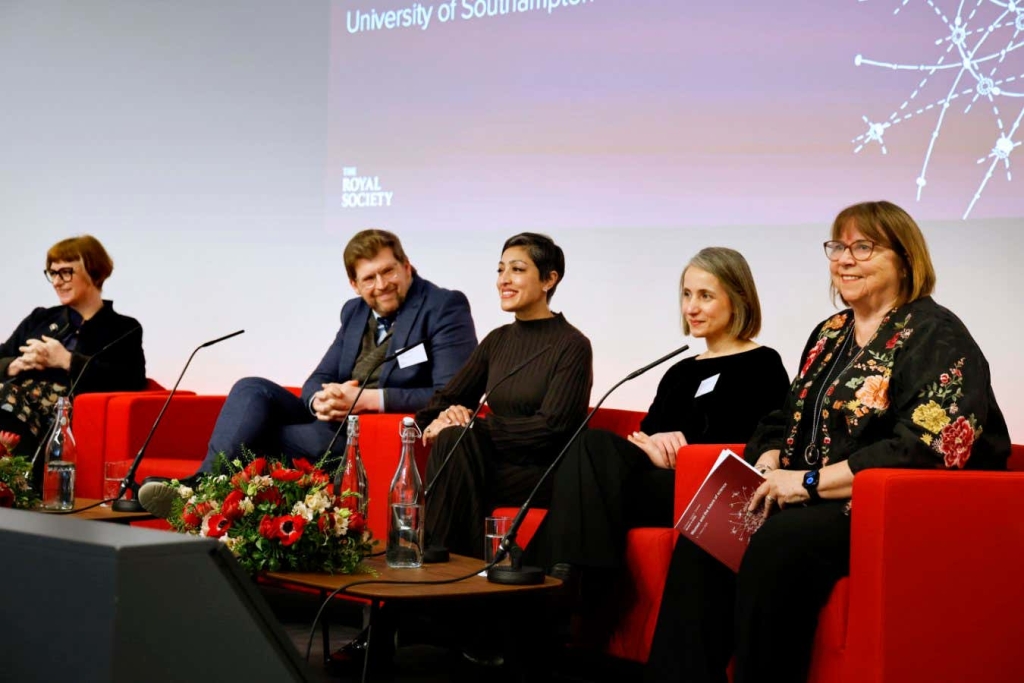
AI Without Women: The Hidden Crisis Shaping Our Technological Future
LONDON, UK — As the second day of the Women and the Future of Science conference unfolds at the prestigious Royal Society, a stark reality is emerging from the discussions that threatens to reshape our technological landscape in ways we’re only beginning to understand. The irony is palpable as I struggle to transcribe the proceedings—my AI transcription software, designed to streamline my work, repeatedly misidentifies women named Julie as “Julian,” a subtle but telling reminder of the very bias being discussed in this session.
This isn’t merely about familiar concerns regarding AI algorithms inheriting gender biases from their training data. The conference, chaired by computer science luminary Wendy Hall, is grappling with something far more fundamental: the fact that transformative AI technologies shaping our collective future are being developed almost exclusively by men.
The Numbers Tell a Troubling Story
The technology sector has long been male-dominated, with only 25% of computer science students in the UK being women. However, the situation has deteriorated significantly in recent years, particularly as generative AI has exploded in popularity. David Leslie, head of ethics and responsible innovation at the Alan Turing Institute, doesn’t mince words: “In the past two years, there’s been a regress. The question of whether the Trump administration has caused intergenerational damage to women in the sciences is undisputable. We are living through a time of backwards thinking.”
Last year’s executive order from President Donald Trump targeting “woke AI” and recommending the removal of diversity, equity, and inclusion references from the National Institute of Standards and Technology’s AI risk-management framework has created a chilling effect. But according to Rumman Chowdhury, a data scientist and former US science envoy for artificial intelligence, this hostility predates Trump. “The concept of woke AI was born from misogynistic attitudes within Silicon Valley before Trump’s order,” she explains.
Silicon Valley’s Growing Hostility
Chowdhury’s personal experience underscores this trend. She previously led ethics and accountability at Twitter until Elon Musk’s takeover resulted in the termination of her entire team. Now, as a panellist at this conference, she delivers a sobering assessment: “I am in the world of frontier AI, and that is the world of AI without women.”
Rachel Coldicutt, who researches the social impacts of emerging technologies, echoes this sentiment: “If we think about what the world looks like without women in AI, I think that’s what we have at the moment. It’s not fantasy at all.”
Why This Matters: The Gender Data Gap
The implications extend far beyond workplace diversity statistics. There’s a long, documented history of technologies being developed with male bodies and needs in mind—from crash test dummies and office air conditioning to astronaut spacesuits and the vast majority of medical research. This phenomenon, known as the gender data gap, produces consequences ranging from merely annoying to potentially life-threatening.
AI is poised to influence everything from our careers and education systems to the diseases we can treat. Yet currently, only 2% of venture capital funding goes to women, while less than 1% of healthcare research and innovation focuses on women’s health conditions. “We need to make tech work for 8 billion people, not eight billionaires,” Coldicutt asserts.
The Path Forward: Alternative Models and New Priorities
With centuries of biased data embedded in current AI models, Coldicutt believes correction is impossible. “We need alternative models,” she states. This represents an opportunity to fundamentally shift what these models prioritize. “It’s about cultivating models… that prioritise care for people, for the planet.”
Chowdhury, who co-founded the non-profit Humane Intelligence to help companies develop more accountable and fair AI systems, identifies another critical issue: the manufactured sense of urgency surrounding AI development. The narrative of existential risk to jobs or humanity creates a “house on fire” mentality where diversity initiatives become expendable. “If people feel as if they have no time, they will drop anything that feels extraneous, including diversity,” she explains.
David Leslie emphasizes the need to address the economic and political frameworks governing AI development to encourage young people to pursue AI for social good. “We need to start with the basics, start with transforming the incentives.”
Rethinking Intelligence Itself
Perhaps most fundamentally, we may need to reconsider our very definition of intelligence in the context of AI. The original conceptualization of AI emerged from a pivotal 1950s meeting at Dartmouth College in New Hampshire. “That definition of intelligence comes out of the Dartmouth conference,” Hall notes. “Which, by the way, was all men.”
As the conference continues, one thing becomes clear: the absence of women in AI isn’t just a diversity issue—it’s a fundamental threat to the development of technology that serves all of humanity. The question isn’t whether we can afford to include women in AI development, but whether we can afford not to.
Tags: #AI #GenderBias #WomenInTech #SiliconValley #ArtificialIntelligence #TechDiversity #GenderDataGap #WokeAI #TechEthics #WomenInSTEM #AIWithoutWomen #TechInclusion #DigitalGenderGap #FutureOfAI #TechInequality
Viral Phrases: “AI without women is already here” • “We need to make tech work for 8 billion people, not eight billionaires” • “The gender data gap is life-threatening” • “Your house is on fire” mentality in AI development • “Alternative models that prioritise care for people, for the planet” • “The existential risk narrative is manufactured urgency” • “Transforming the incentives” • “The Dartmouth conference was all men” • “Living through a time of backwards thinking” • “This isn’t fantasy at all”
,


Leave a Reply
Want to join the discussion?Feel free to contribute!