
What was the ‘lightbulb moment’ for this senior software engineer?
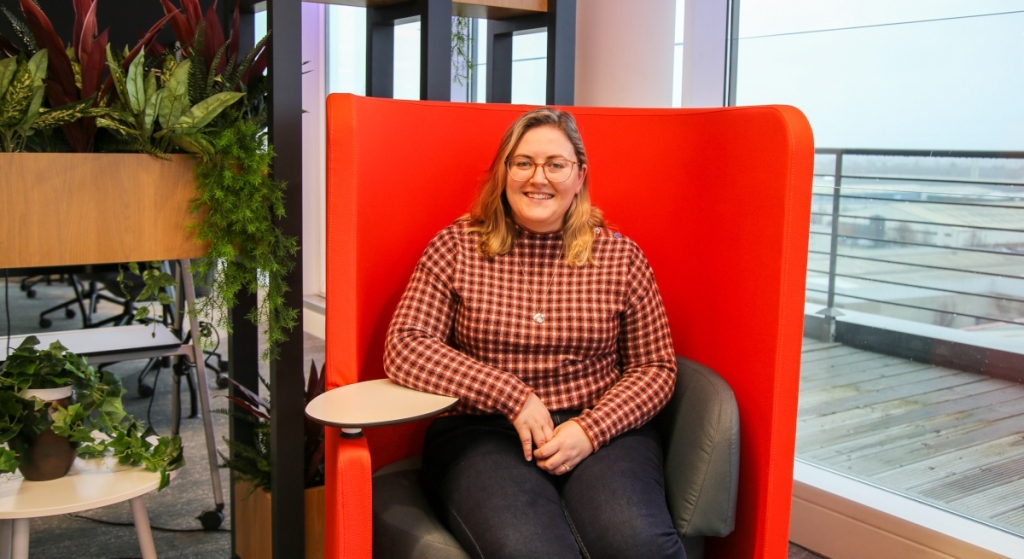
From CoderDojo to Senior Software Engineer: Ciara Walsh’s Journey Through the Ever-Evolving Tech Landscape
In a world where technology evolves at breakneck speed, few stories capture the essence of modern STEM careers quite like that of Ciara Walsh, senior software engineer at Workhuman. Her journey from a young coding enthusiast to a seasoned professional offers a compelling narrative about passion, risk-taking, and the importance of continuous learning in the digital age.
The Early Spark: Where It All Began
Growing up with a natural affinity for science and engineering, Walsh knew she was destined for a STEM-related career. However, the path wasn’t immediately clear. “I had quite a difficult time figuring out which direction to go in when approaching my career initially,” she recalls. What makes her story remarkable isn’t just her eventual success, but the serendipitous moment that set everything in motion.
The turning point came through an unexpected source—her late grandmother. During a particularly challenging moment while struggling with her CAO (Central Applications Office) application, Walsh had a conversation that would change everything. “That conversation was a lightbulb moment for me,” she explains, “and my whole career journey has followed from it.”
This pivotal moment led her to explore software engineering, a field she would come to love for its unique blend of logic and creativity.
The Joy of Problem-Solving
For Walsh, the daily grind of software engineering isn’t just about writing code—it’s about solving puzzles. “I really enjoy problem solving and having to really think about how to approach solutions,” she says. “Software engineering is essentially problem solving as a career in many ways.”
Whether she’s building new features for users or troubleshooting why a test is failing, Walsh finds deep satisfaction in those “aha” moments when everything clicks into place. This passion for problem-solving has been a constant throughout her career, driving her to tackle increasingly complex challenges.
Witnessing the Internet of Things Revolution
One of the most exciting developments Walsh has witnessed in her sector was the evolution of the Internet of Things (IoT). She recalls an early-career meeting where the concept was being discussed as an ambitious vision for the future. “The conversation at that time was around how ambitious of an idea it was, and how many technologies and tools would need to be invented to even achieve a quarter of the concepts being laid out at that stage.”
Today, many of those once-futuristic ideas have become reality. “The sheer number of technologies that we use daily now which simply didn’t exist when I started my career is amazing,” Walsh marvels. From smart home devices to connected industrial systems, the IoT revolution has transformed how we interact with technology, and Walsh has had a front-row seat to this transformation.
The Courage to Take a Career Detour
Perhaps the most challenging moment in Walsh’s career came when she made the bold decision to step away from her established career path. In 2024, she chose to return to college to pursue a master’s degree in electronic engineering—a significant risk, especially given the industry slowdown and hiring challenges at the time.
“I also felt that I needed to take that step back and spend time growing my knowledge and skills to be successful moving forward,” she explains. This decision, while difficult, proved to be transformative. Walsh carefully balanced learning new topics with deepening her existing knowledge, ensuring she didn’t lose her practical skills while gaining theoretical understanding.
The journey wasn’t without its struggles. “The imposter syndrome and stress associated with that journey—particularly during the later stages, when my course had finished and I was trying to restart my career—wasn’t something I anticipated.” Even after securing her current role, it took time to rebuild her confidence. However, looking back, Walsh believes the risk paid off handsomely, giving her a stronger foundation in key concepts and enhanced research skills that will serve her well throughout her career.
The Creative Heart of STEM
If Walsh could change one thing about the STEM sector, it would be to emphasize and celebrate the inherent creativity within these fields. “We tend to focus a lot on being data-driven and efficient, but the reality is that the majority of the work we do in STEM involves some kind of inventing and/or creative thinking.”
She believes that in our pursuit of efficiency and meeting deadlines, we sometimes lose sight of the innovative potential that exists within STEM careers. “If I could change anything, it would be that we gave ourselves more space and time to be purely creative, rather than always doing the most efficient thing.”
Hackathons serve as perfect examples of this creative freedom in action. “I’ve been involved with multiple hackathon projects that ended up being deployed as full products after some polishing. Those only exist because the team members were given the space to think and explore outside the structure of the usual day-to-day.”
The Power of Mentorship
Throughout her career, Walsh has been incredibly fortunate to benefit from strong mentorship relationships. A recipient of a women in technology scholarship during her undergraduate studies, she gained access to amazing mentors from the very beginning. “Their advice and guidance have stood the test of time at this stage, and I genuinely think I’m a better engineer because of all the people who’ve worked with me along my career path so far.”
But mentorship isn’t just about receiving guidance—it’s also about giving it. Walsh has found that mentoring others has been equally beneficial to her own development. “Mentoring others gives you so many opportunities to really explore your own growth, and for me it has also often resulted in development of my own in parallel to my mentees.”
Advice for Aspiring Software Engineers
For those considering a career in software engineering, Walsh offers practical and encouraging advice. “The best advice I could give someone looking to go into software engineering as a career is to just start coding and experimenting with building simple programs.”
She recommends starting with beginner-friendly languages like Scratch to learn basic logic patterns, then gradually exploring other languages and tools as confidence grows. “There are lots of free resources and tutorials online, and you can actually learn all the technical skills you need to know to do this job using them.”
Perhaps most importantly, Walsh emphasizes that software engineering is a field of constant evolution. “Software is always changing, and there are always new frameworks and tools to learn.” Success in this career requires a willingness to continuously learn and adapt. “Once you learn the general basics, it’s a lot easier than you might expect to transfer skills.”
The Future of Technology: What’s Next?
As Walsh looks to the future, she’s excited about what the next 10 to 15 years might bring. Having witnessed the incredible transformation of technologies that were once theoretical concepts, she’s optimistic about the innovations yet to come.
Her story represents more than just personal success—it’s a testament to the dynamic, creative, and ever-evolving nature of technology careers. From CoderDojo classrooms to senior engineering roles, from taking calculated career risks to embracing continuous learning, Walsh’s journey offers valuable insights for anyone considering or currently pursuing a career in STEM.
In an industry where change is the only constant, her adaptability, creativity, and passion for problem-solving serve as an inspiring example of how to build a fulfilling and impactful career in technology.
tags: #STEMCareers #SoftwareEngineering #WomenInTech #CareerDevelopment #TechIndustry #ProblemSolving #Mentorship #ContinuousLearning #InternetOfThings #CareerAdvice #TechnologyEvolution #ProfessionalGrowth #CodingJourney #TechInnovation #SiliconRepublic
viralphrases: “The connection that this could be my career eventually came through my late grandmother”, “Software engineering is essentially problem solving as a career”, “The sheer number of technologies that we use daily now which simply didn’t exist when I started my career”, “That conversation was a lightbulb moment for me”, “I’m a better engineer because of all the people who’ve worked with me along my career path so far”, “The imposter syndrome and stress associated with that journey”, “If I could change anything, it would be that we gave ourselves more space and time to be purely creative”, “Hackathons are a great example of this, where time is given to just experiment and explore”, “Software is always changing, and there are always new frameworks and tools to learn”, “Once you learn the general basics, it’s a lot easier than you might expect to transfer skills”
,


Leave a Reply
Want to join the discussion?Feel free to contribute!