
UK must learn lessons from AI race and retain its quantum computing talent, says minister | Computing
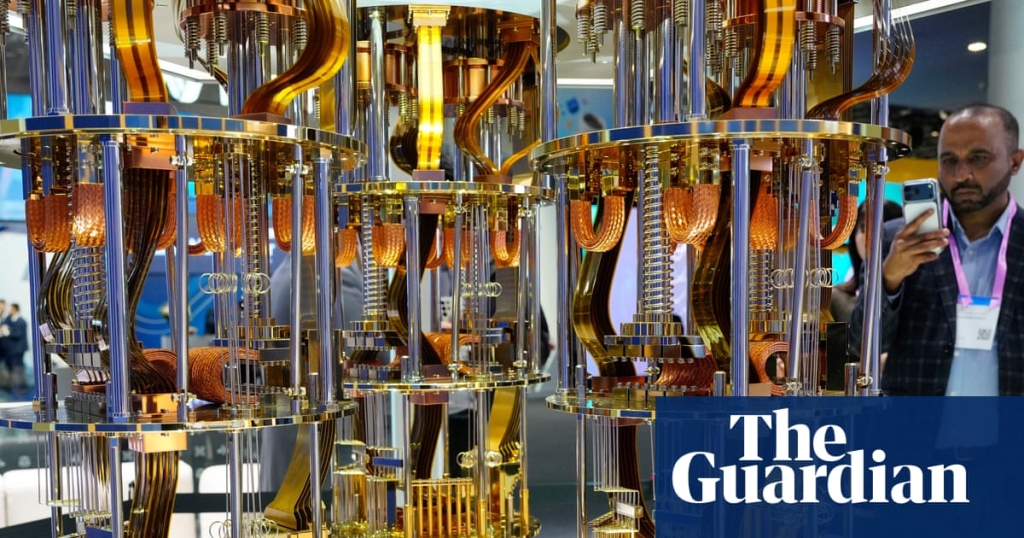
UK Stakes £1bn on Quantum Computing to Avoid AI-Style Brain Drain
In a bold move to cement its position at the forefront of next-generation technology, the UK government has unveiled a £1 billion investment in quantum computing—a sector it fears could suffer the same fate as artificial intelligence, where British talent has been lured across the Atlantic by lucrative US offers.
Speaking at the National Quantum Computing Centre (NQCC) near Oxford, Technology Secretary Liz Kendall warned that the UK cannot afford to repeat the mistakes of the AI race, where the US has dominated both talent acquisition and funding. “I do look at what’s happened on AI,” Kendall said. “I do think we need to learn the lessons and make sure we give our brilliant scientists, spinouts, and startups the ability to stay here and make it happen.”
The funding announcement, made alongside Chancellor Rachel Reeves, represents a strategic pivot toward quantum computing—a field that harnesses the bizarre principles of quantum physics to process information in ways classical computers cannot. The government’s £1 billion injection will support the design of large-scale quantum computers for use by scientists, researchers, the public sector, and businesses. An additional £1 billion, already pledged, will help translate quantum breakthroughs into real-world applications across finance, pharmaceuticals, and energy.
Kendall emphasized that the UK wants to lead, not follow. “I want to be at the front of the grid and leading,” she stated, adding that the country aims to build a domestic cutting-edge quantum computer by the early 2030s. This ambition comes as Google recently announced a quantum algorithm capable of operating 13,000 times faster than classical computers—a milestone that underscores the technology’s transformative potential.
The UK has already produced notable quantum startups, including Quantinuum, a US-UK joint venture that recently achieved a $10 billion (£7.5 billion) valuation. However, the government is acutely aware that without sustained investment and support, these companies and their talent could be tempted to relocate to Silicon Valley.
The contrast with AI is stark. DeepMind, the pioneering AI firm co-founded by Nobel laureate Demis Hassabis, remains headquartered in London but was acquired by Google in 2014 for £400 million. Meanwhile, major US tech companies like Meta have been offering eye-watering sums—reportedly up to $100 million in sign-on bonuses—to poach elite AI researchers from UK universities and startups.
The UK remains a prolific producer of AI talent, but many of its most significant AI operations are now bases for US companies such as OpenAI (creator of ChatGPT), Anthropic, and Palantir. This trend has left policymakers determined to chart a different course for quantum computing.
At the heart of quantum computing lies the qubit—the quantum equivalent of the classical computer’s bit. While bits encode information as either 0 or 1, qubits exploit a quantum phenomenon called superposition, allowing them to exist in multiple states simultaneously. This enables quantum computers to explore vast numbers of possible outcomes in parallel, a capability that could revolutionize fields from drug discovery to materials science.
However, quantum computing remains in its infancy. Fully fault-tolerant quantum computers—capable of delivering on the technology’s most ambitious promises—are still years away. Such machines would require hundreds of thousands of stable qubits, all operating in highly controlled environments free from electromagnetic interference.
The potential applications are staggering. Quantum computing could enable far more efficient representations of chemical compounds, allowing scientists to predict the behavior of complex molecules with unprecedented accuracy. This could accelerate the development of new drugs, materials, and chemicals, potentially unlocking breakthroughs that would take classical computers centuries to achieve.
The government’s investment is part of a broader strategy to position the UK as a global leader in quantum technology. By providing the funding, infrastructure, and regulatory environment needed to nurture quantum startups and retain top talent, ministers hope to create a thriving ecosystem that can compete with—and ultimately surpass—American dominance in the field.
As the quantum race heats up, the UK’s £1 billion bet represents more than just financial support. It’s a statement of intent: that Britain will not be left behind in the next technological revolution, and that its scientists and entrepreneurs will have the resources they need to build the future at home, not abroad.
viral tags: quantum computing UK, £1bn quantum investment, Liz Kendall technology, quantum vs AI race, UK quantum startups, NQCC Oxford, Google quantum breakthrough, quantum talent retention, British tech leadership, quantum computing future
viral phrases: “I want to be at the front of the grid and leading”, quantum computing’s 13,000x speed advantage, £100m sign-on bonuses for AI talent, quantum’s potential to revolutionize drug discovery, Britain’s quantum computing moonshot, avoiding the AI brain drain, quantum bits and superposition explained, the race to build fault-tolerant quantum computers, UK’s quantum computing ecosystem, Silicon Valley’s quantum talent poaching
,

Leave a Reply
Want to join the discussion?Feel free to contribute!